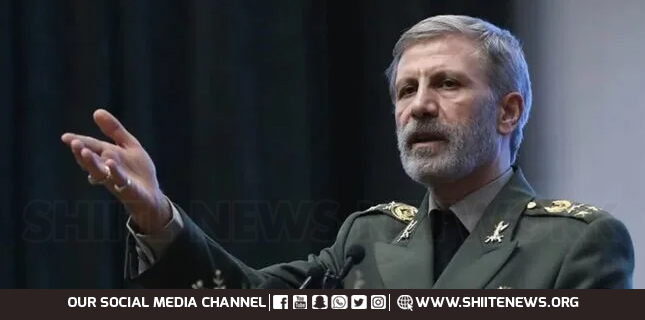
No intention to transfer Iranian uranium abroad: Shamkhani – Exclusive

WebDesk
03 February, 2026 05:37
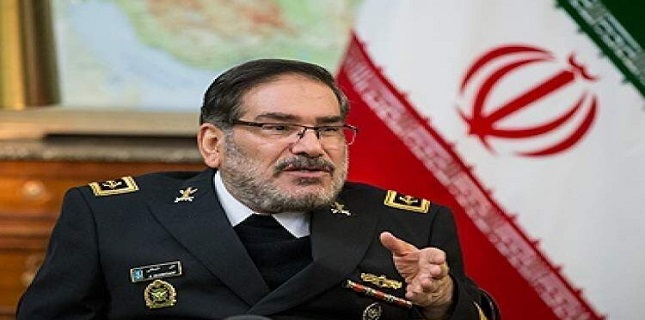
Iran has no intention of transferring its stockpiles of enriched uranium abroad, a senior official in the Supreme National Defense Council and senior political advisor to Iran’s leader, Sayyed Ali Khamenei, Admiral Ali Shamkhani, stated on Monday.
In an exclusive interview for Al Mayadeen, Shamkhani, dressed in military attire, said, “There is no reason to move the stored material out of Iran,” in response to proposals made to Iran as part of the nuclear negotiations and suggesting Russia as an option to this end. He emphasized that Iran’s nuclear program is “peaceful and within local capabilities,” adding that “60% enrichment can be reduced to 20% if they are concerned, but they must offer something in return.”
The senior advisor stressed that Iran’s enriched uranium at 60% is intended primarily “to counter enemy conspiracies against us first, and secondly to prepare for negotiations and dialogue.”
On the question of nuclear weapons, he said, “The West perhaps does not understand, or does not want to understand, what we say, that producing or possessing weapons is forbidden by a religious decree,” emphasizing that this “is non-negotiable and stems from the vision of a religious authority, the Leader of the Revolution and the Islamic Republic of Iran, Sayyed Ali Khamenei.”
Reiterating Iran’s long-standing position, Shamkhani listed the “three nos” from previous negotiation rounds: “Iran does not seek nuclear weapons, will not seek a nuclear weapon, and will never stockpile nuclear weapons, but the other side must pay a price in return for this.”
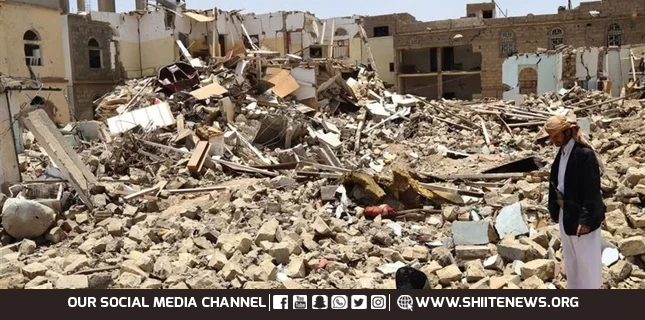
He also revealed a key point about Iran’s stockpile, saying, “The quantity of enriched uranium remains unknown, because part of the stockpile is under rubble, and there is no initiative yet to extract it, as it is extremely dangerous.” That is why, Shamkhani said, negotiations with the International Atomic Energy Agency (IAEA) are ongoing “to estimate the quantity while maintaining security and avoiding risk.”
Shamkhani outlines conditions for Iran-US talks
On talks with the United States, the Defense Council senior official stated that Iran “has repeatedly confirmed and demonstrated its readiness for practical negotiations with the United States solely, and not with anyone else,” criticizing, in this context, Europe’s role as it has “practically proven that it cannot do anything, after US President Donald Trump withdrew from the nuclear deal in 2018, and also during negotiations before last June’s war.”
“Even Trump did not allow them to intervene in these matters,” Shamkhani asserted to Al Mayadeen.
He further clarified, “The negotiations are limited to the United States and to the nuclear file, over which an agreement can be reached.”
On the conditions for talks, Shamkhani asserted that they should be carried out “away from atmospheres of threats and coercion tools” and that both sides should “sit from an equal standing at the negotiating table, start bilateral negotiations based on reaching mutual understanding, and avoid illogical and unreasonable demands.”
“Only then would reaching an agreement be possible,” the top Iranian military official affirmed.
On potential meetings between Iranian and US officials in Turkey, he said, “If negotiations start under the conditions I mentioned, with the two basic requirements of staying away from threats and avoiding illogical orders, of course, there is the possibility for direct and indirect meetings with the American side.”
On direct negotiations, Shamkhani explained, “They will be preceded by indirect negotiations. If there is an understanding and if it forms quickly, the situation can shift to direct negotiations,” reiterating that any such talks will be limited to the nuclear file.
“One of the conditions of the negotiations is to limit them to the nuclear dossier,” he asserted.
Iran facing unjust war, threats from its enemies
The senior member of the Supreme National Defense Council also addressed growing threats of war against Iran, wearing his military uniform as a practical signal of readiness. He said, “War is not just exchanging fire or the whizz of cannons. We are actually living in warlike conditions, but we are prepared for any circumstances that may arise.”
He clarified that this military readiness “does not mean provoking war, but we are facing an unjust war and threats imposed on us by our enemies, who are preparing for this war with all their capabilities.”
Addressing the true objective behind the threats of war on Iran, Shamkhani said, “The enemies are seeking to swallow Iran,” adding that “swallowing Iran while the Islamic Republic exists is impossible. Iran is a morsel that will get stuck in their throats; they will never be able to swallow it.”
He noted that adversaries “have still not learned from their previous experiences,” pointing out that “over the past four decades, they have taken numerous measures against the Islamic Republic of Iran with the aim of swallowing Iran, to no avail.”
Shamkhani told Al Mayadeen, “I hope that in this experience as well they realize this reality and understand that Iran is not swallowable. Before they spend their money and threaten the security of the region, they should be deterred from this kind of behavior.”
Recent riots part of US scenarios
Asked whether the recent internal crisis in Iran was part of the preparations for war or military interference, Shamkhani said, “This is not the case,” describing it instead as “part of different scenarios implemented at different times by the United States.”
He explained that the recent events “coincided with last June’s war,” adding that “since Trump came to power and withdrew from the nuclear agreement in 2018, he has pursued a specific plan and scenario against Iran.”
The political advisor said that after failing to achieve his objectives during his first presidential term, Trump is now “seeking to take steps forward and implement alternative plans following his return to the presidency.”
“We are now in the course of Plan B,” Shamkhani said. “That is, the first alternative plan after last June’s war that involved equipping, educating, training, and supporting those who took up arms against the country’s security centers, in order to weaken Iran’s position, pave the way for the next plan, and provide the groundwork for the following step.”
War vs. political exits
When asked whether war is inevitable or if political exits remain possible, the Iranian admiral responded, “In our military capacity, we must assume that war is inevitable, without a doubt.” However, he added that “within political realities, there is still ample time to invest opportunities in the right direction.”
He stressed that “one of the correct paths is diplomacy and dialogue,” asserting that this path should be strengthened alongside military preparedness. In this context, he said, “They have sent us proposals,” adding, “If these proposals are free of threats, include logical conditions, and avoid arrogance, then there is hope to prevent an unjustified catastrophe or incident.”
“These matters are still in their initial stages,” Shamkhani asserted. “I believe there is a real possibility of achieving this goal and avoiding war.”
What does a ‘regional war’ mean?
Commenting on remarks by Iranian Leader Sayyed Ali Khamenei that any future war against Iran would turn regional, Shamkhani outlined two main reasons why a limited conflict would expand beyond Iran’s borders.
“The first reason,” he said, “is the enemy’s military deployment and positioning in the region, including the furthest points surrounding the Islamic Republic of Iran. Militarily, it is therefore impossible to confine deterrence and response to Iran’s geography alone.”
The second reason, according to Shamkhani, is that “endurance and restraint taught us during last June’s war that it was not in the country’s interest.”
Asked whether Iran would strike all US bases in the region, including in the Gulf or Azerbaijan, Shamkhani said, “During the previous war, we had precise information and data indicating that Iran was threatened from some of the areas mentioned.” He added, “Patience is no longer the case. We informed some parties in the region that we will not exercise restraint, and we intend to inform others in a documented manner.”
He noted that “many countries issued statements and made every effort to prevent threats from originating from within their territories and announced that they would not allow their territory to be used to launch any attack against the Islamic Republic.” Iran, he said, “regards the desire of regional countries to prevent war as sincere, and everyone must participate in preventing this unfolding catastrophe in the region.”
Scale of response relies on US, Israeli actions
“One of the main theaters of war at sea is a real possibility,” the Iranian admiral stated, adding, “We are testing our capabilities to target enemy positions, as these capabilities were not tested during the twelve-day war.”
Asked whether Iran would respond against “Israel” if the United States launched an attack, he replied, “Absolutely, certainly.”
“Basically, we do not separate targets from underlying doctrine,” he said, adding, “There is no room for such compartmentalization.”
“Israel and the United States are not two different elements; they are one and the same, as proven by reality and facts.”
Shamkhani added that “the assumption that the United States would strike without Israel’s participation is fundamentally wrong,” stressing that “if the United States strikes, Israel will certainly be involved and must be responded to accordingly.”
“The scale of the response,” Shamkhani said, “depends on their actions and steps. We will respond in kind.”
No limits on homegrown capabilities
On Iran’s military and security capabilities following security breaches during last June’s war, Shamkhani said the US and Israeli militaries “focus heavily on air power,” so “our current plans are certainly different from those at the beginning of the 12-day war; different in planning, equipment, organization, and systems.”
“All of these capabilities are homegrown,” the top military official asserted, thus “there are no limitations on production capacity.”
Regarding security infiltration, an area attributed to “Israel”, he promised that such breaches “will never be repeated.”
Any attack on Sayyed Khamenei will turn into colossal crisis
Asked whether he feared for the life of Supreme Leader Ayatollah Ali Khamenei in the event of war, Shamkhani said the leader is “the essential pillar that we are duty-bound to protect with all our capabilities,” warning that “any attack, no matter how small, would turn into a colossal crisis, greater than what others can imagine.”
He said, “We will take all necessary measures to defend this essential pillar,” adding that “the Leader is courageous. In these circumstances, he delivered a speech yesterday and personally visited the shrine of the late Imam Khomeini, something only a few would publicly announce under such conditions.”
Shamkhani said that during the twelve-day war, Sayyed Khamenei “filled the vacuum created by the assassinations of military commanders within a matter of hours,” noting that “decisions in the early hours were taken directly by the Leader,” including visits to the military operations room and identifying potential targets.
Difficulties make Islamic Revolution stronger, more resilient
Asked whether he feared for the future of the Islamic Revolution, Shamkhani said, “I do not fear for it. Difficulties make the revolution stronger and more resilient.”
He argued that concerns stem from “cognitive warfare”, saying, “The question of fear for the Revolution is a result of psychological and cognitive warfare waged by enemies against Iran.”
Drawing a comparison with the 1980s, Shamkhani recalled that Iran faced Saddam Hussein’s regime, “which destroyed Iranian cities, killed more than 17,000 troops, and invaded the country,” adding that “the situation then was far more tragic than today.”
“What makes things seem different today,” he said, “is the cognitive war being waged by the enemy, a war that goes beyond psychological operations and targets awareness and perception.”
On whether the new generation has changed since the early years of the revolution, Shamkhani said, “The enemies sought that outcome, but they failed.”
He pointed to mass participation in demonstrations across the country, saying these rallies proved that “February 11, the anniversary of the revolution’s victory, is still alive.” He added that adversaries had planned to prevent such mobilization through “networks, training, weapons distribution, command centers, field leaders, and coordinated objectives nationwide, but they failed.”
US presence in region is to protect ‘Israel’
In closing the interview, Shamkhani addressed US forces, neighboring countries, and supporters of the Islamic Republic, saying, “Over the past 47 years, we have never initiated a war, and we have no desire for this fact to change.”
He added that “the Americans are present in the region to defend Israel,” arguing that “Iran is the force that constrains Israel in the region and prevents its bullying and arrogance.”
“We will continue on this path,” he said, “and we will not allow them to turn the region into an unsafe area or push us toward a situation we do not want.”
Shamkhani concluded by saying that Iran “will continue its choices, policies, and support for the option of resistance and Resistance groups in Palestine, Lebanon, and elsewhere,” stating that “the reason Iran is targeted is on the Resistance’s flank.”
Must Read
Pakistan
Sipah Sahaba Lashkar Jhangvi Terrorists Arrested: CTD Conducts Major Operation in Karachi
12-October،2026
Palestine
Khan Younis Fuel Depot Airstrike: 4 Palestinians Martyred, Several Injured
12-October،2026