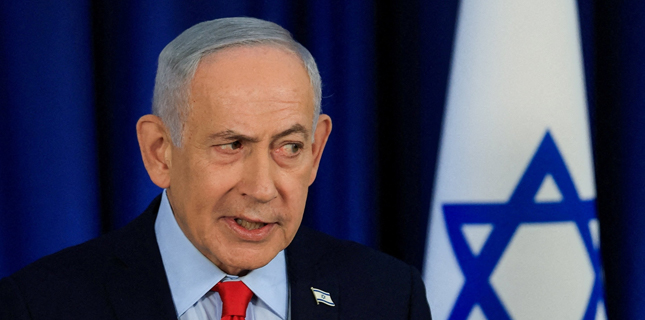
Just a couple of hours after a ceasefire deal was reached, “Israel’s” Prime Minister Benjamin Netanyahu announced Wednesday that his government supports the US decision to suspend strikes on Iran for two weeks, but immediately breached the agreement by declaring it does not extend to Lebanon.
In a statement posted on the Israeli Prime Minister’s Office X account, Netanyahu said the Israeli regime backs Washington’s efforts to ensure Iran “no longer poses a nuclear, missile and terror threat,” and acknowledged that the United States had communicated its commitment to achieving these goals in upcoming negotiations.
However, buried at the end of the statement was a unilateral carve-out: “The two-week ceasefire does not include Lebanon.”
Also Read this News: Trump Announces Two-Week Ceasefire with Iran After Pakistan Mediation
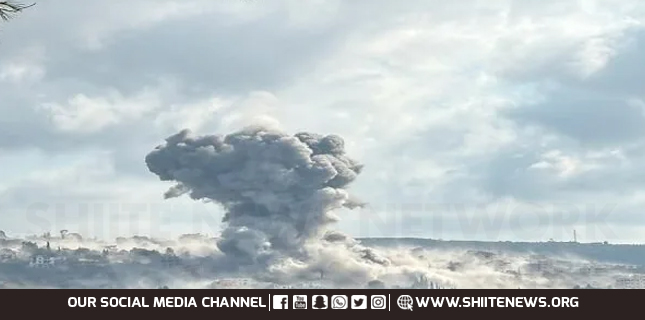
The Israeli regime has already violated the ceasefire before the ink had dried, targeting an ambulance in southern Lebanon alongside bombing several towns in the South.
IOF bombs ambulance, kills 4
All of the following attacks took place shortly after the ceasefire came into effect.
Israeli forces opened their post-ceasefire assault by targeting an ambulance in the town of al-Qleileh in the Tyre district, South Lebanon, killing four people, per Al Mayadeen’s correspondent.
In the Ras al-Ain area, our correspondent reported that an Israeli airstrike hit another vehicle, wounding a number of people. An Israeli drone also struck a motorcycle in Qana, causing injuries.
The IOF carried out airstrikes across al-Rayhan and Nabatieh al-Fawqa in the South, while Israeli artillery shelled a string of towns across the Bint Jbeil district, like Touline, Jmeijmeh, Baraachit, Majdal Selm, and Shaqra. Meanwhile, the town of Hadatha was attacked twice in the early hours of the morning.
In the Bekaa, an airstrike targeted the town of Yohmor.
Direct contradiction of Pakistani mediator
The declaration stands in direct contradiction to the announcement made by Pakistani Prime Minister Shehbaz Sharif, who brokered the agreement.
Sharif stated that “the Islamic Republic of Iran and the United States of America, along with their allies, have agreed to an immediate ceasefire everywhere, including Lebanon and elsewhere, EFFECTIVE IMMEDIATELY.”
Israeli media outlets, including Ynet and Maariv, had reported that the ceasefire encompassed Lebanon. Israeli Channel 12 further cited a security source confirming that the Iranians “insisted that the ceasefire also includes Lebanon.”
Iran’s demands throughout negotiations had explicitly included an end to aggression on all fronts, Lebanon among them.
Israeli public reacts with fury
The ceasefire announcement triggered a wave of frustration across Israeli media. Israeli broadcaster Channel 11 reported that settlers remained in shelters even as the truce was declared. Other outlets described the agreement as “the largest failure in Israel’s history since October 7.”
Maariv was particularly critical, writing that the United States and “Israel” had abandoned most of their war objectives, creating a new regional reality. The outlet said Iran had succeeded in dragging both into an agreement that amounted to surrender from both sides, and that after 41 days of fighting and 5,000 buildings destroyed, the outcome was a decisive Iranian victory, with Hezbollah expected to return stronger than before. Iran and its allies, Maariv concluded, appeared to be the only party emerging victorious from the confrontation.
Commentators questioned the logic of the deal, with one platform sarcastically asking, “Forty days and an entire nation staying home for a ceasefire?”
Trump was not spared either, with several outlets calling him “a global joke” and “a weak man unable to withstand pressure.”