Inclusion of “Ashab” in Durood Through NA Resolution Controversial

23 December, 2025 13:30
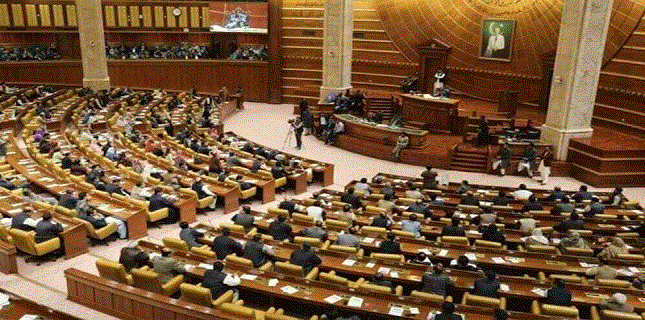
Shiite News: A resolution passed by the National Assembly on August 12, 2020, has once again become controversial after it emerged that the Urdu portion of the resolution added the word “Ashab” (companions) to Durood, making it part of the Prophet’s (PBUH) name usage, while the English text only required writing Khatam-un-Nabiyyin with the Holy Prophet’s (PBUH) name.
As a result of this resolution, the same wording was introduced into Islamic Studies textbooks, including translations of the Holy Qur’an where the word was added in brackets.
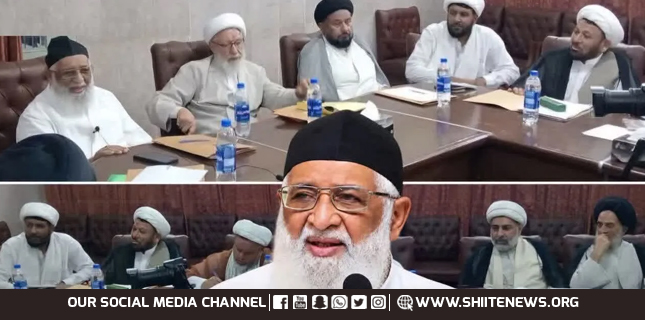
Speaking exclusively, Ghulam Hussain Alvi, Chairman Curriculum and Islamic Teachings Foundation Pakistan, strongly objected, stating that Durood is exclusively for the Holy Prophet (PBUH) and his Ahlul Bayt (AS), not for the companions, and that even Sihah Sitta narrations and prayers do not include companions in Durood.
He regretted that recommendations made by the Islamic Ideological Council (IIC) during its 229th meeting under former Chairman Qibla Ayaz Mir were never implemented by the government.
Alvi alleged that individuals with a negative ideological mindset were deliberately included in curriculum development committees, leading to the systematic exclusion of Ahlebait (AS)-centric narrations and historical events.
He pointed out omissions related to Hazrat Hamza (AS), Hazrat Abu Talib (AS), and Hazrat Abdul Muttalib (AS), while figures historically opposed to Maula Ali (AS) were prominently highlighted.
He stated that he formally wrote to Members of the National Assembly urging them to correct the controversial wording for the sake of students and inter-sect harmony, but no effective action was taken.
Ghulam Hussain Alvi said he approached all major state authorities, including the President, Prime Minister, federal ministers, parliamentary leadership, judiciary, curriculum authorities, and provincial governments, but regretted that the issue remains unresolved.
He demanded implementation of IIC recommendations (2022), formation of an accountability committee by major Shia organizations, and inclusion of Seerat of the Imams of Ahlebait (AS) and Karbala in madrassa curricula.
Must Read

Pakistan
Man Accused of Disrespecting Imam Mahdi Arrested in Karachi, FIR Registered
18-September،2026