India to slash car tariffs for EU ahead of historic free trade deal

WebDesk
26 January, 2026 11:41
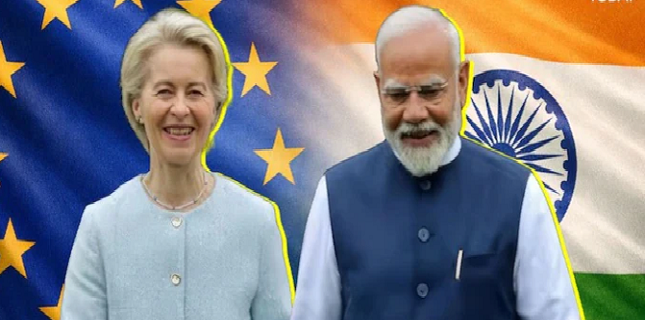
India is preparing to make its most significant move yet to open its automotive sector by cutting tariffs on imported cars from the European Union, according to two sources cited by Reuters. The move comes as both sides near the conclusion of a wide-ranging free trade agreement, which could be announced as early as Tuesday.
Prime Minister Narendra Modi’s government has agreed to reduce tariffs from the current 110% to 40% for a limited number of combustion-engine cars from the EU, provided their import price exceeds €15,000 (approximately $17,739). The reduction will apply immediately upon the agreement’s implementation.
Over time, these tariffs could fall further to 10%, the sources added, granting automakers such as Volkswagen, BMW, and Mercedes-Benz broader access to India’s rapidly growing auto market.
Battery electric vehicles will initially be excluded from the duty reduction for the first five years. The move aims to protect ongoing investments by Indian automakers such as Tata Motors and Mahindra & Mahindra, both of which are ramping up local EV production. After five years, EVs will be eligible for similar tariff cuts.
‘Mother of all deals’
The trade agreement, referred to by negotiators as the “mother of all deals,” is expected to enhance bilateral trade significantly. It may also boost Indian exports, including textiles and jewelry, which have faced steep US tariffs of up to 50% since August 2023.
While neither India’s Commerce Ministry nor the European Commission have commented officially, the agreement reportedly includes a quota of approximately 200,000 vehicles per year under the reduced import duty, subject to last-minute adjustments.
Turning point for EU carmakers
India, now the world’s third-largest car market after the US and China, currently imposes tariffs between 70% and 110% on imported vehicles, a longstanding hurdle for global manufacturers. Executives including Tesla CEO Elon Musk have openly criticized these barriers.
European automakers currently hold less than 4% of India’s 4.4 million-unit annual market, which is dominated by Suzuki and domestic brands like Tata and Mahindra. However, with projections pointing to a 6 million-unit market by 2030, several European firms are preparing for expansion.
Renault, for example, is preparing a strategic comeback in India, while the Volkswagen Group is finalizing new investments via its Skoda brand.
Lower duties are expected to enable EU manufacturers to test the Indian market with broader imported lineups before committing to local production, potentially transforming their market share in one of the world’s most protected automotive sectors.
India, EU near historic trade agreement
This comes as India and the European Union continue cooperating to finalize a comprehensive trade agreement that could be announced soon, according to Indian Trade Secretary Rajesh Agrawal, as reported by Reuters. The timing reflects New Delhi’s strategic pivot toward alternative markets as trade tensions with Washington persist.
The prospective agreement represents India’s most significant trade pact to date, linking economies with combined bilateral commerce of €120 billion ($140 billion) in 2024 alone. For India, the EU has emerged as its largest trading partner, making the deal particularly valuable as American negotiations remain deadlocked following last year’s breakdown in talks.
European Council President Antonio Costa and European Commission President Ursula von der Leyen will visit India January 25-27, co-chairing an India-EU summit on the final day. Their presence signals the strategic importance both sides attach to concluding the agreement, which has been under negotiation for years.
The deal would grant European businesses access to India’s massive consumer market of over 1.4 billion people, currently among the world’s most heavily protected. For India, the agreement offers crucial market diversification as protectionist pressures mount globally and US trade talks remain stalled despite ongoing discussions.
Must Read

Pakistan
Sipah Sahaba Lashkar Jhangvi Terrorists Arrested: CTD Conducts Major Operation in Karachi
12-October،2026


Palestine
Khan Younis Fuel Depot Airstrike: 4 Palestinians Martyred, Several Injured
12-October،2026