Al-Sistani reiterates non-intervention in Iraq’s prime minister choice

WebDesk
11 January, 2026 11:11
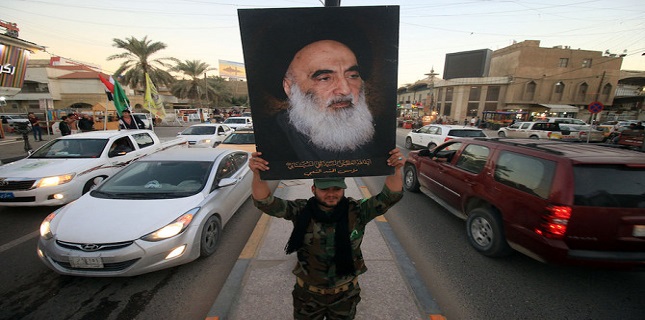
A member of the Hashed al-Shaabi (Popular Moblisation units) carries a portrait of Iraqi Shiite cleric Grand Ayatollah Ali al-Sistani in a street in the southern city of Basra on December 10, 2017, amidst victory celebrations after Baghdad declared in the war against the Islamic State (IS) group. - Baghdad declared victory in its war to expel the jihadists, three years after the group proclaimed a cross-border "caliphate" stretching into Syria, endangering Iraq's very existence. (Photo by HAIDAR MOHAMMED ALI / AFP)
Iraq’s top Shiite religious authority, Grand Ayatollah Ali al-Sistani, has reaffirmed his refusal to intervene in the selection of a candidate for prime minister, maintaining the Marja’iya’s long-standing distance from government formation.
According to information obtained by Shafaq News on Sunday, Mohammed Reza al-Sistani, the cleric’s eldest son, delivered the response to a recent message from the Coordination Framework (CF) —the Shiite alliance that recently emerged as the largest parliamentary bloc— and voiced discomfort over its repeated efforts to involve the authority.
Widely regarded as the highest religious authority for Iraq’s Shiite community, al-Sistani commands the allegiance of millions of followers who turn to him for guidance on religious, social, and political matters. An informed source previously told Shafaq News that the Framework sought guidance last month from the Najaf-based Marja’iya on government formation and potential nominees, but received no response, consistent with its long-standing refusal to engage directly with political actors.
Under Iraq’s post-2003 power-sharing arrangement, the presidency is allocated to a Kurd, the premiership to a Shiite, and the speakership to a Sunni Arab. Talks within the CF on forming the next government continue, amid public debate over a possible third term for former prime minister Nouri al-Maliki.
Must Read
Pakistan
Governor’s Rule KP: Allama Maqsood Domki Calls It a Serious Democratic Mistake
14-October،2026
Pakistan
Sipah Sahaba Commander Killed: CTD Operation Eliminates Wanted Terrorist in Bannu
14-October،2026
Pakistan
Hafez Shirazi Commemoration Karachi: Khana-e-Farhang Iran Hosts Splendid Literary Event
14-October،2026