South Africa defends naval drills with Iran, Russia as ‘essential’

WebDesk
11 January, 2026 11:05
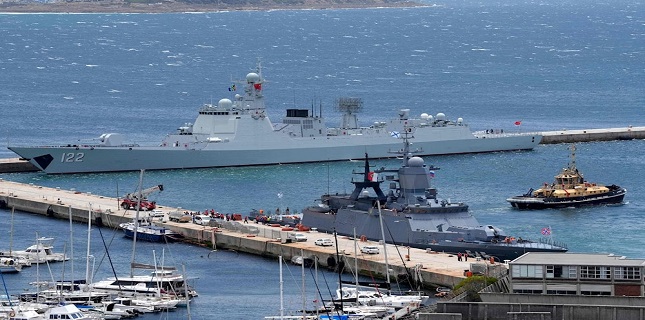
South Africa has commenced joint naval exercises with Russia, Iran, and China, framing the week-long drills as a necessary response to growing maritime instability and a demonstration of alignment among BRICS Plus countries. Dubbed “Will for Peace 2026,” the maneuvers are being held off South Africa’s southern coast and are led by China, with participation from destroyers, frigates, and corvettes from member states.
Captain Nndwakhulu Thomas Thamaha, head of South Africa’s joint task force, said during the opening ceremony that the drills go beyond showcasing military strength. “It is a demonstration of our collective resolve to work together,” he stated, emphasizing that in today’s maritime environment, such cooperation is not optional, but essential.
The BRICS bloc originally comprised Brazil, Russia, India, China, and South Africa. The group has since grown to include Iran, Saudi Arabia, the United Arab Emirates, Egypt, Ethiopia, and, most recently, Indonesia. While China and Iran deployed destroyers, Russia and the UAE sent corvettes, and South Africa contributed a Valour-class frigate. Brazil, Ethiopia, and Indonesia joined as observers.
The drills come days after the United States seized a Russian-flagged oil tanker in the North Atlantic, alleging it was transporting crude to Venezuela, Russia, and Iran in violation of Western sanctions. The move followed an American-backed operation that led to the ouster of Venezuelan President Nicolás Maduro, a close ally of Moscow. These events have sharpened tensions between Washington and several BRICS Plus members.
South African officials defended the naval drills, stating they aim to enhance regional maritime security and ensure the safety of global shipping lanes and economic activity. “The safety of our oceans and trade routes is a shared responsibility,” Thamaha said.
Western criticism and strategic autonomy
The United States has previously criticized South Africa for hosting similar exercises with Russia and China, notably in 2023 during the first anniversary of the war in Ukraine. Washington has also accused the BRICS bloc of adopting increasingly “anti-American” positions and warned of potential new tariffs on BRICS exports.
South Africa has further drawn US ire for its foreign policy stances, including its decision to bring a genocide case against “Israel” at the International Court of Justice over the war on Gaza. These moves reflect Pretoria’s growing assertion of strategic autonomy in a rapidly shifting global order.
Originally scheduled for November 2025, the drills were postponed due to a scheduling conflict with the G20 summit in Johannesburg, which the US boycotted. The resumption of the Will for Peace 2026 exercise marks the fourth time South Africa has participated in joint naval drills with Russia and China since 2019, and the first to include new BRICS Plus members.
As geopolitical alignments continue to evolve, observers see the drills as both a military cooperation initiative and a symbolic assertion of a multipolar world order.
Must Read
Pakistan
Governor’s Rule KP: Allama Maqsood Domki Calls It a Serious Democratic Mistake
14-October،2026
Pakistan
Sipah Sahaba Commander Killed: CTD Operation Eliminates Wanted Terrorist in Bannu
14-October،2026
Pakistan
Hafez Shirazi Commemoration Karachi: Khana-e-Farhang Iran Hosts Splendid Literary Event
14-October،2026