EU sanctions Syrian militias over March coastal massacres

29 May, 2025 04:01
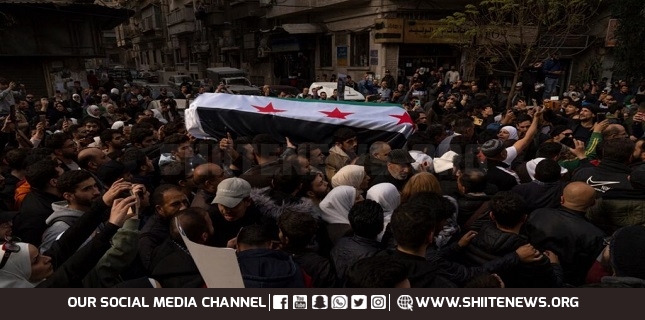
The European Union announced on Wednesday new sanctions targeting three Turkish-backed Syrian militias and two of their commanders over alleged involvement in a wave of ethnic violence that left more than 1,700 people dead in Syria’s coastal region in March.
The punitive measures were imposed on the Sultan Sulaiman Shah Brigade, the Hamza Division, and the Sultan Murad Division, groups widely viewed as Turkish proxies in occupied northern Syria. According to the EU’s official journal, the groups were responsible for “targeting civilians and especially the Alawite community, including by committing arbitrary killings.”
The violence in March reportedly focused on areas where the Alawite sect is a majority. The targeted killings further inflamed sectarian tensions in the region as the transitional authorities struggle to stabilize the war-torn country, with many even accusing the interim government of sanctioning the massacres.
Several figures sanctioned
The EU added Muhammad Hussein al-Jasim, founder of the Sultan Sulaiman Shah Brigade, and Sayf Boulad Abu Bakr, commander of the Hamza Division, to its sanctions blacklist. Abu Bakr was specifically cited for his role in “serious human rights abuses in Syria, including torture and arbitrary killings of civilians.”
This move by Brussels comes just a week after EU member states unanimously approved the lifting of all economic sanctions on Syria, excluding those tied to security concerns, which they said was in support of the country’s reconstruction following the ousting of Assad in December.
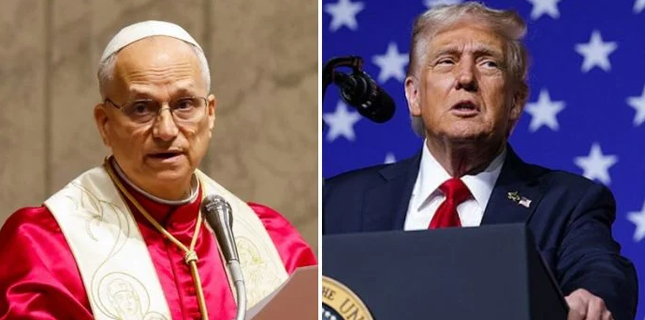
Simultaneously, US President Donald Trump announced a parallel decision to lift US sanctions, ending over a decade of diplomatic isolation against Damascus. Syria’s new leadership has been urgently calling for international relief from years of crippling economic punishment imposed since the onset of the war waged against the country.
Some sanctions remain
Despite lifting economic restrictions, EU officials had warned that individual sanctions would still be enforced against figures or factions accused of inciting ethnic strife or engaging in egregious rights violations.
The Council of the European Union approved the decision to remove the economic sanctions imposed on Syria on Wednesday. “The Council has adopted legal acts lifting all economic restrictive measures on Syria, except those based on security grounds,” the EU council said in a statement.
Last week, EU foreign policy chief Kaja Kallas stated that the bloc was lifting economic sanctions against Syria intending to assist the Syrian people in rebuilding a new, inclusive, and peaceful Syria, a move that follows US President Donald Trump’s earlier pledge during his Middle East trip to remove US sanctions from the country.
On December 8, 2024, Syria’s armed opposition took control of Damascus, leading to President Assad’s resignation and departure from the country, followed by the declaration of armed opposition leader Ahmed Al-Sharaa as transitional president in January and the formation of a new cabinet in March.
US lifts comprehensive sanctions on Syria
On May 24, the United States removed its comprehensive economic sanctions on Syria, paving the way for foreign investment and reconstruction initiatives in the wake of the fall of the Bashar al-Assad government.
The decision officially implements a move previously signaled by US President Donald Trump during his regional tour, which included discussions with Turkish and Saudi officials, as Trump characterized the sanctions as “brutal and crippling” while explaining that their elimination came in response to appeals from regional allies pushing for stability and recovery efforts in Syria following the conflict.
“Syria must continue to work towards becoming a stable country that is at peace, and today’s actions will hopefully put the country on a path to a bright, prosperous, and stable future,” the US Secretary of the Treasury said.
According to the US Treasury, the relief is contingent upon Syria preventing the use of its territory as “safe haven for terrorist organizations” and ensuring protections for ethnic and religious minorities.
Although the Trump administration’s decision has received cautious praise from some Western analysts and Arab governments, others have raised concerns over the speed of reintegration and the risks of premature economic normalization.
Must Read