US Actions Violated Islamabad MoU, Report Claims

WebDesk
11 July, 2026 13:11
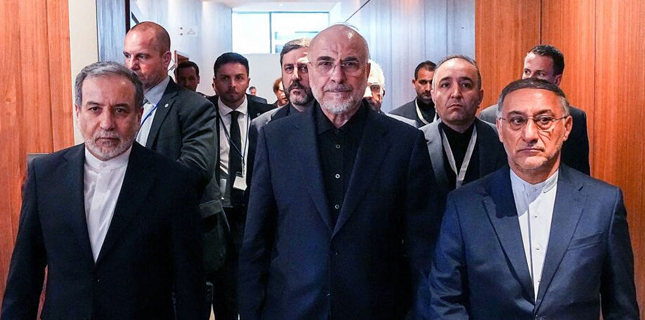
Less than three weeks after Iran and the United States signed the Islamabad memorandum of understanding (MoU) to end the war and pave the way for a comprehensive agreement, Tehran contends that Washington has violated key military, economic and security commitments under the accord, providing a legal basis for reciprocal action under the “commitment for commitment” principle.
The MoU, signed by the presidents of Iran and the United States on June 19, was designed not only to halt military confrontation and consolidate a ceasefire but also to establish reciprocal obligations in the security, economic, maritime and nuclear fields while creating a 60-day framework for negotiations toward a final agreement.
Read More: Pezeshkian, Shehbaz Sharif Discuss Regional Peace and Bilateral Cooperation
According to Iranian officials, developments over recent weeks show that the dispute has expanded beyond differing interpretations of isolated provisions and now concerns the overall implementation of the agreement.
Military aggression
Iran says the most significant US obligation under the MoU was the complete cessation of military aggression against the Islamic Republic.
The first clause states that, from the time of signing, neither side would initiate any war or military operation against the other and refrain from the threat or use of force.
Tehran argues that US military strikes on areas in southern and eastern Iran on July 8 and 9 constituted the first and most explicit violation of that commitment.
Iran’s Foreign Ministry said in separate statements that the attacks violated both the first clause of the memorandum and Article 2(4) of the United Nations Charter.
Foreign Minister Abbas Araghchi also described the strikes as clear evidence that Washington had broken its commitments under the Islamabad understanding.
Oil export waivers
Iran also says Washington has failed to uphold its economic obligations.
Under Clause 10 of the memorandum, the United States committed to issuing, immediately after the agreement was signed, the necessary authorizations for Iranian oil exports and related services, including banking transactions, insurance and shipping, and to maintain those arrangements until sanctions were lifted.
However, Tehran points to the US Treasury Department’s decision on July 7 to revoke the general license covering Iranian oil sales, allowing only a limited period for the termination of existing contracts.
The Foreign Ministry described the measure as “a flagrant violation of Clause 10,” saying Washington had not only failed to implement its commitment but had instead reversed course.
New sanctions
Iran also argues that Washington violated Clause 9 of the memorandum by imposing new sanctions.
That provision required the United States to refrain from introducing new sanctions against Iran or increasing its military presence in the region until a final agreement was reached.
Following the announcement of new US sanctions, Araghchi wrote on X that the US Treasury secretary had directly violated Clause 9.
Foreign Ministry spokesperson Esmaeil Baqaei likewise said the new US sanctions constitute a clear violation of the memorandum, adding that they showed Washington had disregarded multiple parts of the agreement within only a few weeks.
Strait of Hormuz
Another area of disagreement concerns the implementation of Clause 5, which assigns Iran responsibility for arranging the safe passage of commercial vessels and managing future maritime services in the Strait of Hormuz, while providing for consultations with Oman.
Baqaei said recent unilateral US actions in the Strait, combined with military attacks, had effectively disrupted implementation of the provision.
According to the spokesman, the movement of certain vessels outside agreed routes, coupled with US support for those activities, ran contrary to the arrangements outlined in the agreement.
Deputy Foreign Minister for Legal and International Affairs Kazem Gharibabadi also said the cancellation of the oil export waiver violated Clause 10, while US military attacks breached Clauses 1 and 2 of the agreement. He further argued that Washington had failed to fulfill its obligations under the memorandum because of the continuation of Israeli actions in Lebanon.
Tehran’s legal argument
Iranian officials describe the violations as a structural breach of the MoU, maintaining that the issue extends beyond individual incidents.
Iran argues that the memorandum was built on the principle of reciprocal obligations, meaning that implementation by one side depends on compliance by the other.
Tehran therefore maintains that US military strikes, the reinstatement of restrictions on Iranian oil exports, new sanctions and actions related to the Strait of Hormuz have not only violated Washington’s commitments but have also cast doubt over implementation of the agreement and the prospects for reaching a final settlement.
Iranian officials say that unless the United States returns to full compliance with its obligations, the recent developments risk gradually reversing progress achieved since the signing of the Islamabad Memorandum and moving the crisis back toward pre-agreement conditions.
Must Read
Pakistan
Allama Shabbir Maisami Statement: State Historical Facts But Avoid Provocation
24-October،2026