Gulf states strained by costly interceptions as stockpiles shrink

WebDesk
04 March, 2026 09:28
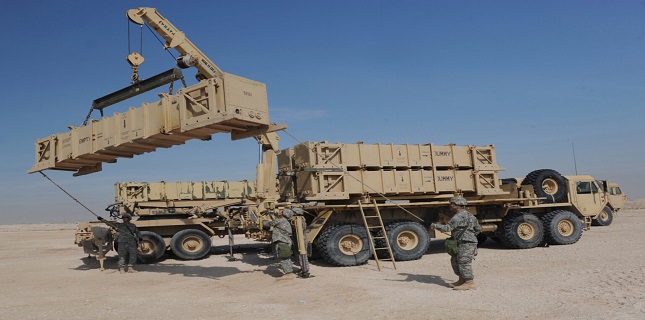
Army Patriot Launch Station operator/maintainers rom Bravo Battery, 1-43 Air Defense Artillery, hold a tag line to keep a missle canister steady during a guided-missile transporter reload certification activity at a non-disclosed Southwest Asia location, Feb. 12, 2010. (U.S. Air Force photo by Tech. Sgt. Michelle Larche)[RELEASED]
The outcome and duration of the widening war on Iran may hinge less on battlefield maneuvers and more on a stark calculation of the size of Iran’s missile and drone stockpiles versus the interceptor reserves held by the United States, “Israel”, and Gulf states, according to analyses published by The Economist and The Guardian.
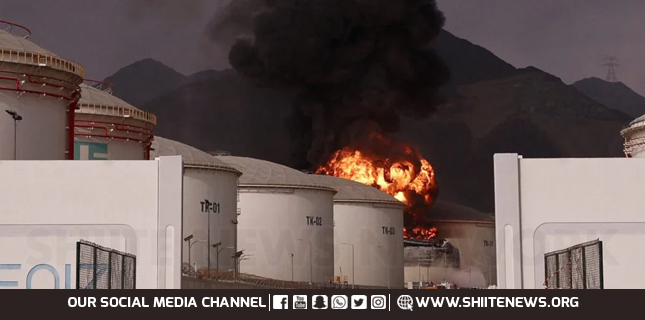
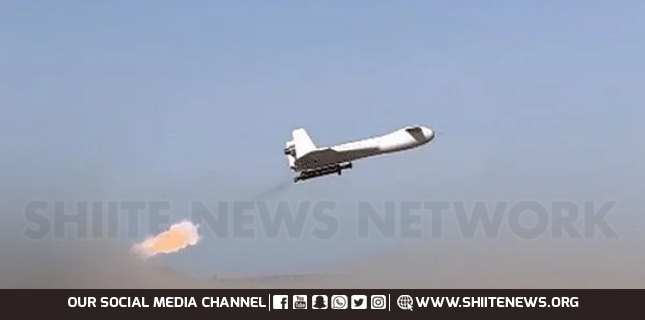
In the first three days of the current war, Iran reportedly fired hundreds of ballistic missiles and a couple of thousand one-way attack drones at Israeli targets in occupied Palestine and US military and intelligence assets in the United Arab Emirates, Bahrain, Kuwait, Qatar, Saudi Arabia, Jordan, and Iraqi Kurdistan.
By comparison, during the 1991 Gulf War, Iraq launched fewer than 100 missiles at Israeli targets and Saudi Arabia combined, The Economist noted, pointing to the scale of Iran’s early retaliatory strikes.
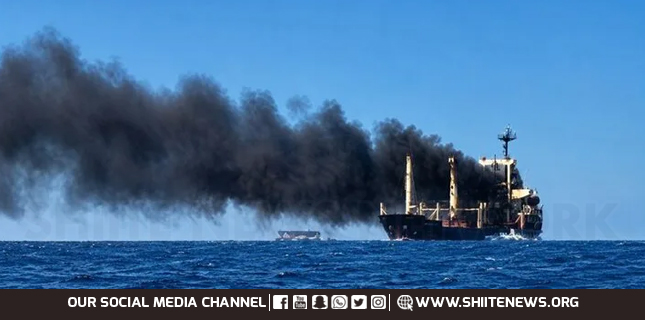
While Gulf governments insist that most incoming projectiles have been intercepted, the pace of fire has placed extraordinary strain on air defense systems. Cities such as Dubai now reportedly experience near-daily interceptions overhead.
According to The Economist, Gulf states may have expended around 800 interceptor missiles, such as the Patriot PAC-3 and THAAD, within just two days. Production capacity appears limited in comparison.
Lockheed Martin manufactures roughly 600 PAC-3 interceptors annually, while the output of THAAD systems is significantly lower. These interceptors are then distributed to multiple arenas, including the Indo-Pacific, Europe, and the US homeland.
The magazine suggests that if the pace continues, Gulf states may be forced to ration their interceptors and make difficult choices about which locations to defend.
A widening regional battlefield
The geographical spread of Iranian strikes, hitting US bases and assets in Qatar, Abu Dhabi, Kuwait, Iraq, Bahrain, and Oman, has made this the most expansive West Asia conflict since the Second World War, The Guardian reported.
Stacie Pettyjohn, director of the defense program at the Center for a New American Security in Washington, described the confrontation as “a bit of a salvo competition”, referring to the exchange of large volleys of precision-guided munitions between the US and “Israel” on one side and Iran on the other.
“The question is who has the deeper magazines of key weapons, and the big unknown is how deep Iran inventories are,” she said.
AN/TYP-2 radars destroyed
The United Arab Emirates has rejected reports suggesting it is running low on interceptors, stating that it maintains a “robust strategic stockpile of munitions” capable of sustaining extended operations. Emirati authorities reported intercepting 161 of 174 ballistic missiles launched toward the country, with the remainder falling into the sea. Of 689 Iranian drones, 645 were intercepted, alongside eight cruise missiles.
However, satellite imagery and footage shared on social media tell a starkly different story. Iran’s Islamic Revolution Guard Corps (IRGC) revealed that its forces hit and destroyed a highly prized radar system, an integral part of the THAAD anti-missile system. Satellite images published by Iranian media showed the AN/TYP-2 radar destroyed at the Al-Ruwais site. Iranian military reports also revealed that a second AN/TYP-2 radar was destroyed in the Muwaffaq Salti Air Base in Jordan. These radars are central to the early detection of ballistic missile threats and to coordinating the interception sequence.
Strategic AN/FPS-132 no more
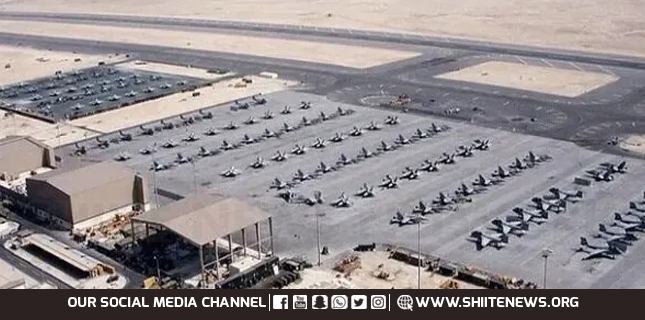
Qatar likewise reported detecting and intercepting the majority of incoming aerial threats, including the claimed downing of two Iranian fighter jets, three cruise missiles, and most ballistic missiles and drones directed at its territory. Nevertheless, Iranian forces were reportedly able to strike another strategic US military asset. At Al Udeid Air Base, an AN/FPS-132, a central pillar of the US and NATO missile defense architecture, was destroyed, as confirmed by satellite imagery from Planet and Middlebury.
The radar, estimated to cost approximately $1.1 billion, plays a critical role in long-range missile detection and early warning. Its destruction carries implications extending beyond the region, affecting the United States’ broader missile defense posture against major global powers such as China and Russia.
Gulf burns through stockpiles to defend US aggression
Kelly Grieco, a strategic and military analyst at the Stimson Center, cautioned that while precise inventory levels are unclear, Gulf states are “burning through a lot” of their defensive munitions. She warned that difficult decisions may soon be required about what assets to shield.
“The Iranians know this,” Grieco said, describing Tehran’s strategy as sustaining smaller but continuous waves of attacks to exhaust defenses over time as “death by a thousand cuts”.
Beyond the military balance, cost and production timelines will shape the conflict’s trajectory. Grieco estimates that intercepting a drone can cost up to five times more than producing one. Advanced US-made interceptors are not only expensive but also slow to replenish and in high demand globally, including in Ukraine and Taiwan.
Pettyjohn suggested that if US, Israeli, or Gulf interceptor stockpiles were significantly depleted, pressure could mount to halt offensive operations and pursue negotiations. While the United States could theoretically withdraw forces, she noted, “Israel” cannot.
Gulf states, meanwhile, are increasingly bearing the brunt of retaliatory strikes.
Must Read


Pakistan
Shia Ulema Council Reception Camp Demonstrates Shia-Sunni Unity on Eid Milad-un-Nabi
28-August،2026