‘Imran Khan is a criminal, not a political prisoner, and will not be released’: Ahsan Iqbal

10 January, 2025 18:32

Imran Khan's sister further commented that after watching the press conference of Rana Sanaullah, Imran Khan smiled and enjoyed it. "We are trying to convey every message of Imran Khan to the nation. We will not let any message be missed." She mentioned that two months ago, they had been threatened with the release of AI-generated videos, but Imran Khan remained confident, saying that they had the support of the entire nation and all of Pakistan’s social media. Aleema Khan clarified that despite being perceived as being involved in politics, they were not politically engaged. She assured that they were dedicated to Imran Khan’s release and his leadership, whether he held an official position or not. She emphasised that Imran Khan was the voice and thought of the people of Pakistan. During her conversation with journalists, Aleema Khan added, "All decisions will be made from Adiala Jail, and they are still being made. We will stay here until Imran Khan is free." She also expressed that they were not afraid of the threats they were receiving, as they believed in the protection of Allah. She also promised to ensure Imran Khan's safety and bring forward everything that was being done to him.
Federal Minister for Planning and Development Ahsan Iqbal has said that Pakistan Tehreek-e-Insaf (PTI) founder Imran Khan is not a political prisoner but a criminal, making it clear that the government would not release him, Express News reported.
He made these remarks on the issue of gifts received by the former prime minister, accusing Khan of selling them at a low price for personal gain. He also criticised the leadership of the PTI, accusing it of driving the country to the brink of economic collapse during its four years in power.
Speaking at a press conference on Friday, he expressed concern over the damaging consequences of PTI’s governance, stating that the party’s actions had plunged the country into a severe economic crisis.
He stated, “The incompetence of the PTI leadership over the past four years has pushed the nation to the edge of disaster. Today, the PTI is engaged in actions that even the extremist elements like RAW never dared to carry out in the past.”
Iqbal further criticised PTI for allegedly conspiring against the military and associating with foreign elements hostile to Pakistan, accusing the party of attempting to tarnish Pakistan’s international standing, particularly in the West.
Addressing the current economic situation, the minister assured that the federal government is taking strong measures to stabilise the economy.
He pointed out that under the current government, Pakistan’s economic outlook has improved, with reports highlighting a 30% increase in remittances this year. “After our government took over, the global perception of Pakistan’s economy has changed for the better,” he said.
The minister also mentioned the launch of the federal government’s ‘Uraan’ programme, which he described as a pivotal initiative to boost the country’s economic growth. He stressed that economic stability requires a peaceful environment, stating that no investors would come to a country plagued by unrest and chaos on its streets.
Iqbal continued his criticism of PTI, pointing out that the ruling party’s leadership had continuously sought to discredit Pakistan’s legal institutions, unlike the Pakistan Muslim League-Nawaz (PML-N), which had chosen to fight its legal battles within the country’s courts.
“We never sought to malign our country’s reputation. It is the PTI that has caused harm to Pakistan’s image,” he stated.
The minister further alleged that PTI’s leadership misused public funds, accusing former prime minister Imran Khan of funneling approximately Rs50 billion into a friend’s account, calling it a clear case of corruption. “If this is not theft, what is?” he questioned.
In conclusion, he reiterated that the federal government was focused on restoring the country’s economic health, enhancing infrastructure, and maintaining law and order to attract investment and ensure the stability of Pakistan’s future.
Must Read
Pakistan
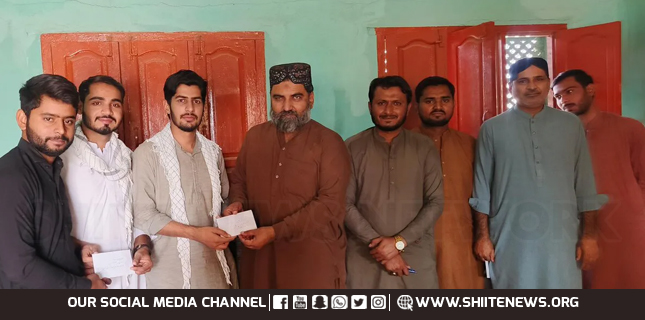
Hazrat Fatima Zahra Conference Islamabad: Academic Event Focuses on Her Life and Model of Resistance
21-October،2026