Yemen separatists ‘determined’ in independence drive after wins

WebDesk
01 January, 2026 06:33
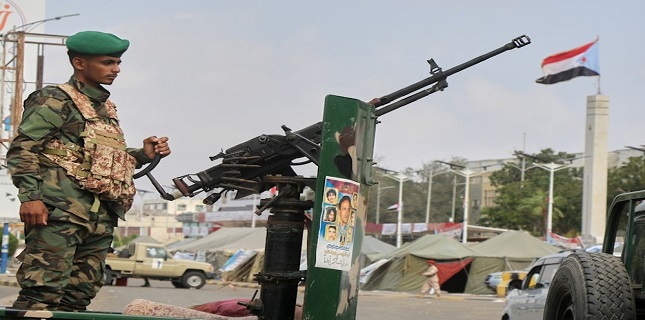
Southern Yemeni separatists have renewed calls for independence following rapid territorial advances, AFP reports.
The Southern Transitional Council (STC), powered politically and militarily by the UAE, now controls most of what was once South Yemen after a swift offensive earlier this month. The push has deepened instability in a country already reeling from more than a decade of foreign intervention and internal conflict.
Speaking to AFP, STC spokesman Anwar Al-Tamimi said recent events had strengthened southern separatist resolve.
“What happened recently has made southerners more determined — psychologically and emotionally — to restore the state,” Tamimi said in an interview conducted in Abu Dhabi.
Tamimi indicated that secession would be pursued when conditions allow, saying: “When the appropriate historical, international, and regional moment arrives will we be ready to restore our state. Whether it will be in the long term, medium term or immediately, that will depend on the circumstances.”
Coalition fractures deepen
The STC’s advance has triggered a sharp backlash from Saudi Arabia, the main sponsor of Yemen’s internationally recognized government, which has demanded separatist forces withdraw from newly seized areas, including positions near Saudi Arabia’s southern border. Riyadh has responded with air strikes on STC positions and issued warnings to Abu Dhabi over continued military involvement in the south.
Saudi officials have also accused the UAE of facilitating arms deliveries to separatist forces through southern ports, a charge that exposes the widening rift within the coalition that has waged war on Yemen since 2015. The UAE has since announced plans to withdraw remaining forces, marking a rare and public rupture between the two Gulf allies.
Proof of a failed intervention
From the perspective of Sanaa, the southern escalation confirms long-held warnings that the Saudi-led coalition was never aimed at Yemen’s unity or stability but at partitioning the country and placing its resources under foreign control.
Axis of Resistance-aligned commentators say the STC functions as a UAE proxy, tasked with securing ports, energy routes, and the strategic coastline rather than representing genuine southern self-determination. Recent Israeli media reports acknowledging coordination with STC figures, including pledges to normalize ties in the event of secession, have reinforced accusations that the separatist project is intertwined with Israeli strategic interests in Red Sea trade routes. They argue that the latest clashes expose how coalition partners are now turning on one another after years of bombing Yemen under the pretext of restoring legitimacy.
Sanaa officials have repeatedly stressed that internal Yemeni issues must be resolved without foreign military interference, framing both the Saudi-backed government and the UAE-supported STC as instruments of an externally imposed agenda. The movement has pointed to the collapse of cohesion in the anti-Sanaa camp as evidence that foreign intervention has produced only division, warlordism, and competing militias.
A reshaped battlefield
Yemen has remained in conflict since 2014, when Ansar Allah forces moved to prevent foreign-driven political domination following the collapse of a transitional process. The subsequent Saudi-led war displaced millions, devastated infrastructure, and failed to defeat resistance forces in the north.
Today, the STC controls more territory in the south than any other single faction, while Ansar Allah retains firm control over Sanaa and much of northern Yemen. Analysts say the separatists’ gains have left Saudi Arabia politically exposed, confronting the reality that its intervention has neither restored authority nor prevented Yemen’s fragmentation.
South Yemen existed as a separate state from 1967 until unification in 1990, but resistance forces argue that reviving it under foreign sponsorship would deepen Yemen’s dismemberment rather than address the root causes of the conflict.
Must Read