Yemen agrees to prisoner exchange involving nearly 3,000 detainees

24 December, 2025 02:47
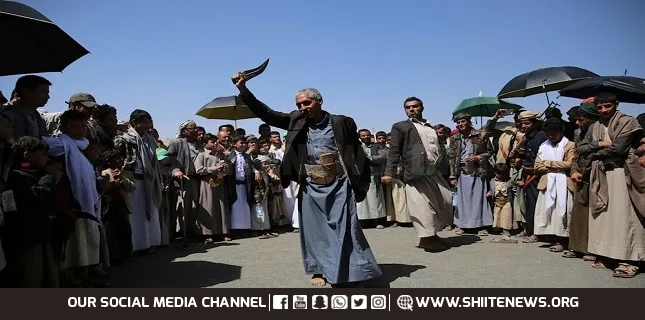
An agreement has been reached to exchange nearly 3,000 detainees held during the war on Yemen, including Yemeni, Saudi, and Sudanese prisoners. The exchange deal follows the conclusion of the tenth round of talks of the Supervisory Committee, held in the Sultanate of Oman.
The talks, which lasted 12 days, focused on implementing the detainee release agreement and resulted in consensus on a new phase of prisoner releases involving all sides to the conflict. The agreement was signed in Muscat under Omani mediation, marking a significant humanitarian development amid years of war and stalled political processes.
Oman welcomed the deal and praised the constructive atmosphere that prevailed during negotiations held between 9 and 23 December 2025. In a statement, the Omani Ministry of Foreign Affairs commended Saudi Arabia’s cooperation, as well as the efforts of the UN Special Envoy for Yemen and the International Committee of the Red Cross (ICRC).
The ministry said the agreement represents an important humanitarian step and could help open the door to addressing other outstanding issues related to the situation in Yemen.
Mohammed Abdulsalam, head of the National Negotiating Delegation, confirmed that an agreement had been reached with the Saudi side and other parties on a large-scale prisoner exchange. He said the deal includes the release of thousands of Yemeni detainees, in addition to Saudi and Sudanese prisoners, and thanked the Sultanate of Oman for its central role in facilitating and ensuring the success of the talks.
Exchange details
Further details were provided by Brigadier General Abdulqader al-Murtada, head of the National Committee for Prisoners’ Affairs, who said the agreement provides for the exchange of 1,700 Yemeni prisoners in return for 1,200 detainees held by the other parties.
Those to be released include seven Saudi nationals and 23 Sudanese. Al-Murtada also expressed appreciation to Oman for sponsoring the negotiations and hosting the discussions.
Ansar Allah had previously announced in 2023 its readiness to engage in a comprehensive prisoner exchange based on the principle of “all for all,” calling for the release of all conflict-related detainees simultaneously. The latest agreement appears to move closer to that objective in practice.
Prisoner exchanges as pillar of de-escalation
The Supervisory Committee overseeing the prisoner exchange was established under the 2018 Stockholm Agreement and is co-chaired by the United Nations and the ICRC. Its mandate includes supervising the release of all prisoners, detainees, missing persons, and forcibly disappeared individuals linked to the conflict, remaining one of the few mechanisms that has continued to function despite broader political deadlock
The December 2025 agreement represents the largest prisoner exchange since October 2020 and exceeds the scale of the April 2023 exchange, which involved 887 detainees. Together, these deals reflect a gradual trajectory of de-escalation, using humanitarian files to reduce leverage and stabilize relations between the parties.
The inclusion of Saudi and Sudanese detainees carries particular political weight. Saudi prisoners have historically been treated by Ansar Allah as high-value leverage, while Sudanese detainees reflect the legacy of Sudan’s military involvement in Yemen as part of the Saudi-led coalition.
Oman’s role has been central throughout the process. Unlike other Gulf states, Muscat did not participate in the Saudi-led coalition and has long served as a neutral venue for direct Saudi–Yemeni engagement.
The decision to sign the agreement in Muscat underscores Oman’s position as a key regional mediator and highlights the increasingly regional nature of efforts to resolve the Yemen conflict.
While major political and economic issues remain unresolved, including port access, salary payments, and a formal Saudi exit from the war, the scale and composition of the prisoner exchange are widely seen as a strong indicator that the conflict has moved away from large-scale military confrontation toward a negotiated settlement framework.
Must Read

Pakistan
Guard Changing Ceremony Held at Mazar-e-Iqbal, PAF Contingent Performs March Past
24-March،2026
Pakistan
Rise Above Sectarianism to Become Nation Dreamed by Iqbal: Allama Shehnshah Naqvi
24-March،2026
Pakistan
Pakistan Should Play Role as Guardian of Muslim Ummah’s Collective Interests: ISO
24-March،2026