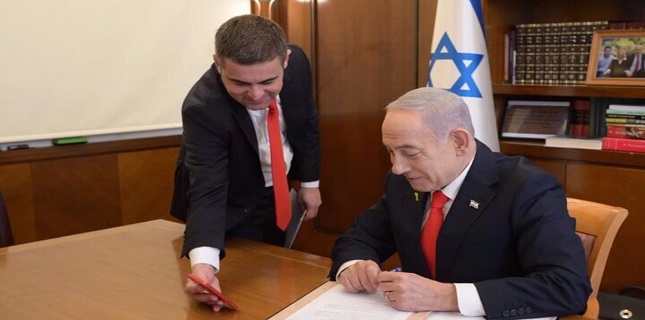
Houthis say US, UK jets hit Red Sea Al-Saleef district in Hodeidah

14 October, 2024 17:21
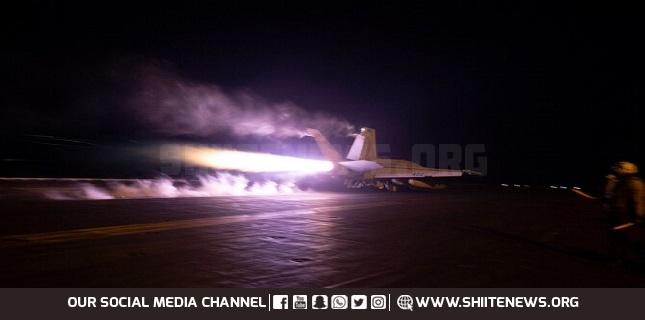
In this photo released by the US military's Central Command on January 22, 2024, US Central Command forces alongside UK Armed Forces, and with the support from Australia, Bahrain, Canada, and the Netherlands, conduct strikes on eight Houthi targets in Iranian-backed Houthi rebel-controlled areas of Yemen. The United States and Britain launched new strikes on Yemen's Huthis January 22, saying their second round of joint military action against the Iran-backed rebels was in response to continued attacks on shipping. American and British forces carried out a first wave of strikes against the rebel group on January 11, and the United States launched further air raids against missiles that Washington said were ready to launch and posed a threat to both civilian and military vessels. (Photo by Handout / US Central Command (CENTCOM) / AFP) / RESTRICTED TO EDITORIAL USE - MANDATORY CREDIT "AFP PHOTO / HANDOUT / CENTCOM " - NO MARKETING - NO ADVERTISING CAMPAIGNS - DISTRIBUTED AS A SERVICE TO CLIENTS - RESTRICTED TO EDITORIAL USE - MANDATORY CREDIT "AFP PHOTO / HANDOUT / CENTCOM " - NO MARKETING - NO ADVERTISING CAMPAIGNS - DISTRIBUTED AS A SERVICE TO CLIENTS /
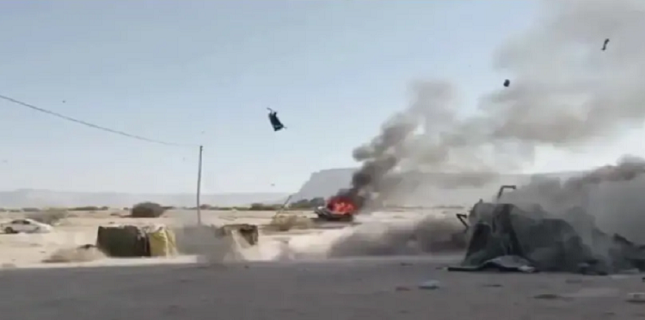
US and UK jets launched two strikes against targets in Yemen’s Houthi-held western province of Hodeidah on Monday, the Houthi-run Al-Masirah said, the latest in a series of military operations against the militia in response to attacks on civilian shipping.
The Houthis did not provide additional information about the targeted areas or whether there were any human or property losses.
The US military usually says that its strikes on Houthi areas target drone and missile launchers, as well as drone boats poised to strike ships.
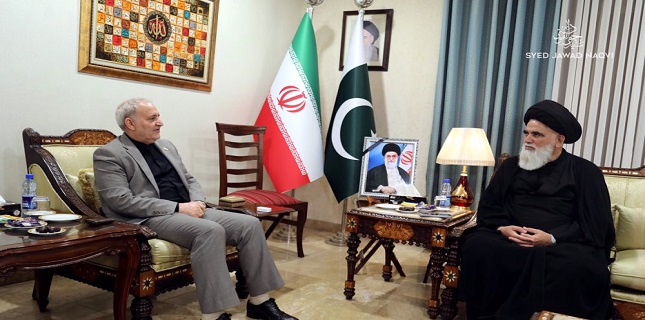
It comes as Iranian Foreign Minister Abbas Araghchi met Houthi chief negotiator Mohammed Abdul Sallam in the Omani capital on Monday, as the president of Yemen’s Presidential Leadership Council accused Tehran of orchestrating “new colonial schemes” in Yemen.
Iran’s Foreign Ministry said that Araghchi “held a meeting in Muscat” with Abdul Sallam on Monday but provided little information about the agenda.
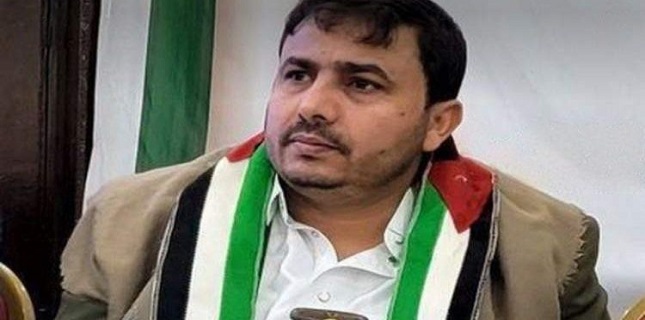
According to Houthi media, Abdul Sallam discussed ending Israel’s “aggression” against Palestinians and Lebanese, as well as “the latest developments in the region.”
Iran has long been accused of providing the Houthis with advanced weapons, media and political support, allowing the militia to seize power in Yemen a decade ago, seize new territory across the country, and fuel a war that has killed tens of thousands of Yemenis and displaced millions more.
The Houthis have recently promised to support Iran against any Israeli attacks.
The Houthis are part of the Axis of Resistance, which includes Iran-backed groups in the region, such as Lebanon’s Hezbollah, Palestine’s Hamas and Iraq’s Islamic Resistance.
Araghchi’s meeting with the Houthi official came hours after Rashad Al-Alimi, the chairman of Yemen’s Presidential Leadership Council, called on Yemenis to band together to counter Iran’s agenda in Yemen and end the Houthi coup.
Speaking on the eve of the 61st anniversary of the Oct. 14 revolution, Al-Alimi accused Iran of attempting to partition Yemen by supporting the Houthis, warning that the militia poses an “existential challenge” to the Yemeni people, their identity, and their relations with the regional and international communities.
“In the face of these extremely intertwined challenges, we have a historical responsibility to unite the republican ranks and stand firm against the new colonial schemes through which the Iranian regime seeks to confiscate our people’s will, and tear their identity and social fabric,” the Yemeni leader said.
The Yemeni leader also condemned Israeli airstrikes on Houthi-held Yemeni territory and demanded that the Houthis end their attacks on international shipping lanes and stop exploiting Yemen’s outrage over Israel’s war in Gaza.
“The enormity of Iran’s role will not cause us to ignore Israel’s extremist behavior throughout the region and condemn its repeated aggression against Yemen, its people’s capabilities and national sovereignty,” Al-Alimi said.
Following Houthi drone and missile attacks on Israeli towns, Israeli jets launched two waves of strikes against Houthi-held Hodeidah in July and September, targeting power stations, ports and fuel storage facilities.
The Houthis have been attacking ships in the Red Sea and other seas off Yemen with drones, ballistic missiles and drones since November last year in a campaign in which the Yemeni militia claims to be supporting the Palestinian people and pressuring Israel to end its war in Gaza.
The US responded to the Houthi attacks by forming marine task forces to protect ships, designating the Houthis as a terrorist organization and launching strikes on Houthi targets in Sanaa, Hodeidah and other Yemeni areas controlled by the militia.
Must Read
Palestine
Israeli judge closes case of Palestinian teen’s death in prison despite evidence of starvation
26-March،2026