Over 330,000 flee eastern DR Congo fighting into Burundi, Tanzania

WebDesk
20 January, 2026 09:00
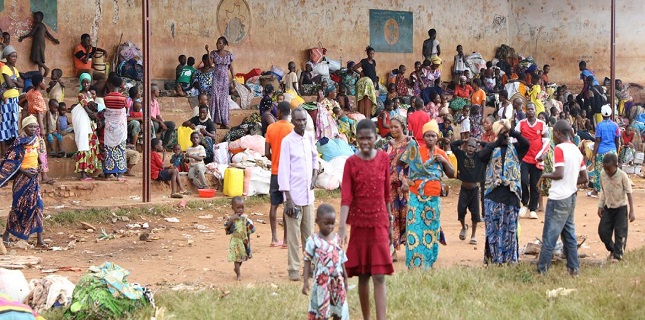
More than 330,000 people have fled the ongoing conflict in eastern Democratic Republic of the Congo (DRC), crossing into neighboring Burundi and Tanzania, according to figures cited by the Actualite news portal.
DRC Minister for Social Affairs, Humanitarian Action, and National Solidarity Eve Bazaiba said around 250,000 Congolese have sought refuge in Burundi, while Tanzania has taken in about 87,000 people, including roughly 50,000 children. The figures were reported on Monday.
Bazaiba warned that conditions in refugee camps remain dire, particularly from a public health perspective. Medical workers on the ground have detected 198 cases of cholera among Congolese refugees in Burundi, including two deaths, underscoring what the minister described as an unfavorable epidemiological situation.
Renewed fighting with the M23 movement
The mass displacement is driven by renewed fighting involving the M23 movement, which was formed in 2012 by Congolese Tutsis. In late January 2025, the group launched a large-scale offensive that sharply escalated the conflict in eastern DRC.
Between January and February, M23 fighters captured Goma and Bukavu, the provincial capitals of North and South Kivu. Fighting intensified further from March through July, triggering widespread displacement and deepening an already severe food crisis in the region.
Although a ceasefire agreement was signed on July 29, clashes continued in several areas. On December 10, M23 forces took control of the strategic city of Uvira without resistance. A week later, the group announced it would withdraw from the city at the request of the United States, but Agence France-Presse later reported that M23 police officers and intelligence personnel remained in Uvira despite the declared pullout.
DRC says Rwanda killed 1,500 civilians
The Democratic Republic of the Congo accused in early January Rwanda of directly participating in military operations in the country’s eastern provinces, alleging that more than 1,500 civilians have been killed since early December amid a renewed offensive by the M23.
In a statement issued Wednesday, Congolese authorities said the casualties resulted from coordinated attacks involving aerial and ground weapons following the collapse of a short-lived lull in fighting.
“The provisional death toll of civilian victims of Rwandan operations, which have seen the combined use of bombs and kamikaze drones… since the beginning of December, stands at more than 1,500,” the statement said.
The escalation came less than a week after Kinshasa and Kigali signed a US-brokered peace agreement on December 4, an accord hailed in Washington as a breakthrough aimed at halting cross-border hostilities in the volatile Great Lakes region. Despite the deal, M23 launched a fresh assault on December 2 and went on to capture Uvira on December 10, a strategic city in South Kivu province that links eastern Congo to Burundi.
Peace Deal Under Scrutiny
Although M23 later announced it would withdraw from Uvira, local residents and security sources reported that fighters remained in the city in civilian clothes. Both the Congolese government and Washington questioned the announcement, with US officials accusing Rwanda of breaching the peace accord that President Donald Trump had described as a “miracle”.
The humanitarian impact has been severe. According to the United Nations, more than 80,000 people have fled into Burundi, while at least 500,000 others have been internally displaced within South Kivu alone, worsening an already dire humanitarian crisis marked by food shortages, overcrowded shelters, and limited access to healthcare.
The United States has publicly criticized Rwanda’s alleged involvement. US Ambassador to the UN Mike Waltz denounced what he described as the “scale and sophistication” of Kigali’s role, accusing Rwanda of deploying up to 7,000 troops inside Congolese territory.
Rwanda has rejected accusations of backing M23, insisting that any actions taken are defensive and aimed at countering armed groups operating in eastern Congo that Kigali says are linked to perpetrators of the 1994 genocide of the Tutsis.
Must Read
Pakistan
Guard Changing Ceremony Held at Mazar-e-Iqbal, PAF Contingent Performs March Past
24-March،2026
Pakistan
Rise Above Sectarianism to Become Nation Dreamed by Iqbal: Allama Shehnshah Naqvi
24-March،2026
Pakistan
Pakistan Should Play Role as Guardian of Muslim Ummah’s Collective Interests: ISO
24-March،2026