Trump advances Saudi nuclear deal without key safeguards

WebDesk
20 February, 2026 10:58
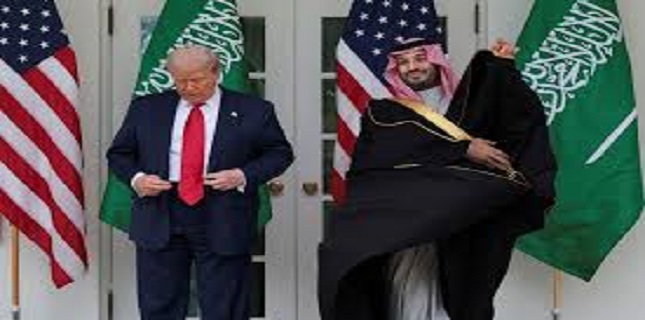
US President Donald Trump has formally notified Congress that his administration is pursuing a civil nuclear cooperation agreement with Saudi Arabia that does not include the full non-proliferation guardrails long demanded by arms control advocates and many lawmakers.
The draft accord, known as a “123 Agreement,” would anchor US companies in the Kingdom’s civilian nuclear energy sector. According to the document reviewed by Reuters, the proposal places the American industry “at the heart” of Saudi Arabia’s civil nuclear development and maintains that nuclear-proliferation safeguards are in place.
Yet the same document leaves open the possibility of Saudi involvement in uranium enrichment and spent fuel reprocessing, referring to “additional safeguards and verification measures to the most sensitive areas of potential nuclear cooperation” between Washington and Riyadh, including enrichment and reprocessing. Those capabilities, while compatible with civilian nuclear power, are also recognized pathways toward weapons development.
For years, bipartisan majorities in Congress insisted that any agreement exclude such activities and require Saudi Arabia to adopt the Additional Protocol under the International Atomic Energy Agency, granting inspectors expanded authority to conduct intrusive monitoring and snap inspections. The administration submitted a required report to Congress indicating it is not currently pursuing that framework.
Kelsey Davenport of the Arms Control Association wrote that the report “raises concerns that the Trump administration has not carefully considered the proliferation risks posed by its proposed nuclear cooperation agreement with Saudi Arabia or the precedent this agreement may set.”
Nuclear diplomacy amid global strain
The negotiations come at a volatile moment. The expiration of the last strategic arms limitation treaty between Washington and Moscow, along with China’s expanding nuclear arsenal, has intensified fears of a renewed global arms race.
In West Asia, nuclear ambitions intersect with longstanding rivalries. Saudi Crown Prince Mohammed bin Salman previously made clear how he views the regional balance of power: “If they get one, we have to get one,” he said in 2023, referring to Iran. A weapon, he added, would be necessary “for security reasons, and for balancing power in the Middle East, but we don’t want to see that.”
Such statements have amplified concerns that civilian cooperation today could become strategic leverage tomorrow.
Palestine and the regional bargain
Beyond proliferation risks, pro-Palestine critics argue the agreement cannot be separated from the broader political architecture of the region.
Under earlier US diplomatic efforts, Saudi normalization with “Israel” was widely reported to be linked to American security guarantees and civilian nuclear assistance. Riyadh publicly maintained that recognition of “Israel” would require credible steps toward Palestinian statehood.
Advocates for Palestinian rights now question whether that linkage is eroding. If Washington moves forward with nuclear cooperation independent of meaningful progress toward ending the occupation or establishing a Palestinian state, they argue it signals that Palestinian self-determination is no longer central to regional negotiations.
From this perspective, the nuclear pact is not merely a technical energy agreement. It reflects a geopolitical hierarchy in which strategic alignment against Iran and economic partnerships take precedence over Palestinian political rights.
Critics contend that advancing major security and nuclear concessions to Riyadh, particularly in the aftermath of the Gaza war, risks consolidating regional normalization while Palestinians remain under occupation and siege. Rather than generating leverage for a two-state solution, they warn, such arrangements may reduce incentives on “Israel” to alter policies in the West Bank and Gaza.
In that reading, the nuclear file becomes part of a broader realignment, one in which Gulf security assurances and Israeli integration progress, while Palestinian aspirations remain deferred.
As Congress reviews the administration’s approach, the debate is likely to extend beyond enrichment and inspection protocols. For many observers, the question is whether the US Middle East strategy can credibly claim to support Palestinian statehood while deepening strategic partnerships that appear increasingly detached from that objective.
Must Read