Allama Jawad Naqvi Warns 27th Amendment Could Trigger National Crisis

15 November, 2025 16:00
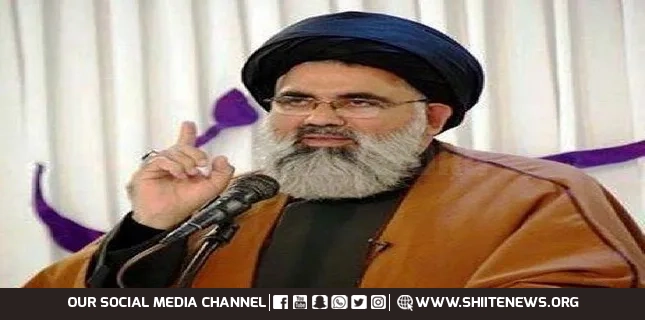
Shiite News: Addressing a gathering at Jamia Urwat-ul-Wusqa Lahore, the head of Tehreek-e-Bidari Ummat-e-Mustafa, Allama Syed Jawad Naqvi, expressed deep concern over the proposed structure of the 27th Constitutional Amendment.
He said that the agenda left incomplete after the 26th Amendment is now being fulfilled through the 27th, adding that two major components have been placed at the forefront: first, the establishment of a Constitutional Court/Constitutional Bench to prevent the Supreme Court from spending time on constitutional petitions, with its entire composition to be determined solely by the government; and second, the creation of a new post in the defence setup — the “Defence Commander” — whose powers and tenure would be granted constitutional protection.
Allama Jawad Naqvi highlighted that since such amendments require a two-thirds majority, smaller parties suddenly become decisive powerbrokers.
Giving an illustration, he said that when everyone has money but the final “five paisa” lies with one pocket, the owner of that last coin dictates his terms — and that is the day their “lottery” opens.
He warned that this is precisely where the danger begins: political bargaining, the passing of sectarian or personal-interest bills, leniencies in cases, interference in appointments and misuse of governments’ vulnerability all begin to thrive.
Referring to a recent example, he cited the controversy surrounding madrassa registration: first a registration policy was drafted under the Federal Ministry of Education, then due to political bargaining the Societies Act bill was pulled out, and finally the President, through an ordinance, offered dual pathways, creating even more ambiguity.
He further stated that the backdrop remains the same “hybrid system” or “military democracy” in which major parties divide power among themselves, numbers are calculated, and wherever the last five paisa are missing, bargaining begins, turning the entire political season into an environment of blackmail.
Concluding his address, he clarified that if this amendment is genuinely a permanent national and defence requirement, then fair enough — constitutions are meant to bind governments, and governments do not have the right to distort the constitution for political gain.
But if the amendment serves personal or party interests, temporary compulsions or political give-and-take, then it amounts to constitutional betrayal. Today’s ease, he warned, may become tomorrow’s national crisis.
Must Read
Pakistan
Key Meeting Chaired by Prime Minister Shehbaz Sharif on Middle East Situation
25-March،2026


Pakistan
Organized Propaganda Campaign Launched Against ISO, MWM, and Allama Raja Nasir Abbas
25-March،2026