Iranian President’s visit marks Shift in Iran-Pakistan Relations

28 July, 2025 04:47
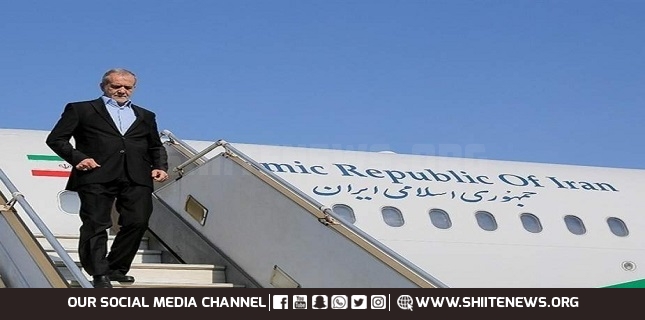
Shiite News: The proposed visit of the President of the Islamic Republic of Iran, Masoud Pezeshkian, to Pakistan, which was to take place this week, has been postponed at the request of Pakistan.
According to diplomatic sources, it was decided by mutual consent of both countries that this visit will now take place on August 2 and 3, 2025.
This visit has assumed even greater importance at a time when the 12-day war between Iran and Israel has ended and political and diplomatic alignments in the region are taking a new shape. In this context, we have reviewed the increasingly close relations between Iran and Pakistan.
Iran and Pakistan have historical, religious and cultural relations spanning more than 70 years. These relations are not only strong at the bilateral level, but both countries have always supported each other in regional and international organizations.
In recent years, there has been significant progress in cooperation in the political, defense, trade and cultural fields, and from high-level visits to border projects, the bilateral closeness has deepened.
A clear example of the intellectual and political harmony between Iran and Pakistan was seen in the recent Iran-Israel war.
The Pakistani leadership openly supported Iran. Prime Minister Shahbaz Sharif contacted the Iranian president and strongly condemned the Israeli attacks, while Defense Minister Khawaja Asif said that Pakistan would defend Iran’s interests.
He also suggested convening an emergency meeting of the Organization of Islamic Cooperation to give a collective response to Israeli aggression. This solidarity is being seen as a step towards promoting the anti-Israel ideologies of both countries and unity and resistance in the Islamic world.
After this, the Pakistani Senate passed a draft resolution declaring support for Iran against Israeli attacks.
However, these activities should not be limited to statements and resolutions. After Israel’s attacks on Iran’s nuclear facilities, Pakistan announced that it had activated its air defense system and deployed fighter jets near its nuclear facilities and its borders with Iran. Pakistan’s Defense Minister emphasized that Pakistan’s defense systems are on full alert as a precautionary measure.
Since the war between Iran and Israel broke out in June 2025, Pakistani circles have been expressing concern that Pakistan’s nuclear program and its own security could be threatened by Israel and the United States.
Due to these concerns, Pakistani officials have taken a clear stance against Israeli attacks on Iran’s nuclear facilities or any American or Israeli conspiracy to overthrow the Iranian government so that Islamabad does not become a target of these same powers in the future.
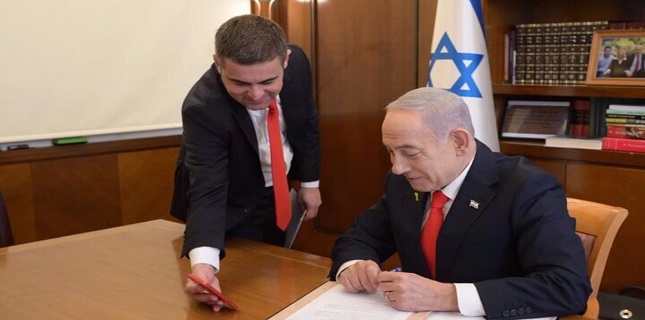
These concerns deepened when an old video clip of Israeli Prime Minister Netanyahu went viral on social media, which attracted considerable attention in Islamabad.
In this clip, Netanyahu said that Israel would not allow any Islamic country to acquire nuclear weapons. He claimed that Israel would neither allow these governments to manufacture nuclear weapons domestically nor import them from abroad. Netanyahu had said that Iran is our first target and Pakistan is the second.
A major objective behind Pakistan’s support for Iran in the war also seems to be that it wants to strengthen close relations with Iran after the war.
That is why, after the end of the war, it was decided under mutual consent of the two countries that the Iranian president would visit Islamabad to open a new chapter in relations.
Iran never forgets its friends and allies, and Pakistan has been among the few countries that openly supported Iran during the 12-day war. Now the results of the Iranian president’s visit to Pakistan are awaited.
Fida Hossein Maliki, a member of the National Security and Foreign Policy Committee of the Iranian Parliament, while discussing the importance of President Dr. Pezhakian’s visit to Islamabad, said that the Zionist regime’s continuous aggressive actions against the people of Iran, Syria and Gaza have further strengthened the alliance between Tehran and Islamabad.
According to him, during the 12-day war, Pakistan not only condemned Israel’s aggression, but also expressed its determination to stand by Iran, which is a manifestation of the close relations between the two countries.
He added that Pakistan is the only Islamic country that has nuclear power and Iran also holds a prominent position in the region, so these two major Muslim powers can jointly establish an important alliance to defend their interests at the global level.
Referring to the ongoing cooperation between Iran and Pakistan in counter-terrorism, Maliki said that last year, the two countries continued to exchange high-level military and defense delegations, including a high-level delegation led by Martyr General Mohammad Baqeri, who visited Islamabad to strengthen defense ties. The military officials of the two countries discussed joint border security and increasing defense capabilities.
He said that the leaderships of Iran and Pakistan have decided that the two countries will jointly deal with any potential threat to their interests. The recent visit of the Iranian President to Pakistan will further expand these defense and security ties.
Referring to Ayatollah Khamenei’s meeting with the Pakistani Prime Minister last year, he said that Iran considers Pakistan an important neighbor and partner.
He said that after President Peshkeshkian’s visit to Islamabad, relations between the two countries will further improve, which will be a clear message to the hostile forces that the closeness of Tehran and Islamabad can bring change in the region.
Must Read
Palestine
Israeli judge closes case of Palestinian teen’s death in prison despite evidence of starvation
26-March،2026