Shia Political Struggle in Pakistan: The Historical Journey of Leadership (Part 1)

01 May, 2025 16:01
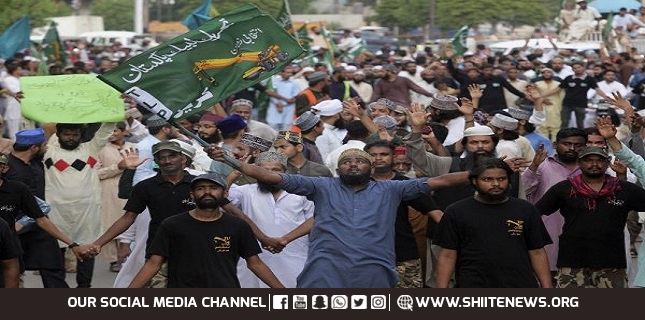
Shiite News: National platforms in Pakistan have their own history, which is not available in a compiled form at any level.
This history is not devoid of interest for many people, while familiarity with this history is also very important and mandatory for the current and future generations.
Especially for those people who are associated with the struggle at any level on national, collective platforms, they should be fully aware and familiar with this history.
If we look at the national collective platforms, many names can be included in them. At least those platforms that have been influencing a large section of the nation to some extent and a large number of people associated with them are seen.
If we look at the subcontinent, i.e. the united India, then when the Muslim League was formed in 1906, whose first head was Sir Aga Khan III, who was a Shash-Imam Shia.
Even before the establishment of the Muslim League, some associations and parties were working for the Muslims in this region, the name of Justice Amir Ali is also among those prominent, select individuals who had some activity and thought before the establishment of the Muslim League.
Although he was also included in the central leadership of the Muslim League, which was harmonious from the very beginning, while Justice Amir Ali had established the National Muhammadan Association in 1870 itself.
When its branches were established in other parts of the country, it was renamed the Central National Muhammadan Association.
He remained its secretary for twenty-five years while Nawab Amir Ali was its president. This organization was formed nine years before the establishment of the Indian National Congress, which can be gauged from his foresight.
The aim of this association was to work for the welfare and development of Muslims. It had branches in more than 36 districts across the country.
When the All India Muslim League was formed in 1906, he merged his party with it. He established a branch of the Muslim League party in England. Syed Amir Ali was elected the President of the All India Muslim League for 1910-1911.
A meeting was held in Lucknow in 1907, in which the foundation of the All India Shia Conference was laid, under which a magazine Sarfaraz was also published, in which the news, position and reports of the party were published, however, even after the establishment of Pakistan, a platform called the All Pakistan Shia Conference came into being, which was headed by Raja Ghazanfar Ali Khan.
It can be said that the All Pakistan Shia Conference was the first Shia national party or platform, after which comes the name of the Shia Rights Protection Organization of Pakistan, which was headed by Allama Mufti Jafar Hussain Qibla, while with him as Vice President was the well-known preacher and religious scholar Hafiz Kifayat Hussain.
Hafiz Kifayat Hussain also has a lot of contributions to the Khatm-e-Nabuwwat Movement, which is an acknowledged fact.
After the establishment of Pakistan, the active scholars in the Shia Rights Protection Institute of Pakistan, together with the scholars of other schools of thought, compiled and approved the famous twenty-two points, which is a historic document regarding the unity of Shia, Sunni and other schools of thought in Pakistan.
In the light of these twenty-two points, many other platforms of unity and solidarity emerged later. Along with Quaid-e-Azam Muhammad Ali Jinnah, many famous Shia personalities were among those who played an active role, however, since Quaid-e-Azam Muhammad Ali Jinnah passed away very soon after the establishment of Pakistan, his lofty thoughts, thoughts, character and ideas were also buried and dictatorship took over the country.
During this time, a tragedy occurred in the Theri area of Khairpur Sindh in 1963, in which a large number of Shia people were brutally martyred.
On the basis of this tragedy, Karachi’s religious scholar Syed Muhammad Dehlvi created a platform, which was named Majlis-e-Amal Ulema Shia Pakistan.
Under this platform, a nationwide gathering of scholars was organized in Karachi. This gathering accepted Allama Syed Muhammad Dehlvi as the leader and he was given the title of Quaid-e-Millat for the first time.
First, the leader Allama Syed Muhammad Dehlvi started visiting other important cities of the country, by that time the issue of Shia theology had come to the fore.
The issue of Shia theology was an important issue, on which the nation launched a movement, realizing the conditions, possibilities and situation of that time, and a sit-in was also held on this issue during the Bhutto era.
In other words, the series of sit-ins in Pakistan was also started by the Shia leadership. The Shia people have always been victims of oppression and prejudice by governments, due to which their natural character remains resistant and protesting.
Syed Muhammad Dehlvi’s movement for the demands of Shia religion, whose patron group and platform was Majlis-e-Amal Ulema Shia Pakistan, had three demands of Majlis-e-Amal Ulema Shia Pakistan. 1. Shia religion 2. Shia endowments and protection of mourning. Later, it was also divided into two parts, one of which was led by Justice Jamil Rizvi and the other by Mr. Mirza Yusuf Hussain.
Mirza Yusuf Hussain was accompanied by Allama Bashir Ansari Fateh Taxila, this group was also a candidate for leadership when Mufti Jafar Hussain Qibla was the leader.
Mufti Jafar Hussain Qibla was announced at a great public gathering in Bhakkar, before that, an organizational meeting was held in Gujranwala, in which consultations were held for the affairs of the Bhakkar Ijtima and the election of the leadership. Bhakkar National Convention 12 April 197
It was held on 9th, in which there was full public participation with representation from every section of thought and region of the nation.
From the establishment of Pakistan to the election of Mufti Jafar Hussain Qibla, the Jafariya nation does not seem to be rooted in any centrality or collective order.
Yes, there have been movements on various problems and issues, and some of the measures that we have mentioned have been implemented.
These include full participation in the Khatm-e-Nabuwwat Movement, speeches in meetings, twenty-two agreed points of scholars, the role of influential personalities in the movement and mourning issues regarding Shia theology, while the formation, organization, expansion or institutional (madrasa, schools, hospitals) development and progress of the collective religious and political platform of the nation is negligible.
There are a few names in the madrasas, which were established, but the number of students in them is the same as in other schools of thought, as in today’s times.
This ratio is such that the number of religious students in our country across Pakistan can be equal to the number of any of their major religious madrasas.
Thus, our nation in Pakistan could not even begin its journey in this direction, which other schools of thought had already started with their network of madrasas before the establishment of Pakistan.
It can be said that the opposing party and other schools of thought strengthened themselves through madrasas.
How strong and powerful the madrasas (especially those of Deobandi and Wahhabi thought) were made by General Zia is a separate story.
As a result of this, the atmosphere of Pakistan has become so peaceful, safe and secure that even the brothers who live in peace and security have had to face problems like hatred, prejudice and extremism, even terrorism.
Continued….
Must Read
Palestine
Israeli judge closes case of Palestinian teen’s death in prison despite evidence of starvation
26-March،2026