UAE vows $1.4T US investment despite ongoing war on Iran

WebDesk
20 March, 2026 02:08
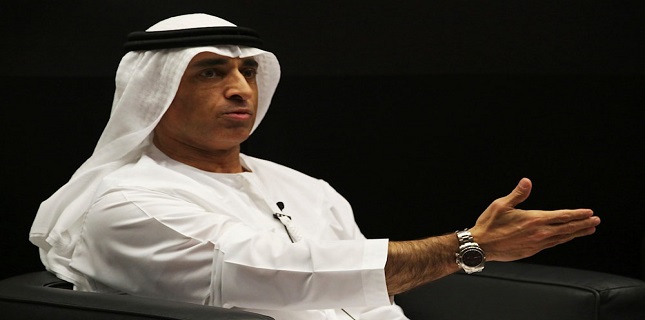
The United Arab Emirates will continue its $1.4 trillion long-term investment program with the United States, Ambassador Yousef Al Otaiba stated in a letter reported by Bloomberg.
“The UAE’s $1.4 trillion investment… will remain on track, with plans to speed up deployment and funding,” Al Otaiba added, addressing concerns that the war could strain Gulf finances or slow international projects.
Al Otaiba claimed that the UAE has faced nearly 2,000 missile and drone attacks, successfully intercepting more than 93%. He emphasized that ports, airports, and trade routes remain operational.
It is worth noting that the UAE hosts anti-missile radar systems and interceptor batteries, along with logistical infrastructure supporting both US and Israeli personnel, including facilities used for resupply and operational coordination.
Iran demands compensation from UAE over role in US strikes
Earlier today, Iran formally called on the United Arab Emirates to provide compensation for damages resulting from recent US aggression, saying Abu Dhabi facilitated aggression on Iranian territory, according to a letter submitted to the United Nations.
In a correspondence addressed to UN Secretary-General Antonio Guterres, Iran’s UN Ambassador Amir Saeid Iravani said the UAE had enabled the United States to use its territory to carry out aggression against Iran.
Tehran accuses UAE of internationally wrongful act
Iravani stated in the letter that the UAE’s actions constituted “an internationally wrongful act that entailed state responsibility,” stressing that allowing foreign forces to launch aggression from its soil violated international law.
The Iranian envoy underscored that such conduct directly contributed to the aggression against Iranian territory, holding the UAE accountable for its role in enabling the strikes. Tehran argued that the UAE bears international responsibility to provide full reparations, including compensation for both material and moral damages caused by the aggression.
The letter reflects Iran’s broader push to pursue legal and diplomatic avenues in response to US military aggression in the region, while also signaling a warning to regional states against facilitating foreign aggression targeting Iranian sovereignty.
Iran warns that it will target launch sites in Gulf
Earlier on March 14, the spokesperson for Iran’s central Khatam al-Anbiya Headquarters warned that Iranian forces may target US missile launch sites operating from locations inside cities in the UAE. Lieutenant Colonel Ebrahim Zolfaghari said the US military had resorted to operating from ports, docks, and concealed facilities within UAE cities after its military bases in the region were destroyed.
According to the Iranian official, US forces launched missiles from these locations targeting the Iranian islands of Abu Musa and Kharg. The US CENTCOM had published footage of earlier attacks from desert settings where High Mobility Artillery Rocket System (HIMARS) fired precision munitions at Iranian territory.
Although several Gulf states have publicly claimed that their territories would not be used for attacks against Iran, open-source information suggests otherwise. Flight-tracking data indicate that Saudi Arabian airspace is being used by aerial refueling tankers supporting fighter aircraft involved in strikes against Iran. The Prince Sultan Air Base in Saudi Arabia has reportedly hosted multiple Stratotanker refueling aircraft participating in these operations.
Meanwhile, the United Arab Emirates hosts anti-missile radar systems and interceptor batteries, along with logistical infrastructure supporting both US and Israeli personnel, including facilities used for resupply and operational coordination.
Must Read
Middle East
Hezbollah Denies Kuwaiti Accusations, Reaffirms Keenness on Brotherly People
20-March،2026