US says ‘Israel’, Syria agree to so-called ‘de-escalation mechanism’

WebDesk
07 January, 2026 05:09

Following two days of indirect talks brokered by Washington in Paris, “Israel” and Syria have reached a what was described as a preliminary understanding to manage military tensions through a US-supervised coordination mechanism.
In a statement released on Tuesday, a first of its kind, the US Department of State said the two sides agreed to establish a “joint fusion mechanism,” intended to ensure continuous communication and coordination. The channel is designed to handle intelligence exchanges, military de-escalation, diplomatic engagement, and commercial matters, all under direct US oversight.
“Israel and the Syrian Arab Republic … have decided to establish a joint fusion mechanism – a dedicated communication cell – to facilitate immediate and ongoing coordination on their intelligence sharing, military deescalation, diplomatic engagement, and commercial opportunities under the supervision of the United States,” the statement said.
Occupation Before De-Escalation
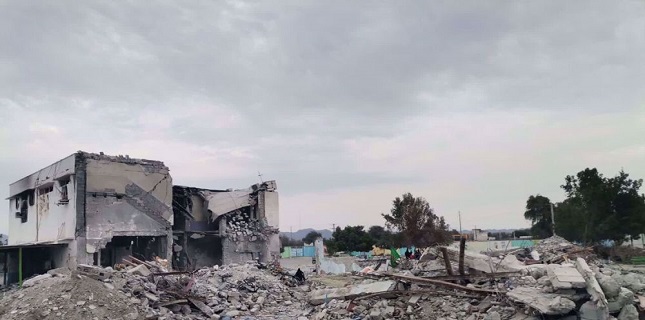
The announcement comes against the backdrop of escalating Israeli aggression in southern Syria following “Israel’s” exploitation of the security vacuum created after the fall of Bashar al-Assad in December 2024. Since then, Israeli forces have expanded their ground presence beyond previously occupied areas, carried out near-daily incursions, and launched repeated airstrikes deep inside Syrian territory, actions Damascus has denounced as violations of sovereignty and international law.
Syrian officials have made clear that technical coordination mechanisms cannot substitute for an end to occupation. A Syrian official told Reuters that progress on key political and security issues remained impossible without a binding Israeli commitment to withdraw from territory seized after Assad’s fall.
“It would not be possible to move forward on ‘strategic files’ without a clear, binding timeline for Israeli troops to quit Syrian territory,” the official said, speaking on condition of anonymity.
According to the same official, the Paris talks concluded with a US proposal to suspend Israeli military operations against Syria, an initiative aimed at containing immediate escalation while negotiations continue. Damascus views such measures as insufficient in the absence of guarantees to reverse what it describes as a creeping occupation.
“Israel’s” security establishment did not immediately respond to the Syrian position or to the US proposal.
US-brokered “coordination” is a trap; normalisation without withdrawal simply legitimises occupation
The Paris talks’ new “joint fusion mechanism,” a US-supervised communications cell to exchange intelligence, coordinate de-escalation, and open “commercial opportunities,” is being presented as a step toward stability.
In practice, it formalizes a managerial role for Washington while leaving key issues unresolved: The Israeli ongoing occupation of Mount Hermon and a campaign of hundreds of airstrikes and cross-border raids in southern Syria since the fall of the former regime.
The US proposal reportedly asks Damascus to demilitarize parts of southern Syria, freezing Syrian deployments and participating in coordination, while Israeli forces remain entrenched on the Hermon heights and beyond. Observers note that this effectively institutionalizes a creeping occupation under the guise of technical cooperation.
Under these conditions, normalization could provide the Israeli regime with diplomatic cover and operational freedom. Since December 2024, Israeli air and ground operations inside Syria have expanded significantly, often citing alleged security concerns while targeting areas deep within sovereign territory.
Critics argue a US-supervised channel risks reframing these actions as technical issues rather than violations of international law requiring accountability.
There are also reports that Israeli strategy includes political maneuvering in southern Syria, including support for Druze separatism and covert arming of local factions, which could weaken Syria’s territorial integrity.
A mechanism that freezes Syrian forces without requiring Israeli withdrawal could facilitate such fragmentation. Proposed economic initiatives in border zones, potentially financed by Gulf states, could similarly be used to advance political partition rather than reconstruction.
Entrusting the United States to supervise intelligence, military, and commercial coordination may further create a geopolitical dependency that undermines Syrian sovereignty. Observers warn that this approach favors the priorities of the stronger party, setting a precedent for third-party management of bilateral disputes.
Analysts maintain that lasting stability requires more than technical coordination: a verified Israeli withdrawal, an end to airstrikes and raids, and international guarantees respecting Syria’s territorial integrity. Without these measures, the joint fusion mechanism risks institutionalizing the very imbalance that has fueled the current crisis.
US Proposes Joint Operations Room with Syria and Israelis to Break Negotiation Deadlock: Media
The United States has put forward a new proposal aimed at reviving stalled negotiations between Syria and the Israeli regime, according to Barak Ravid, Washington correspondent for Channel 12.
During a meeting in Paris attended by Syrian and Israeli representatives, US envoy to Syria Tom Barrack outlined a plan designed to overcome the deadlock that has characterized talks over recent months.
Officials familiar with the proposal say it involves the creation of a joint operations room in Jordan, comprising the US, “Israel”, and Syria. The operations room would serve as the primary forum for ongoing discussions on demilitarizing southern Syria and the withdrawal of military forces.
Until the operations room is fully established, both sides are expected to freeze current troop deployments along the border, to “prevent unilateral actions that could escalate tensions.”
The joint operations room will reportedly handle political and military negotiations, as well as intelligence cooperation and economic discussions, with the stated goal of building confidence between the parties.
A senior US official also indicated that the border regions, particularly on the Syrian side, could be transformed into an economic zone funded by Gulf states, aiming to promote stability and development along the frontier.
No Normalization
While the talks mark an unusual channel of engagement, Syrian officials have publicly framed the process not as normalization but as an effort to halt Israeli aggression, restore territorial integrity, and reactivate existing international agreements, including the 1974 Disengagement Agreement.
For Damascus, de-escalation without withdrawal risks entrenching occupation under the cover of US-managed coordination rather than addressing the root causes of instability.
Must Read