70 companies in Lebanon to lay off employees amid financial crisis

11 December, 2019 15:44
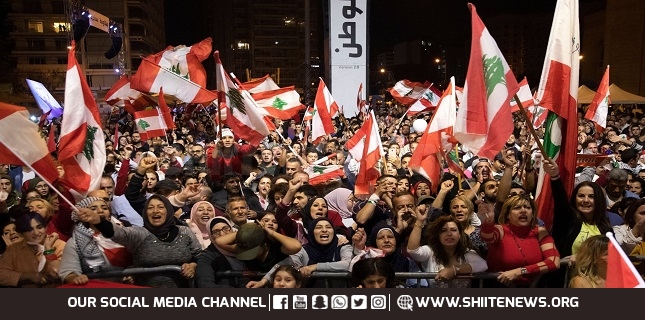
70 companies in Lebanon to lay off employees amid financial crisisLebanese Protesters shout slogans and wave their national flags as they are demonstrating in Martyr Square, Beirut, Lebanon, 24 November 2019. Protests in Lebanon are continuing since first erupted on 17 October, as protesters aim to apply pressure on the country's political leaders over what they view as a lack of progress following the resignation of Prime Minister Saad Hariri on 29 October. Protest in Lebanon, Beirut - 24 Nov 2019
Lebanese Caretaker Labor Minister Camille Abousleiman says dozens of companies in the cash-strapped Arab country are set to resort to mass dismissals very soon as they are wrangling with their own debt problems in the wake of the acute financial and economic crisis that Lebanon is going through.
“Over the past month, more than 70 institutions and companies submitted requests to the ministry for the layoff of over 1500 workers, citing the current exceptional crisis prevailing in the country. Moreover, to hundreds of workers filing complaints of arbitrary dismissal, reduction in their wages and termination of employment contracts by their employers,” Abousleiman said during a press conference in the capital Beirut on Tuesday.
He urged companies not to fire employees without further thoughts because this will cause further deterioration in the living conditions of thousands of Lebanese families.
Abousleiman added that his ministry is trying to come up with a law that protects employees amid the current exceptional crisis prevailing in the country.
The Lebanese labor minister also called for urgent measures to be taken with the Supreme Judicial Council to activate arbitration work councils.
Lebanon has been facing a very tough economic situation because of failing policies of successive governments, which have led to the impoverishment of the people.
Growth in Lebanon has plummeted in the wake of endless political deadlocks and an economic crisis in recent years.
The country hosts 1.5 million Syrian refugees, and their presence is often blamed for putting pressure on the already struggling economy
Unemployment stands at more than 20 percent, according to official figures.
The Lebanese Finance Ministry says the national debt is hovering around $85 billion, which accounts for more than 150 percent of Gross Domestic Product (GDP).
Successive governments have also failed to address a waste management crisis or improve the electricity grid, which is plagued by daily power cuts.
On October 29, then Prime Minister Sa’ad al-Hariri submitted his resignation to President Michel Aoun.
Under the constitution, Hariri’s cabinet would stay on in a caretaker capacity until a new government is formed.
The protests began on October 17, when the government proposed imposing a tax on Whatsapp calls, along with other austerity measures.
Protesters in Lebanon have stopped blocking roads and setting up barricades, and instead shifted to holding sit-ins at state-affiliated sites.
They say they will maintain pressure on the political establishment until their demands for the departure of the ruling elite and an end to chronic economic mismanagement and corruption are met.
Must Read


Middle East
IRGC hits US-Israeli pilot hideouts, drone hangers in 87th wave of reprisal attacks
31-March،2026