Most missiles used in war are a decade old; US does not dare enter Persian Gulf: IRGC spokesman

WebDesk
16 March, 2026 01:43
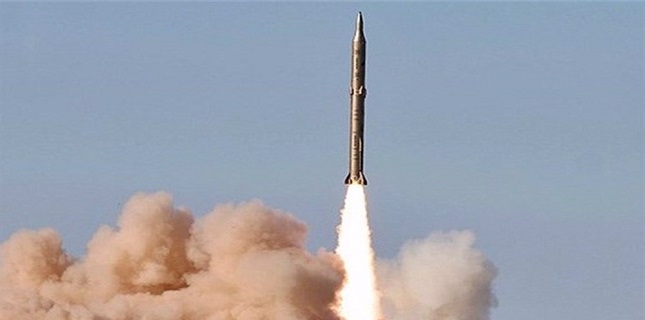
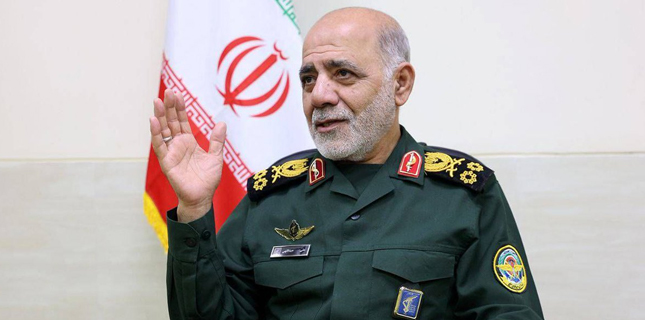
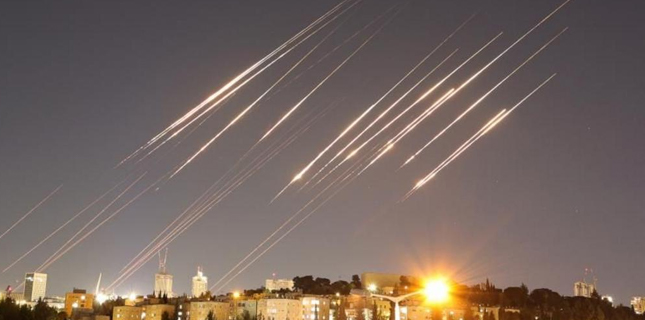
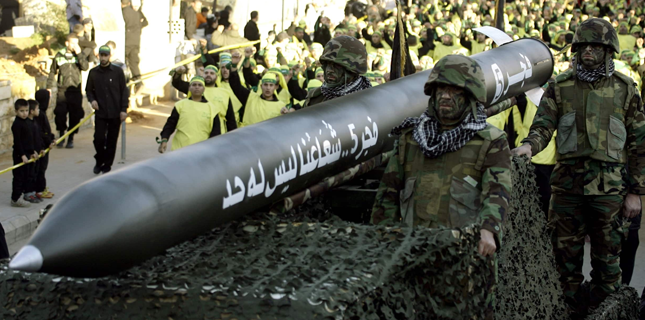
The Islamic Revolution Guard Corps (IRGC) has revealed that the majority of missiles so far launched against American and Israeli targets during Operation True Promise 4 have been manufactured approximately ten years ago, with more advanced weaponry held in reserve as the imposed war enters its third week.
IRGC Spokesman Brigadier General Ali Mohammad Naeini stated in an interview with the IRIB’s News Network that approximately 700 missiles and 3,600 drones have been fired at US and Zionist targets since the beginning of the war on February 28.
“The missiles currently used belong to a decade ago,” Naeini emphasized. “Many of the missiles we have produced since the 12-day war until the Ramadan war have not yet been deployed”.
The spokesman noted that Iran’s offensive capabilities have grown significantly since the previous war, and the full extent of its military modernization remains unseen by adversaries.
‘The US does not dare’ enter the Persian Gulf
In a warning to Washington, General Naeini declared that American naval forces lack the courage to approach the Persian Gulf, asserting that the Strait of Hormuz remains under complete Iranian control.
“If the enemy claims to have destroyed our navy, let them dare to bring their warships into the Persian Gulf,” Naeini challenged, directly addressing recent US statements about Iranian naval capabilities.
The spokesman detailed that American naval vessels have been forced to maintain a distance of 300 to 400 miles at the far end of the Gulf of Oman following cruise missile strikes by the IRGC Navy and the Army.
These vessels, he stated, likely sustained significant damage and have withdrawn for repairs, effectively removing them from operational missions.
“Following attacks by cruise missiles from the IRGC Navy and subsequently the Islamic Republic of Iran Army, they immediately withdrew from the region, likely having sustained extensive damage and departing for overhauls. They have been stripped of their operational missions”.
He further asserted that all enemy equipment, radar systems, defense installations, ammunition depots, and fighter aircraft have been targeted through electronic warfare systems, leaving US naval bases in a state of disarray.
Enemy miscalculated Iran’s collapse
General Naeini offered a detailed analysis of the fundamental miscalculations by US intelligence agencies regarding Iran’s resilience following the February 28 martyrdom of late Leader Ayatollah Seyyed Ali Khamenei.
“The Americans launched this war based on the assessment that with the martyrdom of the Leader of the Islamic Revolution, who sits at the apex of the country’s governance structure, the nation would experience political collapse, duality in governance would emerge, societal cohesion would be damaged, and the nation would suffer psychological breakdown,” Naeini explained.
According to the spokesman, US intelligence agencies anticipated a short, limited war that would not become regional, protracted, or geographically expansive.
They expected rapid internal chaos, followed by the formation of a regional and global coalition against Iran.
“From their perspective, the result would be internal upheaval, the rapid formation of chaos and sedition, and then the creation of a regional and global coalition against Iran”.
General Naeini noted that senior Iranian military commanders, including the Chief of Staff of the Armed Forces, the IRGC Commander, and members of the Supreme Defense Council, were targeted and martyred.
“Logically, the country should have suffered both political collapse and military collapse,” he acknowledged.
However, he declared that the opposite occurred. “Everything turned out opposite. After 15 days, the enemy today is in doubt, desperation, and confusion, accused of lack of planning among Zionist, Western, and American elites”.
Enemy seeks a way out
The IRGC spokesman asserted that US leadership has effectively acknowledged defeat and is now contemplating how to engage with Iran to end hostilities.
“In the first two or three days, Trump explicitly stated he was ready to finish the job and clearly articulated his motivations and goals. Now the rhetoric of the war’s architects has shifted from collapse scenarios; their internal discussions focus on how to come to terms with and communicate with the Islamic Republic,” Naeini said.
“They have admitted their failure and accepted the reality of the Islamic Republic, and are now thinking about how to interact with the Islamic Republic and end the war,” he added, asserting this is based on documentary evidence even if not publicly disclosed.
Naeini attributed the enemy’s miscalculation to a fundamental misunderstanding of Iran’s political and military structure.
“The enemies imagined that the Islamic Republic system relied on an individual structure and entered the war based on a flawed understanding of political, social, and defense power. They failed to recognize that our martyred Imam had defined the doctrine and strategy of war, and operational plans had been reviewed and approved before his martyrdom”.
General Naeini also reiterated Iran’s commitment to continued retaliation.
“The end of the war will come when the enemy believes in our military and social deterrence. We seek to punish the aggressor and will continue our heavy and destructive strikes against the enemy”.
Must Read