Iranian military advisor warns of enemy plots, urges national unity

WebDesk
02 January, 2026 04:33
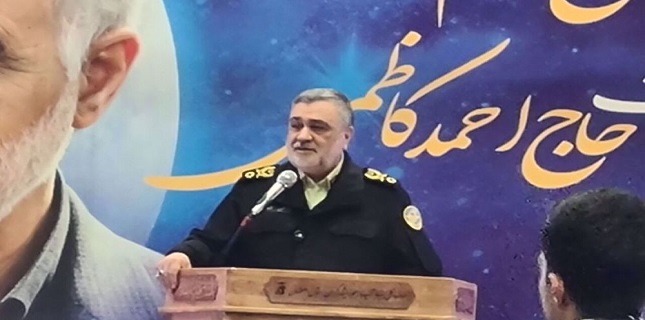
A senior advisor to the chief of staff of Iran’s armed forces has warned of enemy plots disguised under slogans such as women’s rights, emphasizing the need for vigilance, national unity, and avoiding societal divisions.
Speaking on Thursday during a ceremony marking the sixth anniversary of the martyrdom of General Qassem Soleimani in Isfahan, Brigadier General Hossein Ashtari stated that slogans like women’s rights are part of enemy efforts to sow divisions among the people.
He noted that adversaries cannot achieve their goals through military or security means and are instead seeking to create discord, highlighting the importance of officials addressing the needs of the disadvantaged and avoiding political exploitation of social issues.
“Unity and cohesion strike a blow to our enemies,” Ashtari said. “They will not succeed through military or security confrontations, and we must ensure that no rift arises among the people.”
Acknowledging the economic pressures on the people, Ashtari warned against attempts to exploit these hardships for political gain.
“There are many ways to address economic pressures, and any effort to use this as a pretext for political agendas is clearly unacceptable to our people,” he said.
Protests erupted in Iran beginning Sunday as shopkeepers in Tehran closed their businesses in response to the rial plunging to record lows against the US dollar.
Iran’s Attorney-General Mohammad Movahedi-Azad said Wednesday that peaceful economic protests are a “recognizable reality” and must be addressed through legal channels, while warning that organized attempts to exploit such protests will face decisive legal action.
Movahedi-Azad criticized unilateral and extraterritorial sanctions, noting that when such measures limit access to essential goods, medicines, financial services, and vital resources, “it is difficult to separate them from the concept of collective punishment,” which international humanitarian and human rights law reject.
The attorney-general underscored the importance of distinguishing between lawful protest and criminal behavior. “Economic pressures can lead to the formation of social demands and protests, and in this framework, peaceful economic protests must be pursued through legal channels,” he said.
He warned, however, against attempts to manipulate legitimate demands.
“Sometimes, by exploiting guided media networks, distorted narratives, and the instrumentalization of deceived individuals or elements disrupting public order, there are efforts to turn these demands into insecurity,” Movahedi-Azad said.
The judiciary, he said, has a responsibility to draw a clear line between the right to protest and criminal acts.
“Any attempt to turn economic protests into insecurity, destruction of public property, or execution of external scenarios will face legal, proportionate, and decisive reaction,” he added.
Ashtari on Thursday identified “maintaining cohesion” as a key national priority, noting that preserving the Islamic Republic is, according to the late Imam Khomeini, a paramount duty.
He praised the strategic role of the Leader of the Islamic Revolution Ayatollah Seyyed Ali Khamenei in guiding the country through crises.
“We must thank God for having a wise and far-sighted leader who has steered the ship of the Islamic Revolution through all turbulence. Undoubtedly, no one cares for the people, especially the underprivileged, as much as the Leader.”
Highlighting Iran’s history of facing plots, sanctions, and threats since the 1979 revolution, Ashtari added, “Wherever the security of the people is at stake, citizens have always stood united.”
He urged adherence to the path of the martyrs, expressing hope that the nation will successfully navigate current challenges and reach new heights without disappointing the sacrifices of its heroes.
Must Read
Pakistan
Guard Changing Ceremony Held at Mazar-e-Iqbal, PAF Contingent Performs March Past
24-March،2026
Pakistan
Rise Above Sectarianism to Become Nation Dreamed by Iqbal: Allama Shehnshah Naqvi
24-March،2026
Pakistan
Pakistan Should Play Role as Guardian of Muslim Ummah’s Collective Interests: ISO
24-March،2026