Probe: Mahsa Amini’s death caused by illness, not alleged blows

07 October, 2022 16:11
“Hamas confirms that it goes ahead with its decision to restore ties with the Syrian Arab Republic to serve the interest of the Arab and Muslim Ummah, above all the Palestinian cause, especially in light of the escalating regional and international developments concerning the Palestinian cause,” the statement read. “We look forward to the day when Syria restores its leading position in the Arab and Muslim Ummah. Hamas supports all sincere efforts aimed at restorations of peace, stability and prosperity in Syria,” it noted. Relations between Hamas and the Syrian government were downgraded in 2011 following the outbreak of foreign-sponsored conflict in the Arab country. The Palestinian Hamas resistance movement vacated its headquarters in Damascus the following year, and moved it to the Qatari capital city of Doha. Back in June, Khalil al-Hayya, a member of the Hamas political bureau and the deputy chief in the Gaza Strip, confirmed to the Lebanese al-Akhbar newspaper that a decision had been taken to “restore the relationship with Damascus” after “an internal and external discussion” involving leaders, cadres, influencers, “and even detainees inside Israeli prisons.” Hayya said “the circumstances, timing and form were discussed” and “a plan was drawn up that will be implemented with the help of allies.” The senior Hamas official added that “there is a trend towards the broader environment, which includes stakeholders, thinkers and scholars, and then the broader popular frameworks” He said that they had also raised the issue with Turkey and Qatar, two major Hamas sponsors, and neither had opposed the move.
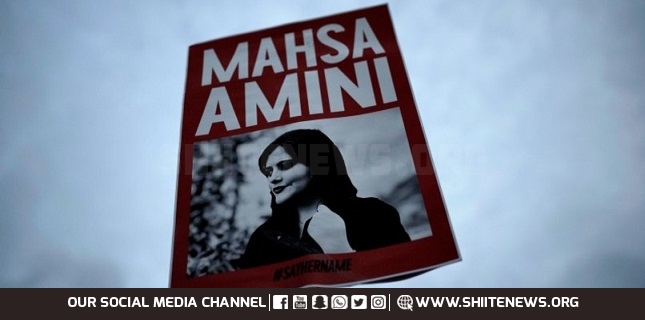
Iran’s Legal Medicine Organization has released the results of its investigation into the case of Mahsa Amini, saying that her controversial death was caused by an illness rather than alleged blows to the head or other vital body organs.
The official medical report was released on Friday, some three weeks after the 22-year-old Iranian woman fainted at a police station and was pronounced dead days later on September 16 at a Tehran hospital.
“According to hospital documents, the study of CT scans of the brain and lungs, results of physical examination of the body and an autopsy, and pathological tests, the death of the individual was not caused by blows to her head, vital organs and limbs,” said the report.
Amini had undergone a craniopharyngioma surgery at the age of eight which led to the eruption of disorders in the hypothalamus and hypophysis gland, said the report, adding that the deceased used to take hydrocortisone, levothyroxine, and desmopressin as medication.
According to the report, Amini fainted on September 13, leading to a heartbeat interruption and blood pressure decrease as her body was not able to adjust to the new conditions considering her illness.
Ineffective cardiopulmonary resuscitation in the early minutes caused severe brain hypoxia, said the report, adding that she was pronounced dead on September 16 at Kasra Hospital due to multiple organ failure despite all efforts to save her.
Protests over the death of Mahsa Amini erupted first in her native province of Kordestan and later in several cities, including the capital.
Although Iranian President Ebrahim Raeisi immediately ordered a thorough investigation into the case, the protests soon turned violent, with rioters fatally attacking policemen and indulging in vandalism against public property in several cities.
The foreign-backed violent riots have also claimed dozens of lives from both security forces and innocent people as the Western media and Persian-language news networks continue to induce riots in Iran.
‘Police made no fault’
Meanwhile, Police Chief Brigadier General Hossein Ashtari said that no fault can be attributed to police forces in the case of Mahsa Amini.
Speaking at the Friday prayers in Tehran, Ashtari voiced regret over her death but said police forces were only doing their mission according to the law and enactments of the Supreme Council of the Cultural Revolution.
He rejected any sort of beatings when Amini was taken into custody.
Referring to the riots, Ashtari said “police cannot tolerate distortion of security by a number of rioters.”
“We do not let the peace and security of people be disrupted by some individuals who have determined aims and by MKO, the Americans, and Zionists,” he added.
Enemy’s misleading narratives
The police chief also said that one of the strategies of the enemy in recent riots was to disseminate misleading narratives on the death of some individuals such as the case of 17-year-old Iranian girl Nika Shakarami.
“Those who were murdered had not been at the site of demonstrations nor were they killed by weapons used by security forces,” he said, noting that they were killed by cold weapons such as knives whereas security forces use rubber bullets.
Replacing suicide with murder
Another case of a misinformation campaign run by Western media concerns a 16-year-old girl named Sareena Esmaeilzadeh. They claimed that she was killed by security forces during protests in Karaj. Initial reports, however, indicated that she had committed suicide.
According to Hossein Fazeli, head of Alborz Province justice department, right after Esmaeilzadeh’s death was reported, related authorities went to the scene and initial investigations showed that she had thrown herself down from the roof of a five-story building.
She had once attempted suicide by consuming drugs, Fazeli said, citing the remarks made by the deceased’s mother.
The forensic report also clarifies that the cause of the death has been the multiple injuries and fractures and bleeding due to falling, added the official.
Must Read
Palestine
Israeli judge closes case of Palestinian teen’s death in prison despite evidence of starvation
26-March،2026