Pakistan PM backs Iran’s right to self-defense amid tensions

WebDesk
24 March, 2026 01:43
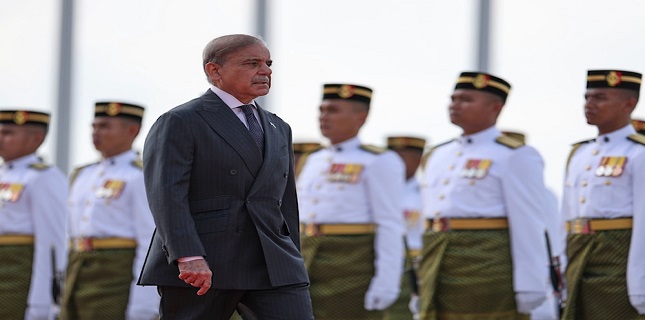
Pakistan’s Prime Minister Shehbaz Sharif affirmed his country’s support for Iran, stressing that Tehran has the legitimate right to defend itself amid the ongoing joint US-Israeli aggression on the West Asian nation.
Sharif expressed “regret over the attack on Iran and the resulting martyrdom and injury of thousands of citizens and officials,” signaling Islamabad’s concern over the humanitarian and political consequences of the confrontation.
His remarks came during a phone call with Iranian President Masoud Pezeshkian, reflecting continued high-level coordination between the two neighboring states.
Call for Islamic unity to de-escalate crisis
During the conversation, Sharif emphasized the need for collective action among Muslim-majority countries to reduce tensions and restore regional stability.
He called for coordinated diplomatic efforts, stating that Islamic nations must work together to contain escalation and prevent further deterioration of the situation.
At the same time, he reiterated that Pakistan “stands alongside” Iran, underscoring a political position aligned with Tehran’s framing of the conflict.
Strait of Hormuz cooperation highlighted
Sharif also thanked Iran for its “positive handling” of recent developments, particularly in facilitating the passage of Pakistani vessels through the Strait of Hormuz.
This acknowledgment reflects the strategic importance of maritime routes for Pakistan’s trade and energy security, especially amid heightened tensions in the Gulf.
Ensuring uninterrupted navigation through the strait remains a shared priority for regional states reliant on these critical shipping lanes.
Deep-rooted Iran–Pakistan relations
Iran and Pakistan share a long border and maintain multifaceted relations spanning security, economic, and political domains.
Their geographic proximity has necessitated ongoing coordination, particularly in areas such as border security, counter-smuggling efforts, and addressing armed group activity along shared border.
In addition to security cooperation, the two countries have pursued joint economic initiatives, including energy projects and cross-border trade development.
Must Read