Demand for Russian energy spikes as war on Iran chokes Hormuz: Peskov

WebDesk
08 March, 2026 08:56
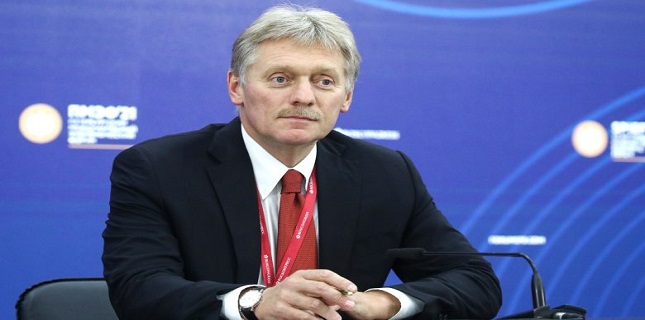
Moscow announced on Friday that the ongoing US-Israeli aggression against Iran has driven a sharp rise in demand for Russian energy, as the week-old war on Iran continues to strangle global oil and gas supplies through one of the world’s most critical maritime chokepoints.
Kremlin spokesman Dmitry Peskov told reporters that Russia has seen “a significant increase in demand” for its energy resources, and reaffirmed Moscow’s capacity to fulfil all existing contracts.
“Russia has been and remains a reliable supplier of both oil and gas, including pipeline gas and liquefied natural gas,” Peskov said.
The war on Iran, now in its seventh day, has brought shipping through the Strait of Hormuz to a near-standstill. The number of crude tankers passing through the strait has plunged by 88%, while vessels carrying liquefied petroleum gas are down 94%, according to data from analytics firm Kpler.
The disruption has forced importing nations to scramble for alternatives, pushing Russia’s position as an energy supplier back to the fore.
Washington’s waiver for India
The Kremlin’s remarks came shortly after the US Treasury issued a 30-day waiver late Thursday, allowing Indian refiners to purchase Russian crude already stranded at sea. The licence covers Russian oil loaded onto vessels before 5 March and delivered to India by Indian entities, expiring on 4 April.
Treasury Secretary Scott Bessent framed the measure as a targeted emergency response. “This deliberately short-term measure will not provide significant financial benefit to the Russian government as it only authorises transactions involving oil already stranded at sea,” he said.
Nearly 11 million barrels of Russian crude are currently on idling tankers, with close to 70% of ships anchored off the Chinese coast and in the Singapore Strait.
India’s supply crunch
India has crude reserves covering only 25 days of demand and remains highly dependent on oil imports, with a substantial portion coming from West Asia via the Strait of Hormuz. In response to the waiver, state-owned refiners Indian Oil Corporation, Bharat Petroleum, Hindustan Petroleum, and Mangalore Refinery and Petrochemicals have initiated discussions with traders to secure Russian oil for prompt delivery.
The relief may come at a cost, however. Traders are selling Russian Urals to India at a premium of $4-5 per barrel to Brent, a stark reversal from the discount of $13 per barrel seen in February.
Limited relief
Analysts caution that the waiver, while offering short-term breathing room, falls far short of a structural solution. “It may take some pressure off the market in the immediate term, but at the end of the day, with as much as 20 million barrels per day of Persian Gulf supply being lost, this is not a game changer,” said Warren Patterson, head of commodities strategy at ING Groep in Singapore.
“The only way to see more permanent pressure taken off prices is to get oil flowing through the Strait of Hormuz once again,” Patterson told Bloomberg.
Brent crude fell over 1% on Friday following the announcement, but analysts expect prices to continue rising if the Hormuz blockade is not lifted soon.
For Moscow, the crisis has presented an unexpected opportunity, repositioning Russia as an indispensable energy supplier at a moment when Western pressure had been pushing major buyers away.
Must Read