Kim Jong Un opens Ninth Congress of Workers’ Party of Korea

WebDesk
21 February, 2026 10:19
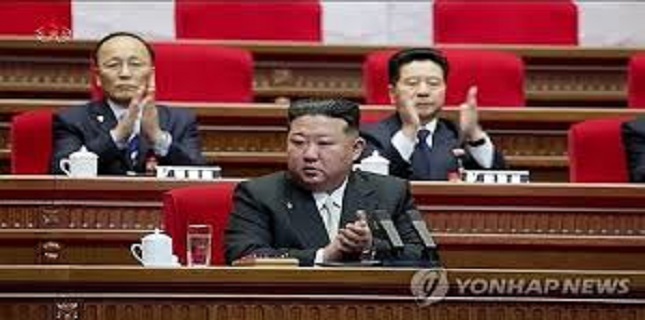
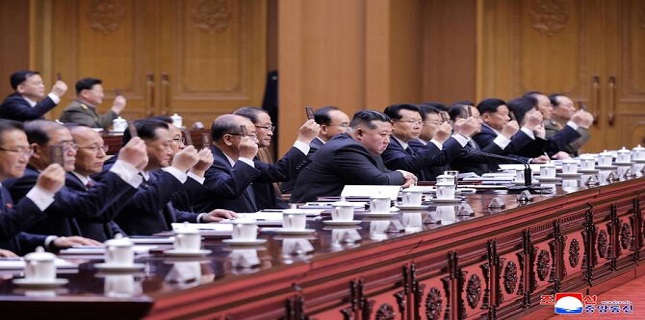
Kim Jong Un delivered the opening address at the Ninth Congress of the Workers’ Party of Korea (WPK), hailing “epochal” achievements over the past five years despite sanctions, natural disasters, and global health challenges.
In remarks published by the official Korean Central News Agency (KCNA), Kim said the period since the Eighth Party Congress marked “a proud period” in which the Party and the people brought about a decisive turn in advancing socialist construction “on the strength of solid unity.”
In the DPRK, five-year plans and Party Congresses function as central pillars of governance, formalizing major policy shifts and leadership positions. These plans extend beyond economic targets, serving as comprehensive blueprints that diagnose internal conditions while shaping strategic diplomatic and military strategy. They determine how resources are allocated and are used to protect the DPRK through self-reliance. Recent initiatives, including the “Regional Development 20×10” framework, have been embedded within these planning cycles to rapidly develop rural areas and modernize the Korean People’s Army (KPA) industrial plants.
Five-year review amid sanctions and crises
Kim acknowledged that conditions at the time of the Eighth Congress were “literally so harsh that we could hardly maintain our own existence,” citing intensified sanctions by hostile forces, successive natural calamities, and the global public health crisis, including the COVID-19 pandemic.
He noted that the country had previously fallen short of achieving the goals of its five-year national economic development strategy set at the Seventh Party Congress. However, he said the Eighth Congress had “resolutely scrapped” outdated objectives and replaced them with more scientific and realistic plans.
According to Kim, the revised strategy enabled the country to fulfill the main targets of the five-year economic plan, particularly by reinforcing key industries and modernizing technical infrastructure. He underlined that several sectors had overcome prolonged stagnation and laid the foundations for planned growth.
Consolidating state position and socialist construction
The Korean leader also pointed to strengthened national defense, progress in diplomacy, and improvements in the country’s global standing. He said the state’s external position had become “irreversible”, creating favorable conditions for accelerating socialist construction.
Kim highlighted large-scale projects aimed at transforming the capital and developing regional areas simultaneously, as well as initiatives to improve living standards. He said these efforts confirmed the “correct direction” for further proactive advancement.
The Congress, he stressed, will review the work of the eighth-term Party Central Committee, define new lines and policies for advancing socialist construction, and adopt organizational measures to strengthen Party leadership.
Addressing shortcomings, launching new long-term plan
While emphasizing achievements, Kim also acknowledged “serious shortcomings and negative elements” within Party and government organs, including defeatism, conservatism, and immaturity in leadership ability. He called for a critical review of past work and the elaboration of a scientific struggle plan for the next stage.
He said that the new long-term plan period would be crucial for implementing regional development policies and a rural revolution program aimed at fulfilling the Korean people’s aspirations.
Preparations for the Congress included the formation of a non-permanent preparatory committee, fact-finding missions across sectors, and assessments of central leadership performance. Party organizations at all levels reviewed their work and completed the election of delegates.
The Ninth Congress is attended by 5,000 delegates, including 224 members of the eighth-term central leadership and 4,776 delegates elected by Party organizations nationwide. Among them are officials from political, economic, military, scientific, educational, cultural, and media sectors, as well as field labor representatives. A total of 413 women are participating as delegates.
An additional 2,000 observers are attending the Congress.
Modernizing the KPA industry
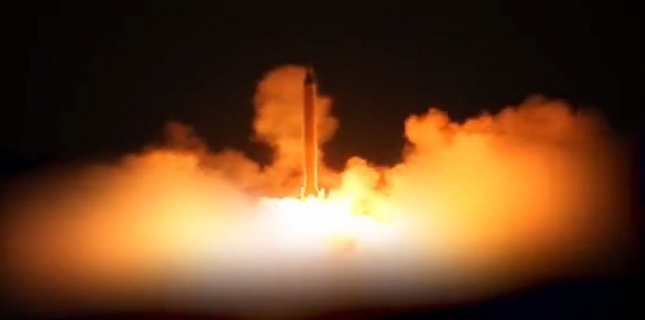
In the past five years, the DPRK accelerated the implementation of the “Five Major Tasks for Strategic Weapons” set at the Eighth Party Congress, advancing solid-fuel intercontinental ballistic missiles (ICBMs) such as the Hwasong-18 and Hwasong-19, launching its first military reconnaissance satellite Malligyong-1 in 2023, and diversifying tactical nuclear delivery systems, including the Hwasong-16-Na and the “Hero Kim Gun-ok” nuclear-capable submarine.
In 2022, Pyongyang formalized a revised nuclear doctrine permitting preemptive use. Alongside military advances, authorities reported economic stabilization despite sanctions and the pandemic, highlighting large-scale housing construction in Pyongyang’s Hwasong district, agricultural gains, industrial modernization at facilities such as the Kim Chaek Iron and Steel Complex, and the launch of the “Regional Development 20×10” initiative.
Diplomatically, the period saw deepened strategic alignment with Russia, culminating in a comprehensive partnership agreement in 2024, as well as a hardened stance toward South Korea under a newly articulated “hostile two-state” framework.
By the conclusion of the Ninth Party Congress, the WPK is expected to pursue more aggressive policies on ballistic missile production and nuclear policy, as well as expand its small and major industries development in cities and rural areas.
Must Read