Afghanistan’s hunger crisis worsened by winter, aid cuts

WebDesk
20 January, 2026 09:04
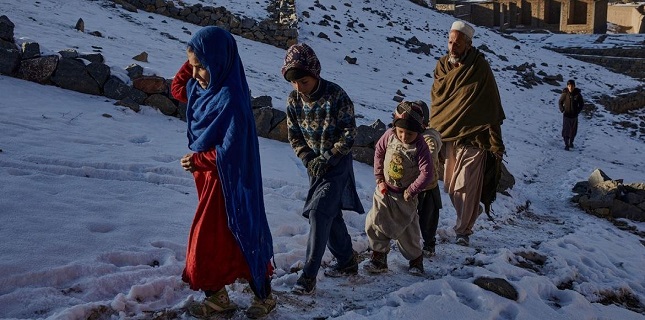
The humanitarian situation in Afghanistan is deteriorating amid a harsh winter and aid cuts. A report published by Reuters on Monday highlights different humanitarian cases suffering under the worsening hunger crisis.
In a makeshift tent on the outskirts of Kabul, Samiullah and his wife Bibi Rehana sit down to their only meal of the day, dry bread and tea, surrounded by their five children and infant grandchild. “We have reached a point where we are content with death,” said 55-year-old Samiullah, who, along with his extended family, was among the more than 2.5 million Afghans deported over the past year.
His family is surviving harsh conditions in a war-torn country, unable to recover their savings or rebuild their lives. “Day by day, things are getting worse,” he said, adding, “Whatever happens to us has happened, but at least our children’s lives should be better.”
According to the United Nations’ World Food Programme (WFP), an estimated 17 million people in Afghanistan are battling acute hunger, made worse by massive cuts to international aid and a rising population of returnees.
Aid cuts and harsh Winter leave returnees vulnerable
WFP Country Director John Aylieff said the influx of deportees, roughly a 10% increase in Afghanistan’s population, has sharply increased food insecurity. “Many of these Afghans were working in Iran and Pakistan, and they were sending back remittances,” Aylieff said.
“Those remittances were a lifeline for Afghanistan.” With that financial support gone and aid programs severely underfunded, an additional 3 million people now face acute hunger.
The WFP warns that 2026 could see an even greater crisis, with an estimated 200,000 more children projected to suffer acute malnutrition.
Winter has further strained fragile aid systems. In Bamiyan, about 180 kilometers from Kabul, food distribution centers remain overwhelmed. Though supplies like rice and palm oil are available, they remain insufficient for the growing queues of families. “I am forced to manage the winter with these supplies; sometimes we eat, sometimes we don’t,” said Zahra Ahmadi, a 50-year-old widow and mother of eight, receiving aid for the first time.
Clinics and aid sites struggle with growing demand
At the Qasaba Clinic in Kabul, the surge in patients has doubled daily cases of malnutrition, says Dr. Rabia Rahimi Yadgari. The clinic now treats around 30 malnourished children daily. Supplies are stretched thin, and many families have lost access to broader support systems.
Also mentioned in the report, Laila, 30, brings her son Abdul Rahman to the clinic regularly. “After taking the supplements, he starts to recover,” she said. “But after some time, he loses the weight again.” After her husband lost his government job following the Taliban’s takeover, the family’s income collapsed. “Life never remains the same,” she added.
Since the Taliban’s return to power in July 2021, following the withdrawal of international forces led by the United States, Afghanistan has lost access to foreign reserves and aid because of Western sanctions and asset freezes, further crippling its economy.
Iran and Pakistan accelerated deportations in 2025, citing concerns over security and limited resources. Tehran linked some deportations to accusations of espionage for “Israel”, while Islamabad blamed the Taliban for harboring armed groups.
Must Read

Pakistan
Guard Changing Ceremony Held at Mazar-e-Iqbal, PAF Contingent Performs March Past
24-March،2026
Pakistan
Rise Above Sectarianism to Become Nation Dreamed by Iqbal: Allama Shehnshah Naqvi
24-March،2026
Pakistan
Pakistan Should Play Role as Guardian of Muslim Ummah’s Collective Interests: ISO
24-March،2026