South Korea begins deployment of ‘monster’ Hyunmoo-5 missile

WebDesk
19 January, 2026 10:44
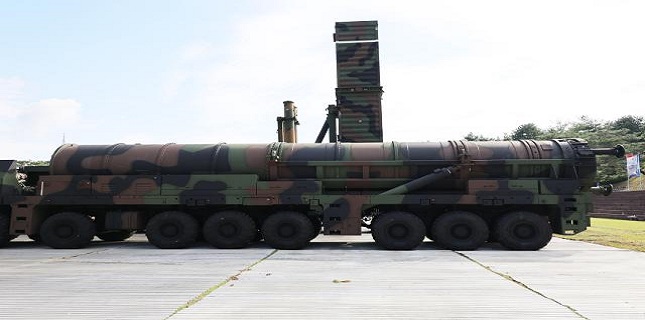
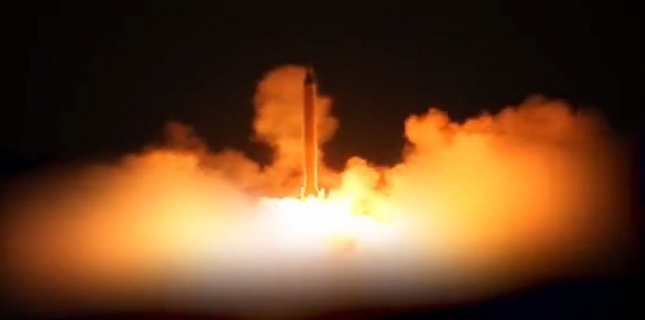
South Korea’s military has begun deploying the Hyunmoo-5 surface-to-surface ballistic missile, military sources said on Sunday, as Seoul moves to strengthen its posture against the Democratic People’s Republic of Korea’s nuclear and missile capabilities.
The Hyunmoo-5, often described by South Korean officials as a “monster” missile due to its size and destructive power, is designed to strike deeply buried underground facilities, including hardened bunkers. It forms a central pillar of South Korea’s conventional strike strategy, which aims to decapitate the DPRK’s leadership and destroy strategic facilities in the event of war.
South Korea has increasingly focused on expanding its conventional strike arsenal as it confronts Pyongyang’s advancing nuclear and conventional weapons programs, while remaining bound by its commitments under the Nuclear Non-Proliferation Treaty (NPT).
The missile is reported to carry an 8-ton penetrator warhead with a range of 600–800 km, capable of striking fortified underground targets. Analysts note that with a lighter payload, the Hyunmoo-5 could potentially extend its range up to 3,000-5,000 km, placing it within the intermediate-range ballistic missile (IRBM) category.
South Korean Defense Minister Ahn Gyu-back has repeatedly argued that bolstering conventional capabilities is essential to offset the DPRK’s nuclear capabilities. In an interview for Yonhap News Agency in October last year, Ahn said, “Since South Korea cannot possess nuclear arms as it is a signatory to the Nuclear Non-Proliferation Treaty, I firmly believe we should possess a considerable number of Hyunmoo-5 monster missiles to achieve a balance of terror.”
Ahn added at the time that mass production of the missile had already begun, with additional measures under consideration to significantly increase output.
Long-term missile buildup planned
South Korea first publicly unveiled the Hyunmoo-5 during an Armed Forces Day ceremony in 2023, though most technical details have remained classified due to the missile’s strategic sensitivity.
According to military sources, the armed forces plan to field up to hundreds of advanced missiles, including the Hyunmoo-5 and upgraded variants currently under development, as part of a broader effort to enhance long-range precision strike capabilities.
The deployment process began in late 2025 and is expected to be completed during the term of President Lee Jae Myung, which runs until June 2030.
DPRK to expand its own missile arsenal
As the ROK’s Armed Forces field its “monster” missile, Kim Jong Un, the leader of the DPRK, continues to review the development of various industrial and arms projects, including industrial plants responsible for the production of the DPRK’s new generation of short-range ballistic missiles (SRBMs).
Kim also oversaw the testing of the Hwasal series of nuclear-capable cruise missiles and the Hwasong-11E. The Hwasong-11E is equipped with a hypersonic glide vehicle (HGV), which makes the Korean People’s Army among a select few with such capabilities.
The ongoing development and deployment of these weapons, alongside South Korea’s Hyunmoo-5 program, highlights an accelerating arms race on the Korean Peninsula. The parallel buildup of missile arsenals on both sides underscores the fragile balance of power in the region, as each nation seeks to deter the other while preparing for worst-case contingencies.
Must Read

Pakistan
Guard Changing Ceremony Held at Mazar-e-Iqbal, PAF Contingent Performs March Past
24-March،2026

Pakistan
Rise Above Sectarianism to Become Nation Dreamed by Iqbal: Allama Shehnshah Naqvi
24-March،2026

Pakistan
Pakistan Should Play Role as Guardian of Muslim Ummah’s Collective Interests: ISO
24-March،2026