Bangladesh inquiry says 287 disappeared victims presumed killed

WebDesk
06 January, 2026 05:40
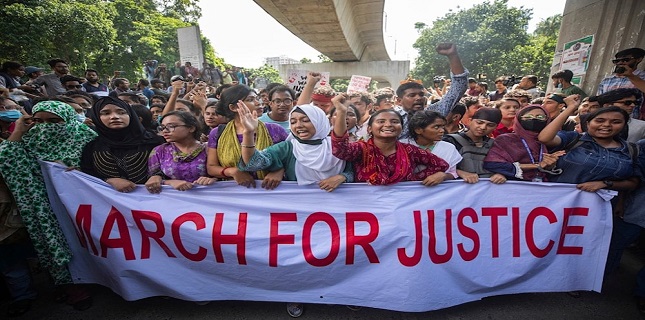
Bangladesh’s post-uprising reckoning with past abuses has deepened after a government-appointed commission concluded that hundreds of people who disappeared under the rule of former prime minister Sheikh Hasina were likely killed, pointing to systematic state violence spanning several years.
The Commission of Inquiry on Enforced Disappearances, established after Hasina was removed from power during a mass uprising in August 2024, said it examined 1,569 verified cases of abduction and secret detention. Of those, at least 287 victims are now presumed dead, according to the body’s final report, which was submitted to the government on Sunday.
Hidden graves exposed
Investigators said available evidence suggests that many victims were executed and their bodies concealed to erase traces of the crimes. Some corpses were believed to have been dumped in rivers, including the Buriganga in Dhaka, while others may have been buried in unmarked or mass graves scattered across several regions.
“We have identified a number of unmarked graves in several places where the bodies were presumably buried,” said commission member Nur Khan Liton.
Given the scale of the findings, the commission urged authorities to seek international forensic support to help identify victims and preserve evidence. “The commission has recommended that Bangladesh seek cooperation from forensic experts to identify the bodies and collect and preserve DNA samples from family members,” Liton told AFP.
The report said enforced disappearances were not isolated incidents but were carried out by security forces operating under the direction of Hasina and senior officials in her administration. It noted that many of those abducted were linked to opposition movements, particularly the Islamist Jamaat-e-Islami and the Bangladesh Nationalist Party (BNP), both of which faced sustained repression during Hasina’s tenure.
State repression
The commission’s findings align with long-standing accusations by rights groups that enforced disappearance had become a political tool, involving multiple branches of the security apparatus and intelligence services, rather than the actions of rogue elements.
Separately, law enforcement authorities have begun uncovering physical evidence tied directly to the 2024 uprising that ultimately forced Hasina from office. In December, police started exhuming a mass grave in Dhaka connected to the unrest. Criminal Investigation Department (CID) chief Md Sibgat Ullah said at least eight bodies were recovered from the site. “Bodies all found with bullet wounds,” he said.
The disappearances investigated by the commission span multiple years, while the mass grave exhumations relate specifically to the violent suppression of protests in mid-2024. During that period, security forces launched a crackdown as demonstrations over economic grievances evolved into a nationwide uprising.
Deadly reckoning
The United Nations has said that up to 1,400 people were killed during the July-August 2024 crackdown alone, underscoring the scale of violence used as Hasina attempted to cling to power.
In November, Hasina was sentenced to death in absentia for crimes against humanity in connection with the suppression of the uprising, marking one of the most dramatic legal turns in Bangladesh’s political history.
For families of the victims, the commission’s work has brought both confirmation and renewed demands for justice. “We are grateful for finally being able to know where our brother is buried,” said Mohamed Nabil, whose 28-year-old sibling Sohel Rana was identified among the dead recovered in Dhaka.
“But we demand a swift trial for the police officials who shot at the people during the uprising,” he added.
Must Read
Pakistan
Pakistan Defense Minister Khawaja Asif Tweet Triggers Strong Reactions in Israel
10-April،2026