South Korea to boost ties with China, hails its role in regional peace

WebDesk
02 January, 2026 04:56
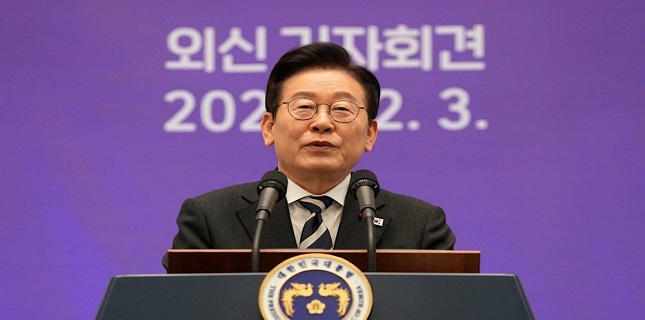
The South Korean presidency announced on Sunday that President Lee Jae-myung will focus on enhancing diplomatic efforts with China during his upcoming visit to Beijing, with peace on the Korean Peninsula at the top of the agenda.
According to presidential statements, Seoul views Beijing as a key player in regional stability. President Lee emphasized the importance of China’s role in advancing relations in a way that supports peace and cooperation on the peninsula.
The visit, scheduled for Sunday, comes as both countries work to finalize a series of memorandums of understanding in the fields of economy and industry. The South Korean presidency confirmed that these agreements aim to deepen bilateral ties and economic coordination between Seoul and Beijing.
In addition, South Korea is seeking to strengthen cultural exchange with China and improve diplomatic relations with both China and Japan. The presidency noted that Seoul is working to enhance consensus with Beijing on mutual cultural interests and broader regional cooperation.
Enhancing regional cooperation
President Lee’s visit signals a renewed diplomatic effort by Seoul to engage key regional powers amid ongoing tensions in East Asia, with a focus on multilateral cooperation and long-term peace initiatives.
In a related context, Seoul is reviewing the possibility of formally lifting a set of unilateral sanctions imposed on the Democratic People’s Republic of Korea (DPRK) in 2010, effectively acknowledging that the measures have lost much of their relevance more than a decade after being introduced.
According to the Yonhap News Agency, the review was confirmed by the Ministry of Unification, which said it would undertake a comprehensive assessment of the sanctions package adopted under former president Lee Myung-bak.
The sanctions, known as the “May 24 measures,” suspended most trade and economic cooperation with the DPRK, banned new investment, and imposed sweeping restrictions on inter-Korean exchanges. Seoul implemented the measures following the sinking of the South Korean naval vessel ROKS Cheonan in March 2010, an incident the South Korean government attributed to a DPRK torpedo attack.
Pyongyang, however, has consistently rejected that accusation, denouncing the Cheonan case as a politically driven fabrication used to justify confrontation and halt inter-Korean cooperation.
Must Read

Pakistan
Guard Changing Ceremony Held at Mazar-e-Iqbal, PAF Contingent Performs March Past
24-March،2026

Pakistan
Rise Above Sectarianism to Become Nation Dreamed by Iqbal: Allama Shehnshah Naqvi
24-March،2026
Pakistan
Pakistan Should Play Role as Guardian of Muslim Ummah’s Collective Interests: ISO
24-March،2026