Thailand releases 18 Cambodian POWs under border ceasefire

WebDesk
01 January, 2026 06:52
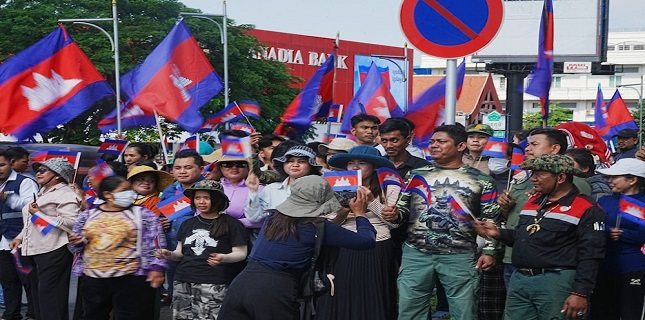
Thailand on Wednesday released 18 Cambodian prisoners of war who had been held for five months, fulfilling a key provision of a ceasefire agreement aimed at ending weeks of intense fighting along the Thai-Cambodian border.
The soldiers were freed at the same border checkpoint between Thailand’s Chanthaburi province and Cambodia’s Pailin province, where the ceasefire was signed on Saturday by the two countries’ defense ministers.
In a statement, Thailand’s Ministry of Foreign Affairs said the repatriation was carried out “as a demonstration of goodwill and confidence-building, as well as in adherence to international humanitarian principles.”
Cambodia’s Ministry of National Defense welcomed the move, saying it would help create conditions for peace, stability, and the normalization of relations between the two neighbors after months of hostilities driven by competing territorial claims.
POW release marks key step in ceasefire implementation
Thailand has maintained that the detention of the soldiers was permitted under the Geneva Conventions, which allow prisoners of war to be held until the end of hostilities. Thai authorities said the detainees were granted access to visits by the International Committee of the Red Cross and other protections under international law.
The issue of the detained soldiers had become a major point of contention, with Cambodian officials using it to mobilize domestic support during the standoff. In a statement on Wednesday, Cambodia’s Defense Ministry said the government had honored its pledge to families that “no soldier would be left behind.”
The freed soldiers were flown from western Cambodia to the capital, Phnom Penh, where they were greeted by emotional family members at the city’s old airport. They were later taken for a private meeting with Prime Minister Hun Manet, as crowds outside the airport waved flags and cheered their return.
Thailand needs to assess security
Under the ceasefire terms, the prisoners were to be released if fighting remained halted for 72 hours after the agreement took effect at noon on Saturday. While that period elapsed on Tuesday, Thai authorities said additional time was needed to assess security conditions, citing alleged Cambodian drone activity along the border.
The soldiers were captured in late July under disputed circumstances. Cambodian officials said the troops approached Thai positions peacefully after fighting subsided, while Thai authorities claimed the soldiers entered territory Thailand considers its own with hostile intent. Two of the original 20 detainees were repatriated earlier for medical reasons.
The initial ceasefire was brokered by Malaysia and reinforced through pressure from US President Donald Trump, who warned that trade privileges could be withheld unless both sides agreed. Despite subsequent agreements, sporadic violence continued, escalating into heavy clashes in early December.
Thai officials say at least 26 Thai soldiers and one civilian were killed in the fighting since December 7, along with 44 civilian deaths.
Ceasefire deal struck
Thailand and Cambodia have signed a ceasefire agreement to end nearly three weeks of deadly fighting along their shared frontier, marking the most serious escalation in the Thailand-Cambodia border conflict in recent years.
“Both sides agree to maintain current troop deployments without further movement,” the two countries’ defense ministers said in a joint statement on Saturday. The agreement took effect at noon local time and was shared publicly by Cambodia’s Defense Ministry.
The ceasefire ends 20 days of clashes that involved fighter jet sorties, rocket fire, and heavy artillery exchanges. The violence left at least 101 people dead and displaced more than half a million across both countries.
ASEAN to monitor border truce
The ceasefire agreement stipulates that an observer team from the Association of Southeast Asian Nations (ASEAN) will monitor compliance, and additional coordination will be carried out directly between defense ministers and military chiefs.
Both sides also committed to ensuring the safety of civilians and agreed to facilitate the return of displaced populations. Thailand will return 18 Cambodian soldiers held since the July clashes if the ceasefire holds for 72 hours.
Tensions escalated in July after five days of clashes left 48 dead and displaced more than 300,000. That ceasefire, mediated by US President Donald Trump and Malaysian Prime Minister Anwar Ibrahim, collapsed in early December.
Renewed fighting then spread from the forested northern border near Laos to coastal areas along the Gulf of Thailand. Despite efforts by Trump and Anwar, neither leader was able to secure another ceasefire until regional diplomats convened again in late December.
Must Read
Pakistan
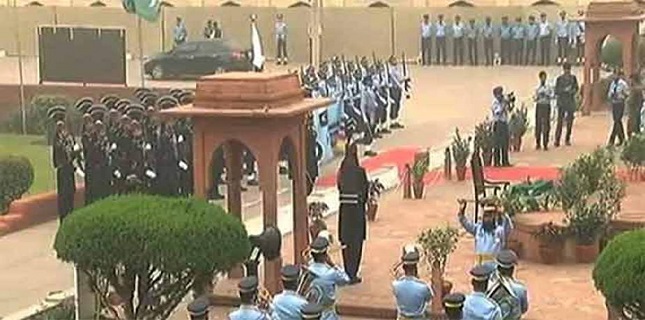
Guard Changing Ceremony Held at Mazar-e-Iqbal, PAF Contingent Performs March Past
24-March،2026
Pakistan
Rise Above Sectarianism to Become Nation Dreamed by Iqbal: Allama Shehnshah Naqvi
24-March،2026
Pakistan
Pakistan Should Play Role as Guardian of Muslim Ummah’s Collective Interests: ISO
24-March،2026