China builds secret EUV chip machine in AI tech race: Reuters

19 December, 2025 04:38
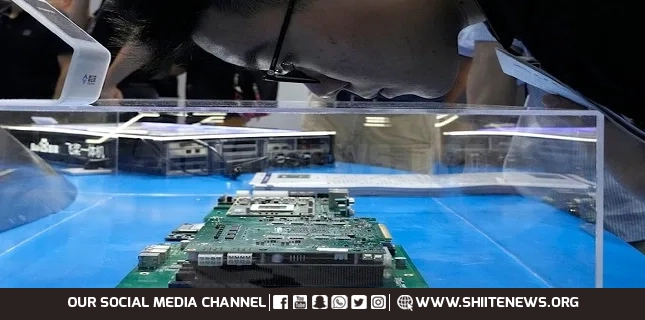
In a secure laboratory in Shenzhen, Chinese scientists have built a prototype machine central to the China AI chip program, one capable of generating extreme ultraviolet (EUV) light, a technology until now monopolized by the West.
Developed by former engineers from Dutch chipmaker ASML, the machine reportedly reverse-engineers the company’s proprietary EUV lithography system, according to multiple sources familiar with the project, who told Reuters.
While the machine has not yet produced working chips, it is successfully generating EUV light, a foundational step in producing the most advanced semiconductors powering AI, smartphones, and weapons.
A Manhattan Project for semiconductors
The prototype, completed in early 2025, represents a major milestone in China’s six-year effort to achieve semiconductor independence, a central priority under President Xi Jinping.
Reuters writes that the initiative is led by Xi’s confidant Ding Xuexiang, and involves coordination between Huawei, state research institutes, and a web of engineering talent, including Chinese-born former ASML employees. Sources described the effort to Reuters as China’s Manhattan Project for semiconductors.
“The aim is for China to eventually be able to make advanced chips on machines that are entirely China-made,” said one source. “China wants the United States 100% kicked out of its supply chains.”
Huawei’s deep role and extreme secrecy
Reuters states that Huawei plays a pivotal role in every stage of the project, from chip design to fabrication and integration. Some of its scientists reportedly sleep on-site in secure facilities, with limited phone access and compartmentalized knowledge of the broader program.
CEO Ren Zhengfei is said to personally brief Chinese leaders on progress. Employees working on sensitive components are filmed at their workstations and incentivized through bonuses when they successfully reverse-engineer machine parts.
Huawei declined to comment, and Chinese authorities did not respond to requests for clarification.
Export controls, reverse-engineering, and espionage concerns
Since 2018, the United States has pressured the Netherlands to block ASML’s sale of EUV systems to China. The Biden administration expanded those restrictions in 2022 to include deep ultraviolet (DUV) machines.
Despite these measures, China has acquired parts through secondary markets, recruited ASML engineers, and sourced components from companies like Canon, Nikon, and German optics maker Carl Zeiss AG, sometimes through third-party intermediaries.
A 2019 ASML lawsuit alleging trade secret theft led to an $845 million judgment, though enforcement in China remains limited.
What’s next for China’s semiconductor goals?
Chinese officials have reportedly set a goal to produce working chips on the domestic EUV prototype by 2028, with more realistic timelines suggesting 2030. Even with the prototype operational, Reuters states that China still lags in critical areas such as precision optics.
Still, Reuters cites analysts in saying China has closed the gap faster than anticipated. The Changchun Institute of Optics achieved a key breakthrough in integrating EUV light into the machine’s system. Meanwhile, hundreds of young engineers are focused on reverse-engineering both EUV and DUV systems.
“China has the advantage that commercial EUV now exists, so they aren’t starting from zero,” said analyst Jeff Koch.
China cracking the EUV Monopoly
China’s reported success in generating EUV light is a strategic breakthrough: if it leads to domestically built EUV lithography, it will shatter the West’s technical monopoly (ASML-led equipment and US export controls), accelerate Chinese chip self-sufficiency, and siphon global market share from Western suppliers.
That shift would erode the effectiveness of sanctions and export controls as policy tools, bolster Beijing’s economic scale in critical high-tech supply chains, and translate into greater geopolitical leverage, power to set standards, reward partners, and undercut allied industrial influence.
Even if technical gaps remain, the rapid pace of progress forces Western governments and firms to choose between urgent industrial revitalization and a long-term loss of technological and political dominance.
Must Read

Pakistan
Guard Changing Ceremony Held at Mazar-e-Iqbal, PAF Contingent Performs March Past
24-March،2026
Pakistan
Rise Above Sectarianism to Become Nation Dreamed by Iqbal: Allama Shehnshah Naqvi
24-March،2026
Pakistan
Pakistan Should Play Role as Guardian of Muslim Ummah’s Collective Interests: ISO
24-March،2026