Obituary: Dr. Ali Larijani, a man for all seasons who served Islamic Republic until last breath

WebDesk
18 March, 2026 01:25
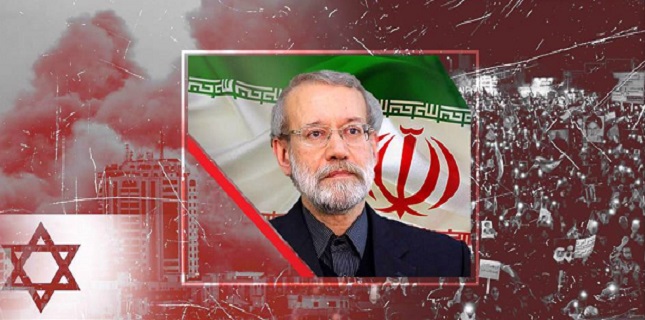
Dr. Ali Larijani, a seasoned statesman, philosopher and political strategist of the Islamic Republic of Iran, attained martyrdom late on Monday in an American-Israeli act of aggression.
The news was announced on Tuesday evening by the Supreme National Security Council (SNSC), which he headed since August last year.
His young son, Mortaza Larijani, the SNSC deputy for security, Alireza Bayat, and a number of their bodyguards were also martyred in the same attack, which came 18 days after the US and the Israeli regime launched an unprovoked aggression against the Islamic Republic.
The SNSC described martyrdom as Dr. Larijani’s “long-held dream,” attained following a lifelong struggle aimed at the advancement of the country and its Islamic Revolution.
His security leadership during the ongoing Israeli-American war of aggression against the Islamic Republic was widely commended and played a key role in inflicting heavy military and economic costs on the enemy.
Top Iranian officials, including President Masoud Pezeshkian, Parliament Speaker Mohammad Baqer Qalibaf, and Judiciary Chief Mohseni Ejei, condoled the martyrdom of Dr. Larijani and vowed to avenge his blood.
Which positions did Dr. Larijani hold?
Ali Larijani, one of the most seasoned figures in the Islamic Republic’s political and security establishment, was appointed secretary of Iran’s Supreme National Security Council (SNSC) in August 2025, a role he previously held nearly two decades ago.
An appointment decree by President Masoud Pezeshkian emphasized Larijani’s role in “prudent and precise oversight,” fostering synergy among institutions, and monitoring emerging technological threats while adopting “intelligent, people-centered approaches.”
Larijani replaced General Ali Akbar Ahmadian, who had held the post since 2023, in a major and important reshuffle following the 12-day Israeli-American aggression against Iran.
He was born in 1958 in the holy city of Najaf, Iraq, to Iranian parents from a prominent religious family. His father, Ayatollah Mirza Hashem Amoli, was a distinguished cleric who moved to Najaf in 1931 due to persecution by the Pahlavi dictator Reza Shah but returned to Iran in 1961 when Larijani was three years old.
His academic journey reflected his intellectual depth and philosophical orientation.
He initially studied mathematics and computer science, earning a bachelor’s degree from Sharif University of Technology. However, after consulting with renowned Islamic scholar Martyr Morteza Motahhari, who later became his father-in-law, Larijani shifted to Western philosophy for his graduate studies.
He completed both his master’s degree and PhD in philosophy at the University of Tehran, with his doctoral dissertation focusing on the 18th-century German philosopher Immanuel Kant.
A multi-faceted personality
Larijani had a formidable résumé spanning media, legislature, and national security.
He began his career in the Islamic Revolution Guards Corps (IRGC), rising to the level of deputy commander during his decade of service in the 1980s amid the imposed war.
He later gained prominence during his decade-long stewardship of the national broadcaster Islamic Republic of Iran Broadcasting (IRIB) from 1994 to 2004, a period remembered by many for expanding domestic programming.
In August 2005, President Mahmoud Ahmadinejad appointed Larijani as Secretary of the SNSC, replacing Hassan Rouhani, who later became Iran’s president.
In this role, Larijani also served as Iran’s chief nuclear negotiator, managing the country’s most sensitive foreign policy portfolio during a critical period of international tensions.
Under his leadership, Iran resumed uranium enrichment activities, which led to its referral to the UN Security Council by the International Atomic Energy Agency in 2006 and the subsequent imposition of illegal and unjustified sanctions.
In 2007, he resigned due to disagreements with then-president Mahmoud Ahmadinejad over nuclear policy. Following his resignation from the SNSC, Larijani won a parliamentary seat from the central Iranian city of Qom in the 2008 elections and was elected speaker of parliament, a position he held for three consecutive terms until 2020.
During his 12-year tenure as speaker, Larijani played a central role in shaping domestic legislation and foreign policy debates during a turbulent era marked by sanctions and nuclear negotiations. He was instrumental in securing parliamentary approval for the 2015 Joint Comprehensive Plan of Action (JCPOA), known as the Iran nuclear deal.
In May 2020, then- Leader of the Islamic Revolution, Ayatollah Khamenei, appointed Larijani as one of his senior advisers and a member of the Expediency Discernment Council, which mediates disputes between parliament and the Guardian Council.
Larijani’s political innings
Larijani also pursued the highest political office with mixed results. In 2005, he ran for president but finished sixth in the race, receiving 5.94% of the votes.
However, he remained in the spotlight and continued to contribute in different ways.
A month after the 12-day war, Larijani made a surprise visit to Moscow, where he met with President Vladimir Putin to discuss Iran’s nuclear program and the escalating tensions in West Asia.
As the secretary of Iran’s Supreme National Security Council, Larijani was tasked with addressing critical domestic and international challenges facing Iran.
His appointment coincided with the establishment of a new defense council, which revived an institution from the Iraq war era to review defense plans and enhance the capabilities of the armed forces in a centralized manner.
His philosophical background often informed his public speeches, where he framed Iran’s challenges in moral and historical terms. This scholarly perspective influenced his strategic thinking in the crucial roles he occupied over the decades.
Now, he has joined other great martyrs, especially his Leader and mentor, Ayatollah Khamenei, exactly 18 days after the latter’s martyrdom.
In his last social media post, in response to the Israeli-American threat to assassinate him, Larijani cited Imam Hussein (peace be upon him) as saying: “I do not see death as anything but happiness, nor life with the oppressors as anything but torment.”
Must Read