Civilian infrastructure in the crosshairs of US-Israeli aggression on Iran

WebDesk
09 March, 2026 03:53
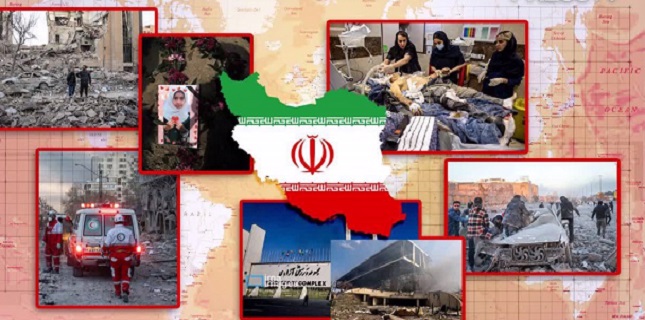
Across Iran, the expanding list of sites hit by American-Israeli strikes reads like a map of everyday civilian life, schools filled with children, hospitals treating patients, crowded residential districts, emergency response centers, and historic urban spaces.
From residential neighborhoods to hospitals and schools, the scope of the aggression highlights the scale at which civilian life has been brutally and indiscriminately targeted by the US-Israeli aggression against the Islamic Republic.
According to Iran’s foreign ministry, dozens of non-military sites have been targeted, including medical centers, educational institutions, humanitarian facilities, markets, and densely populated residential districts across several cities, particularly in the capital, Tehran.
In a latest update on Sunday, Iran’s health ministry said an 8-month-old girl is the youngest martyr of enemy aggression since last Saturday, when the Israeli regime and the US launched strikes across the country.
The ministry said initial statistics from the first week of the war indicate that among the martyrs are 198 women, 190 individuals under 18 years of age, and 6 individuals under 5 years of age.
The youngest martyr so far is an 8-month-old baby girl, and the oldest martyr is an 88-year-old man. Additionally, 30 percent of all martyrs are children.
Among the injured, there are 1,044 women, 584 individuals under 18 years of age, and 54 individuals under five years of age.
Carnage in Minab
One of the earliest reported incidents was the deliberate targeting of an elementary school in the southern city of Minab by the Israeli-American axis of evil, which killed 165 students.
Officials say the growing tally of civilian locations highlights a systematic expansion of US-Israeli aggression into areas where ordinary life unfolds and which, under international law, should remain immune from military conflict.
Under the Geneva Conventions, hospitals, schools, and densely populated residential areas are considered protected civilian objects and must not be targeted during armed conflict.
This context frames the significance of the locations that have been affected by Israeli-American strikes in the past nine days, since the aggression started.
The following is a list of civilian sites compiled by the Iranian foreign ministry, documenting sites and locations struck by the United States and Israel in the war against Iran.
Residential areas
Residential areas near Niloufar Square, more than 20 civilians reportedly killed.
Residential homes around Sepah Square.
Residential areas in Maragheh, more than 27 civilians reportedly killed.
A densely populated residential complex in Sanandaj.
Residential homes in Narmak.
Residential homes along Iraqi Street in Tehran.
Residential buildings along Marzdaran Boulevard.
Damage to residential buildings near Mir-Damad Boulevard.
Residential areas across Fars Province, 35 civilians were reportedly killed.
Hospitals and medical facilities
Gandhi Hospital
Khatam al-Anbiya Hospital
Motahari Hospital
Vali-e Asr Hospital
Tehran Trauma and Burn Center
Shahid Rajaei Heart Center
Ameneh Neonatal Care Center
Abuzar Hospital
Baqaei Hospital
Hazrat Abolfazl Hospital
A medical emergency center in Tehran
Emergency medical bases in Chabahar, Sarab, and Hamadan
Schools and children’s facilities
Shahid Mahallati Elementary School
Hedayat School
A kindergarten in Narmak
A children’s park in Tehran
A sports hall in Lamerd, Fars Province, where 18 children and teenagers were killed
Markets, humanitarian and other civilian sites
Grand Bazaar of Tehran
Baharestan Square Market
Buildings around the Iranian Red Crescent Society in Tehran
Headquarters of the State Welfare Organization of Iran in Tehran
Historic areas around the UNESCO-listed Golestan Palace
Arg Square
Two diplomatic police headquarters in Tehran
Equestrian facility near Tabriz
In a late-Thursday attack, an emergency medical base in Zibashahr, near the southern city of Shiraz, was also targeted by US-Israeli strikes, killing at least 20 civilians and wounding 30 others.
The attack destroyed an emergency medical services base, killing two paramedics who were on duty at the time, according to local reports.
Municipal facilities and infrastructure in the area also sustained damage, provincial deputy governor Jalil Hassani said.
In another attack on the Qazvin-Zanjan freeway, 30 people were killed, according to Shahram Ahadpour, spokesman for the Qazvin provincial security council.
Several schools in Tehran have also sustained severe damage from the ongoing strikes, according to Hossein Sadeghi, head of the Education Ministry’s information center.
Sadeghi said the Allameh Helli 5 school in District 6 suffered “very serious damage” and may be unusable for some time, while the Shahed Hamedani elementary school in District 7 sustained “relatively severe damage.”
Schools in Districts 12 and 7 also suffered damage, he added.
Two students were killed in their residential home in District 14 of Tehran, and several other students were wounded in the attacks, Sadeghi said.
A pattern emerges
The expanding list of US-Israeli strikes on civilian sites across Iran has drawn comparisons to the devastation witnessed in Gaza over the past two years and more, where attacks on civilian infrastructure have been widely documented
During its two-year campaign in the Gaza Strip, Israeli strikes repeatedly hit hospitals, schools, markets, shelters, and densely populated residential neighborhoods, drawing global scrutiny over the systematic targeting of civilian infrastructure.
The scale of destruction has been staggering – roughly 78 percent of Gaza’s total infrastructure has been destroyed, including 92 percent of the housing stock, 84 percent of health facilities, and 95 percent of educational facilities.
The damage inflicted on civilian infrastructure over the past week follows a pattern that has become deeply familiar.
Now, as attacks continue across Iranian cities, from Tehran to smaller provincial towns, the same trajectory appears to be emerging once again.
As medical centers, residential districts, and other civilian locations appear on the growing list of sites struck inside Iran by the United States and Israel, experts say the latest attacks mirror a pattern already established by the Zionist regime on other fronts.
Disregard for human life
Iran has warned that the strikes reflect a deliberate disregard for civilian life, raising urgent questions about compliance with international humanitarian law.
The Iranian Red Crescent Society (IRCS) has also documented extensive destruction to non-military infrastructure across the country.
Hospital records and emergency reports show that women, infants, and elderly people make up a significant share of those killed and injured.
Pirhossein Koulivand, head of the IRCS, said claims by US and Israeli forces that they do not target civilian areas were “completely false.”
“The number of civilian martyrs, especially children, students and even the elderly, clearly shows their savage nature,” he said. “They are not even committed to the rules they themselves have established.”
The figures released by the IRCS outline the scale of the harm:
• 3,646 residential and non-military units have been hit
• 528 commercial units have been completely destroyed
• 14 medical centers, including hospitals, rehabilitation facilities, and limited surgery centers, have been struck
• Three hospitals have been rendered completely non-operational
• 105 non-military centers have been attacked by the enemy to date
• 13 percent of the injured are women
• More than 2,000 injured people are currently hospitalized
• Over 625 surgeries have been performed so far
• The youngest person injured is a four-month-old baby girl from Pol-e Dokhtar
• The oldest injured is a 94-year-old woman from Saqqez
• Among the injured, 552 are under 18 years old and 54 are under five
• 198 of those killed are women
• The youngest victim killed was an eight-month-old baby from Robat Karim
• The oldest victim killed was an 88-year-old from Tehran
• Among those killed, 200 are under 18 years old and six are under five
• Eight healthcare workers have lost their lives
• Thirty healthcare workers have been injured
• Eleven hospitals have been affected by missile strikes
• Eight emergency medical bases have been damaged
• Twelve ambulances have been seriously damaged
According to the IRCS, most injuries involve head trauma, severe burns, amputations, and fractures.
As the number of damaged homes, hospitals, and schools continues to rise, the US-Israeli strikes are reshaping daily life across Iranian cities, turning ordinary spaces, classrooms, markets, medical wards, and residential streets into sites of destruction.
For many observers, the growing list of civilian locations hit by the United States and Israel across Iran is seen as part of a broader pattern in which the boundaries meant to protect civilian life in war have been eroded.
Must Read