Muslims in Modi’s India: Response to Hindutva zealots irked by Iran Leader’s remarks

20 September, 2024 08:00

Earlier this week, the Leader of the Islamic Revolution Ayatollah Sayyed Ali Khamenei met with a delegation of Iranian Sunni scholars to mark the beginning of ‘Islamic Unity Week’, which is observed every year on the birth anniversary of the Prophet Muhammad (PBUH).
During the meeting, Ayatollah Khamenei emphasized that the identity of the Islamic Ummah is “a fundamental issue beyond nationality” and that “geographical boundaries do not alter the truth and identity of the Islamic Ummah.”
He further stressed that it goes against Islamic teachings for Muslims to remain indifferent to the suffering of fellow Muslims anywhere in the world, from Myanmar to Gaza to India.
Some of his remarks from the speech were later posted on his English X page, formerly Twitter.
“The enemies of Islam have always sought to make us indifferent to our shared identity as an Islamic Ummah. We cannot call ourselves Muslims if we are oblivious to the suffering endured by Muslims in Myanmar, Gaza, India, or anywhere else,” read one of the tweets.
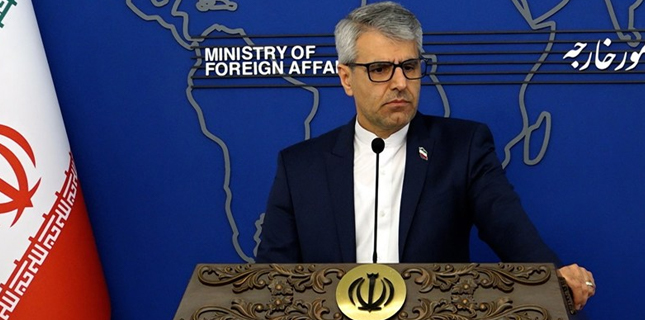
It didn’t go down well with the Indian government. Indian external affairs ministry issued a statement “strongly” condemning the statement made by the Leader of the Islamic Revolution.
The statement termed Ayatollah Khamenei’s remarks “misinformed and unacceptable.”
The run-of-the-mill news channels in India also jumped on the bandwagon to “condemn” the remarks and millions of active social media users in the world’s most-populated country followed suit, using it as a pretext to fan Islamophobia and Iranophobia.
However, many supported the Iranian leader’s remarks based on the documented cases of how members of the minority Muslim community in India have been unfairly treated, especially under the incumbent Narendra Modi government.
Earlier this year, in an election speech, Indian Prime Minister Narendra Modi referred to India’s 200 million Muslims as “infiltrators.” It didn’t come as a surprise as ruling party leaders have since 2014 normalized the vilification of minority Muslims in secular democratic India.
Research by India Hate Lab, a US-based NGO, revealed that in the first half of 2023, there were 255 documented hate speech rallies targeting Muslims across 17 Indian states.
“Approximately 52% of these hate speech gatherings took place in states ruled by Modi’s Bharatiya Janata Party (BJP) and were orchestrated by entities linked to the Rashtriya Swayamsevak Sangh (RSS), including the Vishwa Hindu Parishad (VHP), the Bajrang Dal, and BJP,” reported the group, referring to the ruling party and its parent organizations.
A 2018 media report found that there had been a 500% increase in communal hate speech by senior Indian government officials, leading to a rise in anti-minority violence in the country between 2014 and 2018.
According to ‘Act Now for Harmony and Democracy’ (ANHAD), a Delhi-based socio-cultural organization, there has been a significant increase in hate speech and hate crimes against religious minorities since 2014, when the Modi-led BJP rose to power.
In his book ‘Being Muslim in Hindu India’, Indian author and journalist Ziya Us Salam notes that Muslims have become “second-class citizens, an invisible minority in their own country.”
“My Muslim community stands orphaned, not only abandoned by the ruling BJP but repeatedly marked as responsible for the supposed ills of the nation. There is an overwhelming sense of being part of a group under siege,” writes the veteran journalist who works for The Hindu.
Since Modi’s first term in 2014, nearly 50 lynchings of Muslim men related to cow protection have been reported. The BJP’s campaign has empowered vigilante groups, who in some cases have operated with the tacit support of state authorities.
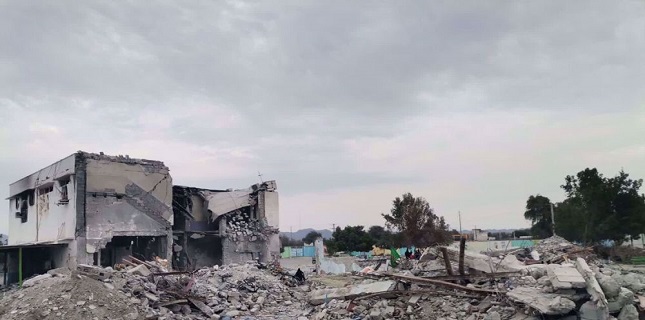
Another reprehensible tactic used to target Indian Muslims is what has come to be known as the “bulldozer justice” method.
There have been hundreds of cases where authorities have used bulldozers to demolish Muslim homes, businesses, and places of worship in different parts of the country.
Reports indicate that authorities in five Indian states—Assam, Gujarat, Madhya Pradesh, Uttar Pradesh, and Delhi—carried out such demolitions as “punishment” following incidents of religious violence or protests by Muslims.
A 2019 report by the Indian NGO ‘Common Cause’ found that half of the police surveyed demonstrated an overt anti-Muslim bias, making law enforcement less likely to intervene in crimes committed against minority Muslims.
The Organization of Islamic Cooperation (OIC) has also officially condemned the rising number of violent attacks against Muslims and their properties in India.
In 2022, the OIC denounced the derogatory remarks made about the Prophet Muhammad by a BJP official, which also led to widespread protests by Muslims in the country.
“These incidents of defamation are part of a growing wave of Islamophobia in India, alongside systematic practices against Indian Muslims, including the hijab ban in some educational institutions, demolitions of Muslim properties, and escalating violence,” the OIC said.
On September 8, a right-wing Hindutva mob vandalized several Muslim-owned shops and a local Eidgah in the Kathlal-Balasinor area of Gujarat, a state situated on the western coast of India.
The violence erupted after a minor road accident and escalated quickly as the Hindutva mob went on a rampage, targeting properties associated with minority Muslims.
A vehicle was set ablaze in broad daylight. Social media footage showed mobs ransacking Muslim-owned shops while vociferously chanting “Jai Shri Ram,” stoking the flames of communal violence.
According to reports in Indian media, the targeted violence took place in the presence of law enforcement agencies, with little to no intervention.
September 2024
Ashraf Ali Sayyed Hussain, 72, was on a routine journey from Jalgaon to Kalyan in Maharashtra, western India, when a group of young men heading to Mumbai for a police recruitment exam accused him of carrying “cow meat.”
They suddenly turned into cow vigilantes, punching Hussain in the face, chest, and stomach, while hurling choicest abuses. They also snatched his phone and recorded the assault, which they later posted on social media pages without any fear of consequences.
Despite clear video evidence of the brutal attack, the Indian police charged the mob under bailable sections of the law, releasing them on bail within a day, triggering anger and outrage.
In a case of “beef lynching” reported from Haryana, northern India, a 22-year-old migrant laborer, Sabir Malik, was beaten to death by cow vigilantes on August 27.
Malik, a rag picker from West Bengal, had been residing in Haryana with his wife and two-year-old child, doing menial work to make ends meet.
Cow vigilante groups raided migrant worker settlements, searching for beef dishes. Malik was killed before the police could even confirm if the meat in question was beef or anything else.
In a nondescript village in the BJP-governed state of Madhya Pradesh, central India, authorities demolished the homes of at least 11 Muslim families on suspicion of storing beef in refrigerators.
The crackdown occurred ahead of the Muslim festival of Eid-ul-Adha, and five Muslim men were arrested in connection with the case and brutally roughed up in custody.
Three Muslim construction workers, Nasirul Haque, Mohammed Samiruddin, and Mohammed Nasir, were beaten to death by a right-wing Hindu mob in West Bengal, a state in eastern India, on unsubstantiated charges of stealing a cow.
Fifteen-year-old Junaid Khan was stabbed to death on a train in Haryana, a state in northern India, following an argument over seating arrangements, according to media reports.
The confrontation escalated into a religiously motivated attack on the teenage Muslim man, during which Junaid was called a “Mulla” and “beef-eater.”
The mob threw away his skull cap, and his brother was severely injured in the attack.
Must Read