History of Arbaeen Million March

12 August, 2024 06:17

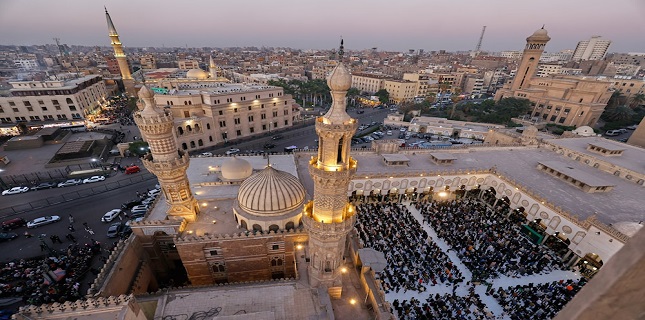
Shiite News: Pilgrimage to the graves is one of the religious traditions of Islam where people travel to seek spiritual solitude and remember the mortality of the material world.
One of these pilgrimages is the Arbaeen pilgrimage, which is held on the fortieth day of the martyrdom of Imam Hussain (a.s.) in the form of a walk to His shrine.
This march, which has turned into a gathering of hundreds, is today considered the most powerful symbol of unity among the Shiite world.
The Arbaeen gathering is attended by different groups of Muslims, Shiites and Sunnis, even people of the Christian faith, and followers of various Middle Eastern ethnic groups such as Izdis and other religions.
Due to which this march is the largest annual religious gathering in the world.
Characteristic of Arbaeen March
The Arbaeen March is a distinct feature among all pilgrimage rituals of Shiite Muslims and as mentioned, is carried out on foot every year from the 7th to the 20th of the month of Safar ul Muzzafar from different countries of the world.
Pilgrims first visit the shrine of Hazrat Ali (AS) in Najaf city and then visit the shrine of His son Imam Hussain (AS) to express their sympathy with the prisoners of Karbala.
In the historical event of Karbala, Yazid’s army took captives from the deserts of Iraq to Syria.
In this traditional march, most of the pilgrims travel from Najaf to Karbala, and along the route of the procession are places to welcome the pilgrims, known as “Mokab”. These processions are organized by the people of different countries.
Philosophy of Arbaeen March
In this march pilgrims refresh the memory of the captives left after the unequal war of the Yazidis with Ahlybait A.S in 61 A.H. And pilgrims learn to resist from this great walk.
A look at the historical record of Arbaeen March
Historical references show that walking to the shrine of Imam Athar (AS) was common in the life of the Imams and took place in different parts of the Islamic land.
But in different Islamic centuries due to strictness and fear of Shias gaining power, it has faced many problems and just like the pilgrimage of Imam Athar (peace be upon him) faced many difficulties at different times and places. There have been ups and downs in this tradition as well.
In fact, visiting Shrine of Imam Hussain (peace be upon him) on the day of Arbaeen is one of the frequent traditions of the Shias, and this group remained committed to this movement even during the Umayyad and Abbasid periods.
Undoubtedly, the Safavid regime in Iran also played a major role in introducing the culture of pilgrimage on foot.
It is mentioned in this connection that Shah Abbas Safavi and the great scholars of his era like Sheikh Bahai decided to go to Mashhad from Isfahan in 1009 Hijri in order to popularize the culture of pilgrimage among the people and walked to Shrine of Imam Ali bin Musa al-Reza (a.s.).
Saddam pressure on pilgrims
However, after Saddam Hussein came to power in Iraq and the Ba’ath Party ruled the country, there were many restrictions on walking and going for the Arbaeen pilgrimage, and there are reports of atrocities on pilgrims by government forces, resulting in the death of many pilgrims.
However, it has been said that despite these restrictions, many scholars declared it obligatory to walk towards Karbala.
The book Sanawat al-Jamarat, published in 2004, mentions the prohibitions of Arbaeen pilgrimage during the Baath Party regime: In 1397 Hijri, the Iraqi Baath Party banned organizing this march.
In 1977, religious ceremonies and organized processions and the ban on walking to Karbala and the pilgrimage of Arbaeen are mentioned.
When the Iraqi people were preparing for the pilgrimage, they moved towards Karbala, but this move was carried out by the regime of Saddam Hussein and Many people were killed and a group was imprisoned.
Some scholars, such as Allama Askari and Syed Muhammad Hussain Fazlullah, who fled Iraq, were also sentenced to death in absentia.
Arbaeen March after the fall of the Baath Party
After the fall of the Iraqi Baath Party with the US invasion of the country in 2003, the march was revived with the new government in Iraq, and every year.
In addition to Iraqi Shias, other countries, especially the Shias of Iran, would join the Arbaeen March.
According to reports, apart from Shias, Sunni, Christian, Izdis and other religious groups also participate in the Arbaeen procession.
Today, in addition to Iran, Afghanistan and African countries, people from Sweden, Denmark, America, England, Austria, Finland, Argentina, Colombia, Russia and Australia also participate in the Arbaeen procession.
Millions of pilgrims at a time of ISIS threat
Since 1993, with the support of the Iranian government, the number of Arbaeen pilgrims has reached 20 million, most of whom are foreign pilgrims.
According to the statistics of the Iraqi Ministry of Interior a year ago, about 11.3 million foreign visitors went to Iraq.
In 1994, when countries in the region were facing the threat of the ISIS terrorist group and other Takfiri groups, the number of Arbaeen pilgrims was estimated at 22 million.
Although the Iraqi authorities said the number of pilgrims was 26 million.
During recent years and despite the Corona situation (in the last two or three years), the average attendance of Arbaeen pilgrims is estimated to be between 12 million and 20 million people.
Statistics of pilgrims of Arbaeen in recent years
In 2016, Haram of Hazrat Abbas (AS) announced that during the two weeks (i.e. from 7 Safar to 20 Safar), more than eleven million people entered Karbala.
In 2018, the Committee of the Shrine of Imam Hussain (AS) announced in a statement that in the ten days leading up to Arbaeen (from 10 to 20 Safar), more than 11 million 85 thousand people entered the city.
A year ago, while the situation of Corona was decreasing, but the effects of the spread of this disease in the world were still present, but despite this, the march was held for the first year without Corona restrictions and the news agencies reported number of visiting pilgrims to be 27 million.
Must Read
Middle East
Hezbollah Denies Kuwaiti Accusations, Reaffirms Keenness on Brotherly People
20-March،2026