Bahrainis Vote for New Parliament amid Political Tensions

23 October, 2010 11:18
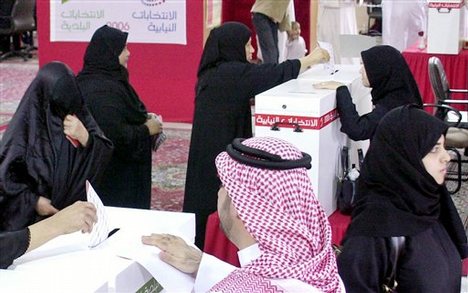
 Bahraini voters have begun casting their ballots in elections for the renewal of the parliament, for the third time since a parliamentary system was reinstated to the kingdom in 2002, amid opposition concerns that the authorities use the votes of military personnel to tilt the scales in favor of candidates at the expense of other candidates.
This is what the opposition called as exploitation of General positions to bring down some of its candidates.
The elections started at 8am (05:00 GMT) on Saturday with more than 318,000 Bahrainis eligible to vote, state television reported.A total of 127 candidates, including eight women, are running in the elections. One of the female candidates, outgoing MP Latifa al-Qouhoud, has already secured an uncontested seat. Voters will be choosing 35 of the 40 members of the house. The other five seats were filled by unopposed candidates.
Voters will also cast their ballots for their respective municipal councils.
A memorable day in the Bahraini political life of with the dawn of the legislative elections, which saw media capaigns from both the opposition and the loyalty that stopped last Thursday.
Sheikh Ali Salman, a senior Shia leader and member of parliament, said ahead of the elections that authority should be shared with people in what analysts say is an open challenge to the pro-Western Al-Khalifa family, in power since 1783.
“It is unacceptable that power be monopolised by a single family, even one to which we owe respect and consideration,” Salman, who also heads the Shia mainstream Islamic National Accord Association (INAA), told a mass rally on Wednesday in a Manama suburb.
“We look forward to the day when any child of the people, be they Sunni or Shia, can become prime minister.”
Chief editor of Al-Wasat newspaper Mansoor Jamri told al-Manar television that “voters had gathered from early morning and there are complaints because some did not have their names on the check lists and can not vote,” adding that “there is a sense among voters of the necessity to prove the existance of each party despite all the difficulties”. Jamri said that the heavy presence of voters could rule out forgery in order to prove existence.”
Posters of Sayyed Hassan Nasrallah, Hezbollah’s secretary general, have been plastered in the Manama neighbourhoods.
And in the run-up to the legislative and municipal polls, a wave of arrests of Shia political activists has drawn warnings from international human rights watchdogs of a drift back to full-blown authoritarianism.
Amnesty International, a London-based rights watchdog, said earlier this month Bahraini authorities had detained 250 Shia opposition activists.
Must Read