Top Shiite leader Ayatollah Al-Nemer shot injured, arrested by Saudi Wahabi forces

09 July, 2012 10:19
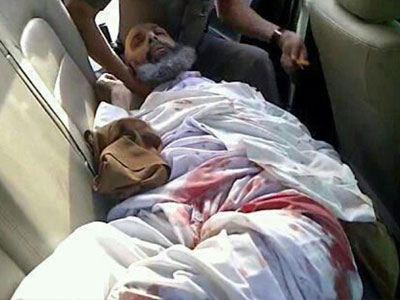
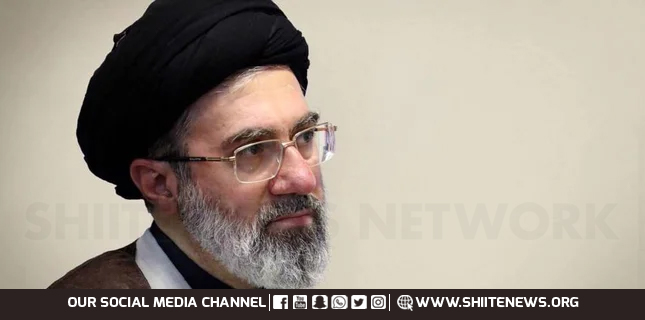
 Wahabi Kingdom of Saudi Arabia has shot injured and arrested leading Shia cleric Ayatollah Al-Nemer on Sunday 08 July 2012 at 5:00 p.m. local time in KSA, the Shiite News reported. According to received picture, injuries from which it can be assumed that the arrest was violent.
According to local residents, loud gun firing were heard and the pursuit ended with Ayatollah Al-Nemer’s car hitting a wall of a nearby house.
Sources close to Ayatollah Al-Nemer indicated that the Ayatollah has been injured without conforming whether the injury was due to the gun firing or the car accident.
Shortly after the car accident, police members took Ayatollah Al-Nemer to an unknown place while his car was left on its spot.
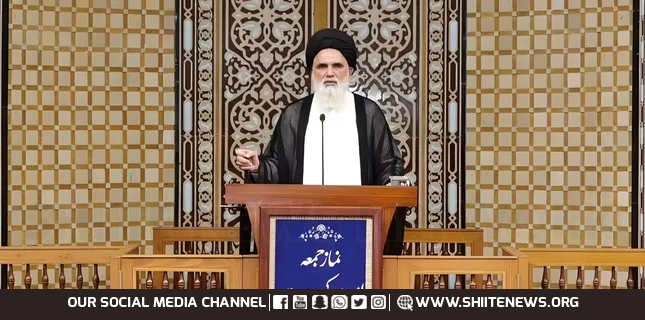
Two weeks ago in his Friday sermon Shaikh Al-Nemer criticised Arab dictators in Saudi, Bahrain. He is well known for publicly criticising dictators.
After the shot injures and arrest of Ayatullah Shaikh Al-Nemer, hundreds of Saudis Shiite Muslims took streets in Awamiah and Qatif for his release and protested against the KSA for the brutal attack on Shiite Cleric.
Kingdom of Saudi Arabia has arrested hundreds of innocent Shiite Muslims including children, since they have demanded basic rights for living.
Since February 2011, Saudi protesters have held demonstrations on an almost regular basis in the oil-rich Eastern Province, mainly in Qatif and the town of Awamiyah, calling for the release of all political prisoners, freedom of expression and assembly, and an end to widespread discrimination.
However, the demonstrations have turned into protest rallies against the Al Saud regime, especially since November 2011, when Saudi security forces killed five protesters and injured many others in Eastern Province.
The Saudi interior ministry issued a statement on March 5, 2011, prohibiting “all forms of demonstrations, marches or protests, and calls for them, because that contradicts the principles of the Islamic Sharia, the values and traditions of Saudi society, and results in disturbing public order and harming public and private interests.â€
Saudi Arabia is a state party to the Arab Charter on Human Rights. Article 24 of the charter states that “every citizen has the right… to freely pursue a political activity [and] to freedom of association and peaceful assembly.â€
Amnesty International and Human Rights Watch have also criticized the Al Saud regime for silencing dissent through intimidation and violation of the basic rights of citizens.
Must Read
Pakistan
Raja Nasir Abbas Jafari Statement: We Will Neither Remain Silent Nor Relinquish Our Rights
17-October،2026