Peace Institute Reports 112 Human Rights Abuses in Saudi Arabia

05 March, 2016 12:40

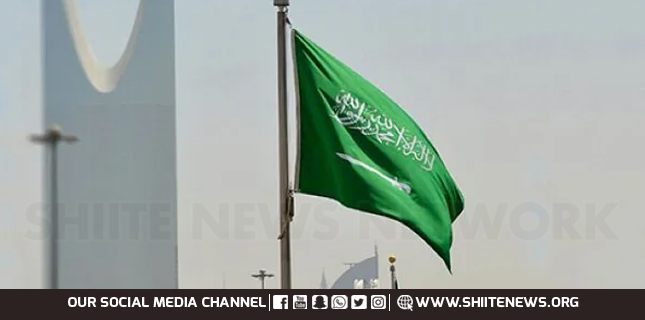
Saudi Arabia has one of the worst human rights records in the world as the country commits war crimes and routinely imprisons and executes people labelled as enemies of the kingdom, a new report said on Saturday.
According to the report published by the Beautiful Peace Institute (Iranian Students’ Center for Human Rights), Saudi Arabia has failed to secure the fundamental rights of its citizens to free expression, association, and assembly. It is also routinely involved in repression of basic freedoms and persecution of political opponents and human rights activists.
The Institute, in its new report, outlines 112 cases of human rights abuses in the Persian Gulf kingdom, including violation of children’s rights, minority rights, persecution and torture of opponents and human rights activists.
The report goes on to state that the Saudi judicial system is used as a tool against those who want more freedom. The country persecutes people who simply advocate basic rights and express their opinions.
The law allows authorities to persecute people who are non-believers, who are treated as enemies of the state. There is also a widespread discrimination against women and migrant workers, who are harassed and discriminated.
Moreover, public executions are common in the country, where just recently, the regime executed prominent Shia cleric Sheikh Nimr al-Nimr along with many other political activists.
In this respect, Saudi Arabia continues to try, convict, imprison, and execute political dissidents and human rights activists solely on account of their peaceful activities. Systematic discrimination against women and religious minorities continues too. Authorities fail to enact systematic measures to protect the rights of millions of foreign workers.
Authorities also subject people to unfair trials and arbitrary detention. New anti-terrorism regulations can be used to criminalize almost any form of peaceful criticism of the authorities as terrorism. On October 15, Specialized Criminal Court sentenced Sheikh Nimr to death on a host of vague charges, based largely on his peaceful criticism of Saudi authorities.
Saudi Arabia does not tolerate public worship by adherents of religions other than Islam and systematically discriminates against Muslim religious minorities, notably Shias.
Detainees, including children, commonly face systematic violations of due process and fair trial rights, including arbitrary arrest and torture and ill-treatment in detention. Saudi judges routinely sentence defendants to floggings of hundreds of lashes.
Judges can order arrest and detention, including of children, at their discretion. Children can be tried for capital crimes and sentenced as adults.
While there is no formal penal code, the government has passed some laws and regulations that subject certain broadly-defined offenses to criminal penalties. In the absence of a written penal code, however, judges and prosecutors can criminalize a wide range of offenses under broad, catch-all charges such as breaking allegiance with the ruler or trying to distort the reputation of the kingdom, or simply trying to drive a car (for women).
What’s more, authorities do not always inform suspects of the crime with which they are charged, or allow them access to supporting evidence, even after trial sessions have begun in some cases. Authorities generally do not allow lawyers to assist suspects during interrogation and often impede them from examining witnesses and presenting evidence at trial.
According to the report, authorities continue to arrest and hold suspects for months and sometimes years without judicial review or prosecution.
Saudi Arabia’s discriminatory male guardianship system remains intact despite government claims to abolish it. Under this system, ministerial policies and practices forbid women from driving, obtaining a passport, marrying, traveling, or accessing higher education and being self-employed (starting a business).
Last but not the least, many migrant workers suffer abuses and exploitation, sometimes amounting to conditions of forced labor. Some employers illegally confiscate passports, withhold wages, and force migrants to work against their will.
The report, in conclusion, outlines many other crimes and human rights abuses committed by the Saudi regime in other parts of the world, including its overt and covert support for Takfiri and Salafi terrorist groups in Syria, genocide in Bahrain, genocide in Yemen, using internationally-banned cluster bombs to target civilians in Yemen, especially women and children, as well as violation of international law during the war.
The report concludes by saying that international human rights groups and organizations are yet to hold Riyadh to account for its human rights violations, abuses and war crimes.
Must Read

Pakistan
Banned Sipah-e-Sahaba Member Sentenced to 9 Years for Supplying Weapons to Taliban
24-September،2026