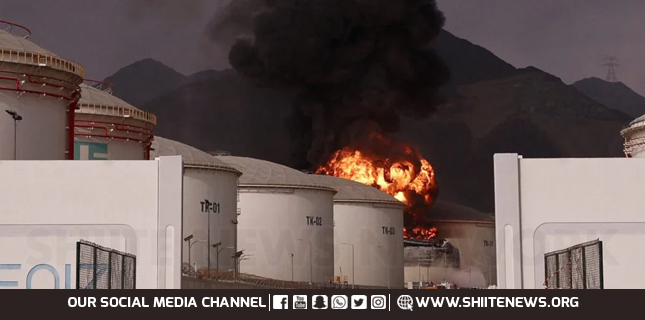
Israeli regime covertly arms Druze militia in Syria, report says

24 December, 2025 02:44

The Israeli regime has been covertly supplying weapons and military equipment to a Druze militia in Syria since the departure of former president Bashar al-Assad in 2024, according to a report by The Washington Post, which cited current and former Israeli officials.
The report said the weapons were provided to a Druze faction known as the Military Council following the rise of transitional President Ahmad Sharaa. Israeli officials told the newspaper that the arms deliveries included weapons, night-vision devices, and ammunition, much of which was sourced from the aggression on Lebanon and the Gaza Strip.
According to the report, Israeli military support for the Druze peaked in the spring, when violent clashes erupted between Druze fighters and Syrian government forces. The assistance later declined and was halted in August as negotiations between Damascus and Tel Aviv advanced. Since then, the Israeli regime has reportedly limited its support to non-lethal equipment such as body armor and medical assistance.
Moreover, Israeli forces have conducted repeated raids in southern Syria, particularly in the provinces of Daraa and Quneitra, since December 2024, establishing checkpoints and detaining local residents.
The new authorities in Damascus have repeatedly appealed to the international community to pressure the Israeli regime to halt what they describe as ongoing aggression, warning that such actions undermine Syria’s sovereignty and threaten broader regional stability.
Druze national guard reports attacks
The self-proclaimed Druze National Guard forces in Sweida announced on Monday that several of their positions on the city’s western axis came under attack by military factions affiliated with Syria’s interim Defense Ministry. The targeted sites included Tel Hadid, the industrial road, and the Knakker area, according to a statement issued by the force’s command.
The statement claimed the assaults involved the use of random mortar shells and drones, describing the operation as an attempt to undermine stability and create confusion across frontline positions. Commanders said their forces responded with “appropriate means,” suppressing hostile fire and regaining full control over the battlefield situation.
The self-proclaimed National Guard stressed that all axes remain under its full authority and that its units are maintaining high combat readiness. The force said it is capable of deterring and decisively countering any threat to ensure the security of Jabal al-Arab and the stability of its residents.
Sweida province, in southern Syria, has witnessed recurring instability. In July, clashes erupted between armed Druze fighters and Bedouin tribal groups backed by the transitional government in Damascus. According to the Syrian Observatory for Human Rights, those confrontations resulted in the deaths of 2,026 people through field executions, Israeli strikes, and other forms of armed violence.
Sweida under fire
The governorate of Sweida witnessed clashes last July between armed Druze fighters and Bedouin tribal forces backed by the transitional government forces in Damascus, which led to the deaths of 2,026 people from field executions, Israeli airstrikes, and other forms of armed violence, according to the Syrian Observatory for Human Rights.
Despite this, arbitrary killings and attacks continue, with the most recent taking place on October 28, when armed gunmen attacked a passenger bus near the Marjanah station on the Sweida-Damascus road, killing two people and wounding 11 others.
On October 25, Syrian sources reported that factions aligned with the Ministry of Defense stationed in the village of Walgha targeted armed groups in Sweida city with heavy weapons. Sources in Sweida added that local forces were responding to movements by these factions along the Atil–Walgha axis.
Living conditions also reached catastrophic levels in Sweida on October 4, as public bakeries in the governorate halted operations due to a lack of flour, leaving residents dependent on limited bread supplies from a small number of private bakeries, according to the Syrian Observatory for Human Rights.
Must Read
Pakistan
Governor’s Rule KP: Allama Maqsood Domki Calls It a Serious Democratic Mistake
14-October،2026
Pakistan
Sipah Sahaba Commander Killed: CTD Operation Eliminates Wanted Terrorist in Bannu
14-October،2026
Pakistan
Hafez Shirazi Commemoration Karachi: Khana-e-Farhang Iran Hosts Splendid Literary Event
14-October،2026