Saudi, UAE, Bahrain reconcile with Qatar after dispute over Brotherhood

17 November, 2014 00:00
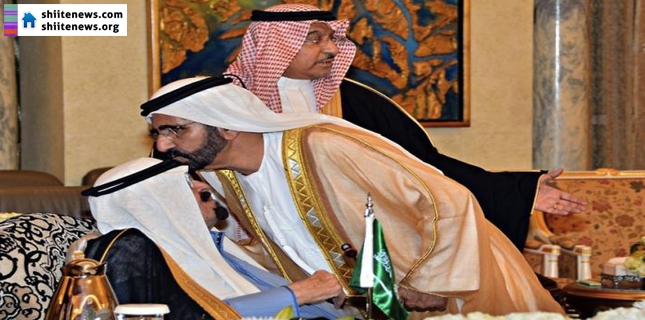
Saudi Arabia, the United Arab Emirates and Bahrain agreed on Sunday to return their ambassadors to Qatar, signaling an end to an eight-month rift over Doha’s support of Islamist groups.
The announcement was made by the Gulf Cooperation Council (GCC) and came after an emergency meeting in the Saudi capital Riyadh to discuss the dispute, which was threatening an annual summit set to be held in Qatar’s capital Doha on December 9 and 10, in a last-ditch bid to overcome internal differences.
In an unprecedented move, the three countries withdrew their ambassadors from fellow GCC member Qatar in March, accusing it of undermining their domestic security through its support of the Islamist movement, the Muslim Brotherhood.
Qatar holds the revolving presidency of the GCC and the country’s emir on Tuesday publicly invited his fellow GCC rulers to Doha for the group’s annual summit. But diplomats had said some of them wanted to move the meeting elsewhere following the dissent with Qatar.
The GCC statement said that Sunday’s meeting had reached what it described as an understanding meant to turn over a new leaf in relations between the six members of the Gulf organization, which also includes Kuwait and Oman.
“Based on that, the kingdom of Saudi Arabia, the United Arab Emirates and the kingdom of Bahrain decided to return their ambassadors to the state of Qatar,” the statement said.
The UAE and Saudi Arabia have both listed the Muslim Brotherhood as a terrorist organization and see political Islam as a challenge to their own systems of dynastic rule.
Kuwait’s emir Sheikh Sabah al-Ahmad al-Sabah has been leading a mediation effort to bridge the gap between Qatar and Saudi Arabia, the United Arab Emirates and Bahrain.
Qatar is seen to have been supportive of the Brotherhood in Egypt and the UAE, and more recently in Libya. It has given sanctuary to some Brotherhood members and extended citizenship to the Brotherhood’s spiritual guide, Sheikh Yusuf al-Qaradawi.
Riyadh and the United Arab Emirates also see the Doha-based al-Jazeera news channel as being a Muslim Brotherhood mouthpiece – something Qatar denies.
The UAE on Saturday issued a list of over 80 Islamist groups which it classified as “terrorist organizations,” among them the Qatar-based International Union of Muslim Scholars, which is headed by Qaradawi.
Doha earlier this year asked Brotherhood leaders to leave Qatar following diplomatic pressure from Saudi Arabia.
In August, Oman’s Foreign Minister Yousef bin Alawi bin Abdullah and the Kuwaiti emir said after a GCC meeting in the Saudi city of Jeddah that the dispute with Qatar had been resolved and the ambassadors would return to their posts in Doha.
But no date was given for the envoys’ return, and differences remained.
Following the agreement on Sunday, Qatar’s stock market edged up in early trade on Monday.
The Doha benchmark climbed 0.4 percent as most stocks rose. Qatar National Bank, up 0.9 percent, was the main support.
The rift did not appear to have a big impact on business in the Gulf, but it did unsettle some investors as Saudis are significant investors in Qatar’s stock market.
Saudi Arabia, the UAE and Qatar have used their oil and gas revenues to influence events in other Middle Eastern countries, and any resolution of their differences could alter the political environment in Libya, Egypt, Syria, Iraq and Yemen.
Saudi Arabia and Qatar, along with Bahrain and the United Arab Emirates are members of the US-led coalition against the Islamic State of Iraq and Syria (ISIS).
Critics opposed to US involvement in the conflict with ISIS have pointed out that Washington, in partnership with its Gulf allies, especially Saudi Arabia, played a role in the formation and expansion of extremist groups like ISIS by arming, financing and politically empowering armed opposition groups in Syria.
In June, Syrian state media accused Saudi Arabia of funding and arming ISIS jihadists.
“Terrorism is spreading in front of the eyes of the western world… and alongside it are the fingers of Saudi Arabia, providing money and arms,” the Al-Thawra daily wrote.
“In the events in Iraq and the escalating terrorist campaign, no Western country is unaware of the role Saudi is playing in supporting terrorism and funding and arming different fronts and battles, both inside and outside Iraq and Syria,” it added.
The editorial also accused Qatar and Turkey of playing similar roles backing extremists “according to US demands or Israeli desires.”
“The emergence of these organizations is not the result of a vacuum but rather long and clear support for terrorism… which the Gulf has dedicated its finances to expanding,” it said, adding that such actions were taken “with Western knowledge and in most cases clear and explicit orders.”
US vice president Joe Biden suggested in a speech at Harvard University early October that Turkey, Qatar and the United Arab Emirates had extended “billions of dollars and tens of thousands of tons of weapons” to fighters trying to oust Syrian President Bashar al-Assad, a statement he later apologized for.
Must Read
Saudi Arab
Iranian President Congratulates Saudi King Salman and Crown Prince on National Day
24-September،2026